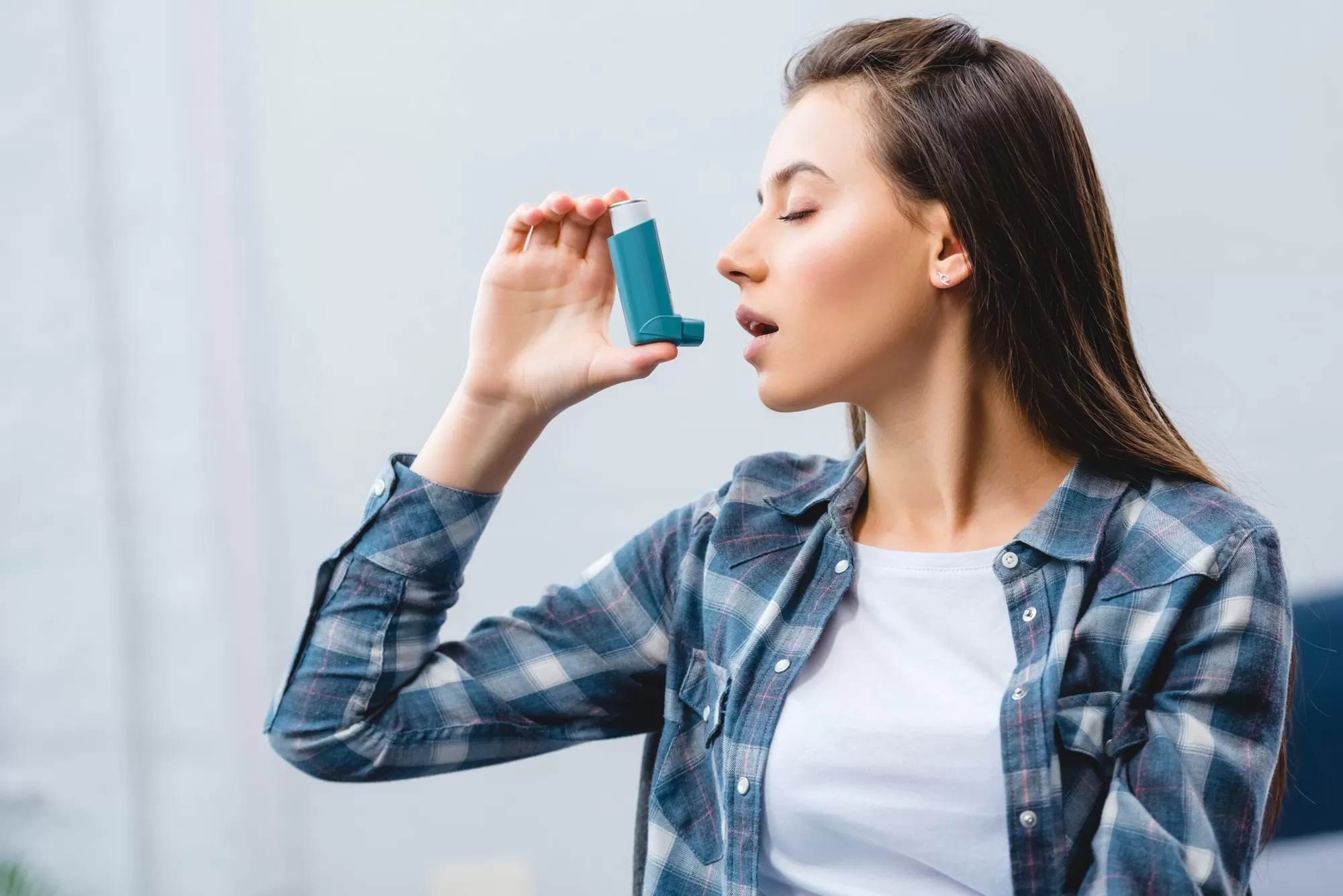
An asthma inhaler is the simplest life-saver most people will ever own — and the one most people use wrong. Studies published by the European Respiratory Journal and Australia's National Asthma Council consistently show that up to 70% of asthmatics use their puffer incorrectly, delivering as little as half the intended dose to their lungs. When you're mid-attack, gasping for air, that gap between "used it" and "used it correctly" can be the difference between catching your breath in 30 seconds and calling 000.
This 2026 guide walks you through the exact technique recommended by Australian respiratory specialists, plus why wearing a Mediband asthma alert bracelet is the other half of every asthmatic's safety net.
What Is Asthma (And Why Inhaler Technique Matters)
Asthma is a chronic respiratory condition where the airways become inflamed, tighten and produce excess mucus in response to triggers like exercise, cold air, allergens, respiratory infections, smoke or stress. During an attack, wheezing, coughing and chest tightness kick in fast, and the harder it is to breathe, the harder it becomes to use your inhaler correctly. That's the cruel irony — the moment you need perfect technique is the moment stress makes it hardest to execute.
Around 2.7 million Australians (11% of the population) live with asthma. Children under 14 and adults over 65 are most affected, and rates have climbed over the past decade thanks to better diagnosis. Most asthma is manageable — but only when the daily routine and the emergency response both work.
Quick Primer: Reliever vs Preventer Inhalers
Before we cover technique, a fast but vital distinction — because confusing these two is the number one avoidable asthma mistake.
- Reliever (rescue) inhaler — usually blue. Contains a fast-acting bronchodilator like salbutamol (Ventolin, Asmol). Opens airways within minutes. Use during an attack or just before known triggers (e.g. exercise).
- Preventer (controller) inhaler — usually orange, brown, or purple. Contains inhaled corticosteroids like budesonide (Pulmicort) or fluticasone (Flixotide). Reduces inflammation slowly. Use every day, morning and evening, even when you feel fine.
- Combination inhaler — purple (Seretide), red (Symbicort) — preventer + long-acting reliever in one device.
If you only own a blue reliever and you're using it more than twice a week, see your GP. You almost certainly need a preventer — and your asthma is not well controlled.
Recommended for you
Products related to this article
Hand-picked to go with what you just read.
How to Use Your Asthma Inhaler — The Correct 10-Step Technique

This is the technique for a standard metered-dose inhaler (MDI) — the most common "puffer" style. Ideally, use it with a spacer (see the next section).
- Remove the cap and check the mouthpiece is clean and clear of debris.
- Shake the inhaler vigorously for 10–15 seconds. This mixes the propellant with the medication.
- Stand or sit up straight. Good posture opens your airways.
- Breathe out fully away from the inhaler. Empty your lungs as much as comfortably possible.
- Put the mouthpiece between your teeth and close your lips around it — don't let your tongue block the opening.
- Tilt your head slightly back so your throat is open.
- Start inhaling slowly through your mouth, then press the canister down at the start of that breath.
- Continue inhaling slowly and deeply for about 3–5 seconds. This is the step most people rush.
- Hold your breath for 5–10 seconds. This lets the medication settle in your airways instead of being exhaled.
- Remove the inhaler and breathe out gently. Wait 30–60 seconds before your next dose if more are prescribed.
If you're using a preventer (steroid) inhaler, rinse your mouth with water and spit afterwards. This reduces oral thrush and hoarseness — a common side effect most people don't know about.
Why You Should Almost Always Use a Spacer
A spacer is a plastic chamber that sits between the puffer and your mouth. When you press the inhaler, the medication sits briefly in the chamber instead of firing straight to the back of your throat, where a lot of it would hit the palate and get swallowed.
Benefits of using a spacer:
- Delivers up to 30% more medication to your lungs compared to a puffer alone.
- No timing pressure — you don't have to coordinate the press with the inhale perfectly.
- Reduces side effects of steroid inhalers (oral thrush, hoarseness).
- Essential for children under 7, who can't reliably coordinate timing, and very helpful for adults over 60.
- Vital during an attack, when coordination falters.
Spacer technique: press the puffer once into the spacer, then take 4–6 slow tidal breaths through the mouthpiece (or mask for kids). Repeat if another dose is prescribed.

First Aid for Asthma — The 4 x 4 x 4 Rule
When a severe attack hits, the National Asthma Council's "First Aid for Asthma" (the 4 x 4 x 4 rule) is what every asthmatic and their loved ones need to know. Print it, photograph it, stick it to the fridge:
- Sit the person upright. Do not lie them down.
- Give 4 puffs of blue reliever, one puff at a time, through a spacer. Take 4 breaths between puffs.
- Wait 4 minutes. If there is no improvement, give another 4 puffs.
- Call 000 immediately if: no improvement after the second round of 4 puffs, breathing is very difficult, lips are blue, or symptoms return within 3–4 hours.
While waiting for the ambulance, keep giving 4 puffs every 4 minutes. More than 4 puffs of salbutamol at once will not harm someone, even if it turns out they don't have asthma.
Why Asthmatics Should Wear a Medical Alert Bracelet
An inhaler protects you when you can reach it, when you have time, and when you can use it correctly. But what if your attack hits mid-run? What if you pass out before reaching your puffer? What if the paramedic who arrives doesn't know your name, your GP, your preventer, or whether you also carry allergies or epilepsy?
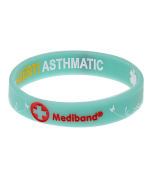
A Mediband asthma alert bracelet is the second half of every asthmatic's safety kit. It's engraved or printed with:
- The diagnosis: Asthma
- Any co-occurring conditions (severe allergy? heart condition? diabetes?)
- Your name and an emergency contact
- Optional: "Preventer: Symbicort" or "Allergic to aspirin" for unusual triggers
Paramedics are trained to check the left wrist within the first 30 seconds on scene. A bracelet ensures you're treated correctly even when you can't speak — and it flags crucial details like aspirin-induced asthma (AIA) that would otherwise be missed.
Looking After Your Inhaler
- Clean the mouthpiece weekly — wipe with a dry cloth, don't use water unless the device label allows.
- Track the dose counter. Don't rely on "it still feels full" — most counters are accurate and most puffers are empty before they feel empty.
- Replace the puffer before the expiry date printed on the canister.
- Keep one at home, one in your bag, one at the office or school — and tell someone at each location where it is.
- Check your spacer yearly. Plastic spacers can develop static that traps medication.
Your Asthma Action Plan
Every asthmatic should have a written Asthma Action Plan from their GP. It lists your preventer, your reliever, your triggers, your warning signs, and exactly what to do as symptoms escalate — from mild flare to emergency. If you don't have one, book a long consultation with your GP and ask for it by name. The template is free and standardised across Australia.
Pair that plan with correct inhaler technique, a spacer for every dose, and a Mediband asthma alert bracelet — and you have a full safety system. Most Australian asthmatics never need emergency care if these four components are in place.
Breathe easy. Worry less. Live more.
Carry your asthma details
In an asthma emergency, responders act faster when your condition is visible. Shop asthma medical alert bracelets engraved with your triggers, medication and emergency contact.
Frequently Asked Questions
How do I know if I'm using my asthma inhaler correctly?
Common signs of incorrect use: puffer "fires" before you start inhaling, you can taste the spray on your tongue instead of feeling it in your lungs, you cough right after each dose, or you don't hold your breath for 5–10 seconds. If any of these sound familiar, ask your GP or pharmacist to watch you use it — this is a free check most pharmacies offer on the spot.
Do I really need a spacer with my inhaler?
Almost always yes — especially for children, anyone over 60, or anyone during an asthma flare-up. A spacer slows the spray, lets you inhale more deeply, and delivers up to 30% more medication to your lungs. The National Asthma Council recommends using a spacer for every dose with a metered-dose inhaler (MDI) "puffer."
What's the difference between a reliever and a preventer inhaler?
Reliever inhalers (usually blue — salbutamol / Ventolin) open your airways fast during an attack. Preventer inhalers (orange / brown / purple — corticosteroids like budesonide or fluticasone) reduce airway inflammation over weeks. You use a preventer every day even when you feel fine; a reliever only when symptoms flare. Using them the wrong way around is a common and dangerous mistake.
When should I call 000 during an asthma attack?
Call 000 immediately if: you're too breathless to speak a full sentence, your lips turn blue, you don't improve after 4 puffs of your reliever (with spacer), or symptoms come back within 3–4 hours. This is the ASCIA/National Asthma Council "First Aid for Asthma" 4 x 4 x 4 rule. Don't wait — severe asthma can become life-threatening in minutes.
Why should asthmatics wear a medical alert bracelet?
During a severe attack, an asthmatic may be unable to speak, too breathless to answer questions, or unconscious. A Mediband asthma alert bracelet tells paramedics exactly what's wrong in seconds, flags any co-occurring conditions (like allergies or heart disease), and lists your emergency contact. It's especially important for kids, teens and anyone who exercises or travels alone.
Reviewed by the Mediband team. This article is general information and is not a substitute for medical advice.

Written by
Founder, Mediband
Founder of Mediband; over 20 years providing medical IDs worldwide.
← Previous
5 Ways to Prevent Type 2 Diabetes (2026 Australian Guide)
Next →
8 Tips for Coping With a Chronic Health Condition (And Living Well)
Comment(s)