
How to Keep Kids with Food Allergies Safe at School: A Parent's Practical Guide
February 09, 2012

Approximately 1 in 13 children has a food allergy — roughly two children in every classroom. And according to the Food Allergy Research & Education organisation (FARE), more than 40% of those children have experienced a severe allergic reaction, including anaphylaxis. For parents sending a child with a food allergy to school, the question isn't just about packed lunches — it's about ensuring teachers, classmates, and the school environment are all prepared to keep your child safe.
This guide covers everything you need to know: understanding common allergens, working with your school, reducing classroom risk, and why a medical alert bracelet is an essential piece of your child's daily safety plan.
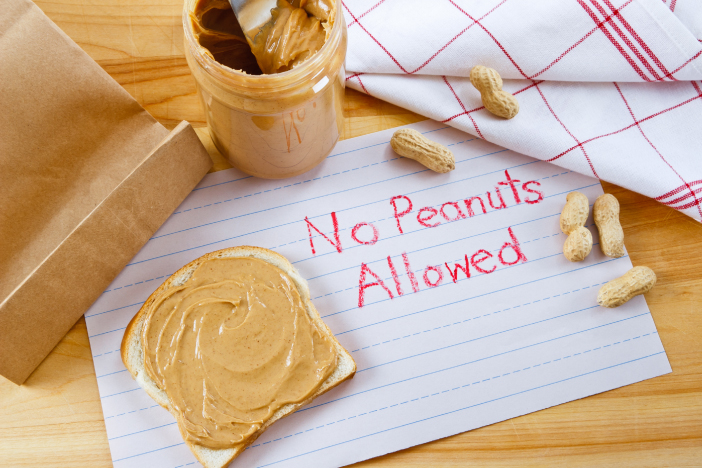
The Growing Challenge of Food Allergies at School
Food allergy prevalence in children has increased by 50% over the past decade, according to a 2025 clinical report from the American Academy of Pediatrics. That growth puts real pressure on schools that weren't designed with allergen management in mind — open lunchrooms, shared surfaces, classroom birthday celebrations, and food-based rewards are now potential hazards for millions of children.
The numbers are sobering:
- 16% of children with food allergies have experienced a reaction at school or daycare (FARE)
- 79% of school-based reactions occur in the classroom — not the lunchroom (Journal of Allergy and Clinical Immunology)
- 31.8% of school nurses reported at least one anaphylaxis episode at their school in the prior year
- Every 10 seconds, a food allergy reaction sends someone to the emergency room
Schools are increasingly required to have food allergy management plans, but the day-to-day safety of your child depends significantly on the preparation you do before the school year begins.
Understanding the Top Food Allergens in Children
Nine foods account for the vast majority of food allergy reactions in children. Understanding which ones pose the highest risk — and how they show up in unexpected places — is the foundation of allergen management.
Peanuts and Tree Nuts
Peanuts are the most common cause of fatal anaphylaxis in children. Tree nut allergies (almonds, cashews, walnuts, pecans) are separate but often co-occur. Peanut proteins are highly stable and can remain on surfaces and in the air in confined spaces — a particular risk in classrooms and on school buses. Even trace amounts can trigger a severe reaction in sensitised children.
Dairy and Eggs
Cow's milk and egg allergies are the most common food allergies in infants and young children. While many children outgrow these allergies by school age, those who don't face challenges in virtually every school food environment — from cafeteria meals to classroom birthday treats. Both allergens are hidden in countless processed foods.
Other Common Allergens
Wheat (gluten), soy, sesame, fish, and shellfish round out the major allergen list. Many children with one food allergy have multiple allergies, making label-reading and ingredient verification an ongoing daily task. Schools must be aware of all relevant allergens for each child — not just the most common ones.
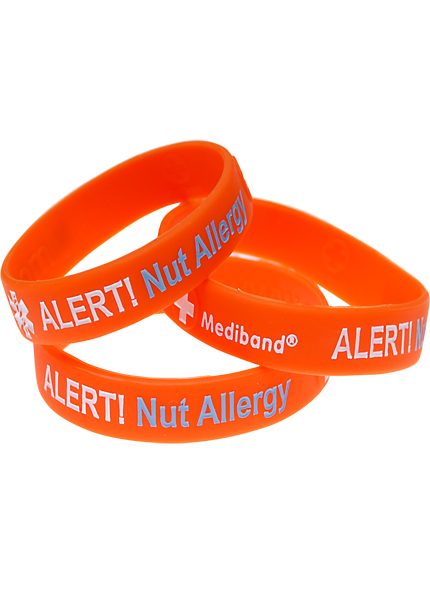
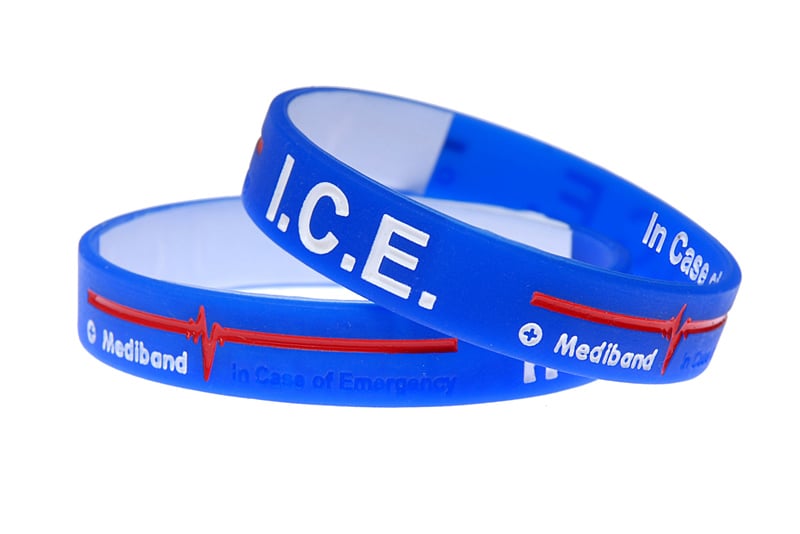
Shop Allergy Medical Alert Bracelets for Kids
Make sure your child's allergies are visible to teachers, first aiders, and emergency responders — every day.




How to Prepare Your Child's School for Food Allergies
The most important thing you can do before the school year starts is communicate clearly and get everything in writing. A verbal agreement with a teacher is not enough — your child's allergy management needs to be embedded in the school's official procedures.
Notify the School and Classroom Teacher
Schedule a meeting with the school principal, your child's teacher, and the school nurse (if available) before the first day. Bring written documentation from your child's doctor outlining the diagnosis, severity, and emergency protocol. Confirm that all school staff who interact with your child — not just classroom teachers — are informed. This includes canteen staff, sports coaches, and excursion supervisors.
Create a Written Allergy Action Plan
Work with your child's doctor to create a formal Food Allergy Action Plan. This document should detail:
- The specific food(s) your child is allergic to
- Symptoms of a mild-to-moderate reaction and what to do
- Symptoms of anaphylaxis and what to do (call emergency services, use epinephrine)
- Your child's prescribed medications and dosages
- Your contact details and your doctor's contact details
Provide a copy to the school, classroom teacher, and school nurse. Laminate one and attach it to your child's bag or keep it with their EpiPen.
Ensure Epinephrine Is Available and Accessible
If your child has been prescribed an epinephrine auto-injector (EpiPen or equivalent), there should be at least one device at school — ideally two: one kept with your child and one stored with the school nurse or in a central location. Confirm that staff who supervise your child know where it is stored and are trained to administer it. Check the expiry date at the start of each school term.
Classroom and Lunchroom Strategies to Reduce Allergen Risk
Schools and parents can work together to create an environment that significantly reduces the risk of accidental allergen exposure. These practical strategies make a measurable difference.
Allergen-Free Zones and Safe Seating
Many schools now operate allergen-free tables in the cafeteria or designated allergen-aware seating areas. These aren't about isolation — they're about creating a predictable, safe space where your child can eat without anxiety. If your school doesn't already have this, you can request it. Equally important: banning food on the playground and school bus, where supervision is lower and cross-contamination is harder to control.
Communicate About Food in the Classroom
Classroom celebrations, cooking activities, and food-based rewards are common triggers for school-based reactions. Speak with your child's teacher about alternatives: non-food rewards, store-bought treats with full ingredient lists (no home-baked goods), or allergen-free options for celebrations. Many schools have now formalised "no homemade food" policies for exactly this reason.
Teach Your Child to Advocate for Themselves
Older children should know their diagnosis clearly — not just "I can't eat peanuts" but "I have a severe peanut allergy and I carry an EpiPen." Teach your child to politely decline food they haven't personally verified, to tell an adult immediately if they feel unwell after eating, and to recognise early symptoms (tingling mouth, hives, stomach pain). Age-appropriate self-advocacy is one of the most powerful protective factors available.

Why Your Child Should Wear a Medical Alert Bracelet at School
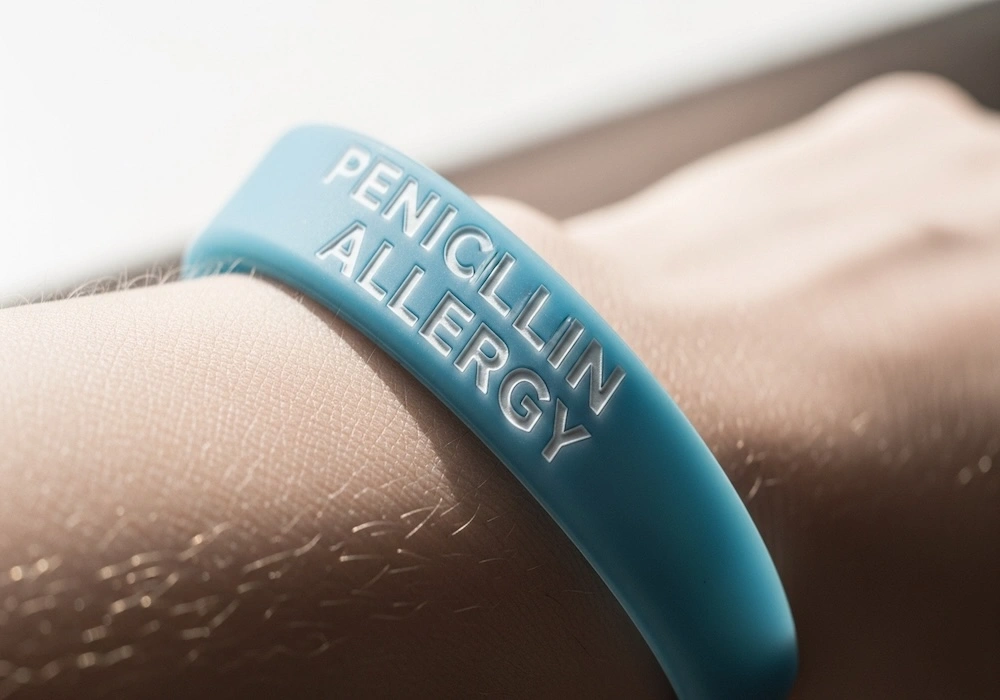
Even with the best preparation, accidents happen. A child picks up the wrong snack. A classmate shares food without realising the risk. A reaction happens on a school excursion, far from the usual staff and routines. In those moments, a medical alert bracelet is often the fastest way for a first responder or teacher to understand what's happening and what to do.
A medical alert bracelet worn on your child's wrist communicates instantly — even if your child can't speak, is unconscious, or panics and can't remember their allergy details. For first aiders without your child's action plan to hand, seeing "PEANUT ALLERGY — USE EPIPEN" on a bracelet could be the difference between immediate, correct treatment and dangerous delay.
Mediband's range for children includes soft silicone write-on bands and pre-printed allergy bands designed to be comfortable, durable, and actually worn every day. Bright colours and kid-friendly designs mean children are more willing to wear them consistently — which is the only way they work.
What to Do If an Allergic Reaction Happens at School
Even with thorough prevention in place, every parent and school staff member should know what to do if a reaction occurs. Speed matters — anaphylaxis can become life-threatening within minutes.
- Identify the reaction early. Mild symptoms include hives, itchy skin, swelling of the lips or face, runny nose, or stomach pain. Severe symptoms include difficulty breathing, throat tightening, drop in blood pressure, or loss of consciousness.
- For mild reactions: Administer prescribed antihistamine if indicated in the action plan. Monitor closely and contact parents.
- For severe reactions (anaphylaxis): Use the epinephrine auto-injector immediately. Call emergency services (000 in Australia, 911 in the US, 999 in the UK). Lay the child flat with legs raised (unless breathing is difficult). A second dose of epinephrine can be given after 5 minutes if symptoms don't improve.
- Do not wait to see if symptoms improve before using epinephrine in a severe reaction. The risk of under-treating anaphylaxis is far greater than the risk of using epinephrine.
- After the reaction: All children who have received epinephrine must be taken to hospital for observation, even if they appear to have recovered.
Frequently Asked Questions
How do I tell my child's school about a food allergy?
Book a meeting with the principal, classroom teacher, and school nurse before the school year begins. Bring written documentation from your child's allergist, including a signed Food Allergy Action Plan. Confirm that all staff who supervise your child — including canteen staff, sports coaches, and excursion supervisors — are informed in writing.
Should my child with a food allergy carry their own EpiPen to school?
Yes — for children old enough to understand its use (generally 10 and above), carrying their own epinephrine auto-injector is strongly recommended. Schools should also have a second device stored in a central location. Always check expiry dates at the start of each school term and replace promptly.
What should a child's medical alert bracelet say for a food allergy?
Include the specific allergen (e.g. "PEANUT ALLERGY"), the action to take (e.g. "USE EPIPEN"), and an emergency contact number. For multiple allergies, list the most life-threatening first. Keep the text brief — responders need to read it at a glance in an emergency.
Can schools ban peanuts to keep allergic children safe?
Some schools implement peanut-free policies, but experts caution that complete bans can create a false sense of security and are difficult to enforce. A more effective approach combines allergy education, strict food-sharing rules, allergen-free zones, staff training, and ensuring children with severe allergies carry their own emergency medication and wear a medical ID.
How can I help my child feel confident wearing a medical alert bracelet at school?
Let your child choose their bracelet from a range of colours and styles — they're more likely to wear it consistently if they like how it looks. Frame it positively: the bracelet is their safety superpower, not a sign that they're different. Many children find that wearing one reduces anxiety, because they know help will come fast if they need it.

Share on Facebook

Share on X

Share on Pinterest
Comment(s)
Recent Posts


Kids Cooling Patch: A Safe, Gentle Way to Manage Fever
February 27, 2026
Are Stick on Thermometers Accurate? Pros, Cons, and Mor
February 23, 2026
Alcohol Gel Sanitiser: Top 5 Benefits for Your Health
February 19, 2026