
What Autism Spectrum Disorder Actually Means
"Autism" is one of those words people use confidently without always agreeing on what it covers. The technical term is Autism Spectrum Disorder (ASD) — and the keyword is "spectrum." ASD describes a wide group of related conditions that affect how a person processes information, communicates, and interacts with the world. One person's experience of autism can look very different to another's, even within the same family.
For parents who have just received a diagnosis (or are wondering whether to seek one), the most important thing to know is that autism is not a problem to be fixed. It's a different way of experiencing the world — one that comes with real strengths alongside its challenges. Understanding ASD properly helps you support your child, work effectively with schools and clinicians, and protect them in everyday situations including emergencies.
Common Symptoms Parents Notice First
Autism affects nerve cells in the brain, which in turn affects how information is processed. The behavioural patterns this creates are wide-ranging, but many parents notice the same recurring signals in young children:
Communication and Social Patterns
- Delayed speech, repeated phrases, or echoing what's heard
- Limited eye contact or difficulty reading facial expressions
- Difficulty with reciprocal conversation (back-and-forth)
- Strong preference for routines, distress when routines change
- Repetitive movements or rituals (spinning, lining up toys, hand flapping)
Sensory Differences
- Strong reactions to sounds, lights, textures, or smells
- Seeking deep pressure or repetitive sensory input
- Specific food preferences linked to texture or temperature
- Discomfort in busy public places (shopping centres, large gatherings)
Strengths Often Underrecognised
- Intense focus and depth of interest in chosen topics
- Strong pattern recognition and memory for facts/details
- Honesty and direct communication
- Logical and rule-based thinking — many autistic adults excel in maths, science, music, and engineering
This combination — intense interests, pattern strength, sensory differences — is what's called "savant" traits at the extreme but exists on a quieter spectrum in many autistic kids and adults.
Recommended for you
Products related to this article
Hand-picked to go with what you just read.
Social Effects on Autistic Children
Difficulty interpreting non-verbal communication causes social challenges for autistic children at school and on playgrounds. Studies estimate that around 55% of human communication is non-verbal — body language, tone, facial expression, implied meaning. For an autistic child, decoding all of that simultaneously is exhausting and often inaccurate.
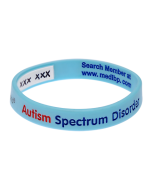
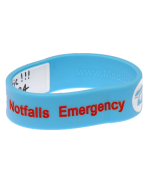
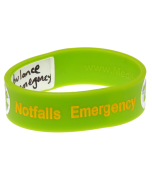
The result can be social exclusion, friendship struggles, and bullying. According to HealthDirect's autism guidance, early intervention and ongoing support can dramatically improve social outcomes. Specific medical alert bracelets such as autism alert bands help by:
- Telling teachers, casual relief teachers, and excursion leaders about the child's diagnosis
- Communicating to bystanders that a meltdown is sensory, not behavioural
- Letting paramedics and ER staff adjust their approach for non-verbal or sensory-affected children
- Carrying emergency contact info if the child becomes separated from family
While some parents feel uncomfortable identifying their child publicly, deliberate visibility usually creates more support, not less. Schools, clinicians, and trained adults respond better when they know.
Autism and Loneliness — A Common Misconception
A persistent myth is that autistic children prefer to be alone. Research suggests the opposite: autistic individuals report higher rates of loneliness than neurotypical peers. The pattern isn't a lack of desire for relationships — it's a different approach.
Many autistic kids form deep, intense bonds with a small number of peers rather than wide casual friend groups. The quality of those friendships is often more important than the quantity. Parents who pressure their children to "make more friends" can unintentionally communicate that the child's natural friendship style is wrong — when in fact it's just different.
What Helps
- Take a genuine interest in the few friendships your child has
- Help structure social interactions when needed (one friend at a time, a clear activity, a clear end-time)
- Connect with other autism-affected families — peer modeling helps both kids and parents
- Talk openly with your child about how their brain works — naming the difference reduces shame
Safety Considerations for Autistic Children
Some specific safety considerations for parents and carers:
Wandering / Elopement
Many autistic children have a strong drive to wander, sometimes toward water, traffic, or other hazards. Layered safety (door alarms, GPS trackers, identification, swimming lessons) is essential. A clear medical alert bracelet with name, "Autism / Non-verbal" and emergency contact saves precious minutes when a child wanders away from family or school.
Sensory Overload Emergencies
A meltdown at a hospital, airport, or shopping centre can look from the outside like aggression or panic. The bracelet flips bystander response from confusion to support — and tells security or first responders to call for a parent rather than restrain.
Co-occurring Medical Conditions
Autistic children have higher rates of food allergies, epilepsy, sleep disorders, and gastrointestinal conditions. If any of these apply, list them on the bracelet alongside the autism alert. The medical wallet card carries fuller details for emergency staff.
Working with Your Child's School
Schools that work with parents proactively dramatically improve outcomes for autistic children. Steps that help:
- Disclose at enrolment — give the school the official diagnosis and any developmental reports
- Set up an Individual Education Plan (IEP) with the teacher and special-needs coordinator
- Visit the classroom early so your child can familiarise with the space
- Provide sensory tools — fidgets, headphones, weighted lap pads — and explain how/when your child uses them
- Brief casual relief teachers at the start of each term — this is often the gap where autistic kids' needs are forgotten
- Pair with a medical alert bracelet — a visible signal that crosses staff handovers
Frequently Asked Questions
Should my autistic child wear a medical alert bracelet?
Strongly recommended — particularly for children who are non-verbal, prone to wandering, or have sensory differences that can be misinterpreted as behavioural in emergencies. The bracelet flags the diagnosis to teachers, carers, paramedics, and bystanders, and carries emergency contact info if the child is separated from family.
What information should be engraved on an autism alert bracelet?
Five essentials: child's first name, "Autism" or "ASD" alert, communication note ("Non-verbal" or "Limited speech" if applicable), parent/carer phone number, and any co-occurring condition (epilepsy, food allergy, etc.). Pair with a wallet card for fuller information.
How do I help my autistic child cope with sensory overload at school?
Combine practical tools (noise-cancelling headphones, fidgets, weighted lap pad, sensory breaks) with a written sensory plan shared with teachers. Identify safe quiet spaces in the school. Brief casual relief teachers at the start of each term. A visible medical alert bracelet helps any staff member respond appropriately during a meltdown.
Why do autistic children seem socially withdrawn — do they prefer being alone?
Research suggests the opposite. Autistic children typically experience more loneliness than neurotypical peers but build relationships differently — fewer, deeper friendships rather than wide casual ones. Pressuring them to "make more friends" can backfire. Better to support the friendships they have and connect with other autism-affected families.
What's the difference between autism, Asperger syndrome, and ASD?
Modern diagnostic systems combine these into "Autism Spectrum Disorder" (ASD). Asperger syndrome was previously a separate diagnosis for autism without intellectual disability or language delay; today, it's considered part of the ASD spectrum. Other forms (PDD-NOS, childhood disintegrative disorder) are also now grouped under ASD.

Written by
Founder, Mediband
Founder of Mediband; over 20 years providing medical IDs worldwide.
← Previous
Dealing with Alzheimer's: 5 Practical Ways to Make Caring Easier
Next →
4 Ways a Medical ID Bracelet Could Save Your Life
Comment(s)