

By Michael Randall · Founder, Mediband
Medically reviewed · Updated August 2025 · 12 min read
Medically reviewed · Updated August 2025 · 12 min read
Are You a Fan of Dr Google? — Smart Health Research 2025
Updated August 2025. Over 80% of Australian adults search their symptoms online before booking a GP (Australian Patient Insights Report 2024). Done well, this is the most valuable health-literacy tool of the last 30 years. Done badly, it triggers anxiety spirals, wastes hours in waiting rooms, or worse — missed diagnoses because someone trusted a forum over a real doctor.
This guide is the practical, evidence-based Australian playbook for using “Dr Google” well: which websites are trustworthy, which red flags say “stop searching, call a doctor”, and how to walk into a GP appointment better-informed without being the patient who diagnoses themselves wrong.
Why “Dr Google” matters
- 4 in 5 Australian adults search symptoms before a GP visit
- 62% change their decision to see a doctor based on what they find
- 27% report feeling more anxious after symptom-searching (cyberchondria)
- 11% have delayed treatment for a serious condition because they self-reassured online
- The average symptom search consumes 18 minutes and visits 5 different websites
The internet is the new front door of healthcare. Most Australians use it. The question is how to use it well.
Recommended for you
Products related to this article
Hand-picked to go with what you just read.
The five Australian health websites you should bookmark
- Healthdirect — healthdirect.gov.au — government-funded, peer-reviewed, integrates 24/7 nurse helpline 1800 022 222
- Better Health Channel — betterhealth.vic.gov.au — Victorian Government, exceptionally well-written for laypeople
- RACGP — racgp.org.au — for clinical-level details, used by Australian GPs themselves
- Therapeutic Guidelines — tg.org.au (paid) — Australian gold-standard treatment protocols
- HealthEngine — healthengine.com.au — for booking + symptom-checker that links to real GPs
Add a condition-specific source for your conditions:
- Diabetes Australia — diabetesaustralia.com.au
- Asthma Australia — asthma.org.au
- Heart Foundation — heartfoundation.org.au
- ASCIA (allergy) — allergy.org.au
- Beyond Blue (mental health) — beyondblue.org.au
- Cancer Council — cancer.org.au
Red-flag websites to avoid
- Anonymous forums where commenters claim to be doctors but aren’t verified
- Sites that promise a single “cure” for many conditions
- Sites without an “About Us” section identifying editors and medical reviewers
- Sites pushing supplements before discussing your symptoms
- Sites whose privacy policy harvests your health data for marketing
- Wikipedia for diagnoses (great for context, not for personal decisions)
- TikTok / Instagram health influencers without medical credentials
How to ask Dr Google smart questions
The quality of your answer depends entirely on the quality of your search query. Tips:
- Add “Australia” to localise results (Australian medications, services, GPs)
- Add the year (“2025”) to filter out 2003-era misinformation
- Use precise terms: “chest pain on exertion left side” not just “chest pain”
- Stack symptoms: “fatigue + weight loss + night sweats” finds different (and more accurate) results than each alone
- Add severity + duration: “mild headache 3 days” gets different advice than “worst headache of my life”
Red flags that mean STOP searching, call a doctor NOW
Some symptoms warrant zero Dr Google and an immediate call to a GP, urgent care, or 000:
- Chest pain — especially radiating to jaw, arm, or back
- Sudden severe headache — “worst headache of my life”
- One-sided weakness or facial droop — stroke FAST signs
- Difficulty breathing — not from exertion
- Loss of consciousness or fainting for unclear reasons
- Severe abdominal pain
- Sudden vision loss in one or both eyes
- Anaphylactic-style swelling — lips, tongue, throat
- Any sudden change in a child’s level of consciousness
For these, dial 000. Don’t search.
How to avoid cyberchondria
27% of Australian online symptom-searchers report increased anxiety after researching. Prevention tactics:
- Set a time limit — 15 minutes max per session
- Read only 2-3 trusted sources, not 8
- If you find a worst-case scenario, balance it with the most-common-cause scenario
- Note that statistically common is most likely — a headache is far more likely to be tension than a tumour
- Talk to a human — healthdirect 1800 022 222 has free 24/7 nurses
- Book the GP appointment, then stop searching while you wait
How to use what you find when seeing your GP
Best practice for GP visits:
- Bring a written list: symptoms, duration, severity, recent changes
- List medications + supplements you’re currently taking
- Mention your own research briefly: “I read X on Healthdirect, is that relevant?”
- DON’T announce your self-diagnosis — let the GP work through differential
- Ask clarifying questions about the GP’s reasoning
- Ask for a follow-up plan: “What should I watch for? When should I come back?”
When “Dr Google” actually helps
- Understanding a diagnosis your GP gave you (read up after, not before)
- Comparing medication options + side-effects with your prescriber
- Understanding your test results when the report says “mild” or “borderline”
- Finding evidence-based lifestyle changes for chronic conditions
- Locating specialist clinics, peer-support groups, or NDIS-funded services
- Researching a rare condition your specialist mentioned
For Australians with chronic conditions
If you live with a chronic condition, the rules tighten. Online research should complement, never replace, your specialist team. Always:
- Run any “new treatment” you find past your treating doctor
- Don’t stop or change medications based on online posts
- Join an Australian-based support group (Facebook, Reddit r/Australia — check moderation)
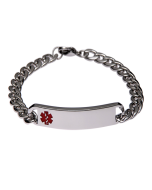
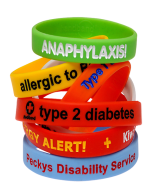
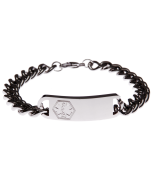
- Wear a visible medical alert bracelet for emergencies that bypass any search engine
- Use MedibandPlus QR profile for complex regimens that change frequently
The role of AI symptom checkers in 2025
AI chatbots (ChatGPT, Gemini, healthdirect’s SymptomChecker) are now everywhere. They’re generally safer than forum browsing because they cite mainstream sources, but they share weaknesses:
- Can confidently invent or oversimplify
- Don’t do physical examinations
- Don’t weigh personal context (age, family history, recent travel)
- May miss red flags a human GP would catch instantly
Use AI for research support, not for diagnosis. Healthdirect’s Symptom Checker has the strongest Australian clinical-validation track record.
The hidden cost of misinformation
Bad health information has measurable harm. ABC News 2024 reported on Australian preventable hospitalisations linked to social-media health misinformation: 1,400+ ED presentations annually from delayed treatment for serious conditions (chest pain, headaches, abdominal pain) after patients self-reassured online. Use trusted sources.
The Mediband perspective
Mediband’s customer-service team hears Dr Google stories every week. The healthiest patients use online research to:
- Recognise warning signs faster
- Book GP appointments sooner
- Communicate more clearly with their healthcare team
- Understand their own condition better over time
The unhealthy use is to replace medical care entirely or to fall into anxiety spirals. Balance.
The Mediband promise
Mediband supports 500,000+ Australian adults + families managing chronic conditions since 2008. Permanent laser engraving, medical-grade silicone + steel, NDIS-registered, Australian-designed and supported. Trusted by paramedics, GPs, allergy specialists, and Type 1 diabetes educators.
References & further reading
- Healthdirect (2024). Symptom Checker Clinical Validation Study.
- Australian Patient Insights Report (2024). Health-Information Seeking Behaviour.
- Better Health Channel — Health Literacy + Reliable Online Sources.
- ABC News (2024). Misinformation-Related ED Presentations in Australia.
- RACGP (2024). GP Guide to Patient Online Research.
Frequently Asked Questions
Quick answers from the Mediband team
Is it safe to use online symptom checkers?
Yes when used correctly — pick Australian government-backed tools (Healthdirect, Better Health Channel) and treat results as conversation-starters with a real GP, not as diagnoses. Avoid anonymous forums and supplement-pushing sites.
Why do I get more anxious after searching my symptoms?
It's called cyberchondria — online searches surface worst-case scenarios disproportionately. The most-common-cause result rarely makes the top of Google. Counter by setting a 15-minute time limit, reading 2-3 trusted sources only, and balancing rare worst-cases with statistically-common explanations.
Should I tell my GP what I found online?
Yes — briefly. 'I read X on Healthdirect, is that relevant?' is welcome. Avoid 'I think I have Y, here's the printout' — let the GP work through their differential diagnosis. Australian GPs increasingly expect informed patients and value the dialogue.
What are the biggest red flags that say 'stop searching, see a doctor now'?
Chest pain (especially radiating), sudden severe headache, one-sided weakness or facial droop, difficulty breathing, loss of consciousness, severe abdominal pain, sudden vision loss, anaphylactic swelling, or any sudden change in a child's consciousness. Dial 000 — don't search.
Is Wikipedia good for medical research?
Useful for context (how does the condition work, what's the history) but NOT for personal diagnosis. Wikipedia is unrefereed and may have outdated treatment information. For Australian clinical guidance, use Healthdirect or RACGP.
Can ChatGPT or Gemini replace a doctor visit?
No. AI chatbots are useful for research support, understanding diagnoses, and comparing medication options — but they don't do physical exams, can confidently invent details, and miss red flags a real GP catches instantly. Always verify AI suggestions with a qualified Australian doctor.
What's the single most trustworthy Australian health website?
Healthdirect (healthdirect.gov.au) — government-funded, peer-reviewed, integrates with the 24/7 nurse helpline 1800 022 222. Australian content tailored to Australian medications and services. Bookmark this one above all others.

Written by
Founder, Mediband
Founder of Mediband; over 20 years providing medical IDs worldwide.
← Previous
School Lunch Box Ideas for Kids With Allergies — 2025 Aussie Guide
Next →
Halloween Safety With Allergies — A 2026 Australian Parent's Guide
Comment(s)