
By Michael Randall · Founder, Mediband
Medically reviewed · Updated November 2025 · 12 min read
Medically reviewed · Updated November 2025 · 12 min read
Why Sleep Disorders Need a Medical Alert Bracelet — 2025 Australian Guide
Updated November 2025. Sleep medicine has changed dramatically in the past decade. Conditions that were once dismissed as snoring or insomnia are now recognised as life-threatening: sleep apnoea, narcolepsy with cataplexy, parasomnias, REM-sleep behaviour disorder, severe restless legs syndrome. Many require emergency-staff awareness because the patient may collapse, fall, present as confused, or have specific airway-management needs that paramedics can’t guess.
This guide explains why Australian sleep specialists at major centres including the Sleep Health Foundation, Melbourne sleep clinics, and the Australasian Sleep Association now routinely recommend medical alert bracelets to patients with significant sleep disorders. Built on 2024-2025 sleep medicine practice, with case examples from Australian sleep clinics.
The Australian sleep disorder snapshot
- 1.5 million Australians have diagnosed obstructive sleep apnoea (Sleep Health Foundation 2024)
- An estimated 3 million more remain undiagnosed
- 0.05% prevalence for narcolepsy with cataplexy (~12,000 Australians)
- 1 in 3 adults have inadequate sleep regularly (<7 hours per night)
- 10x increase in motor vehicle accident risk for untreated severe sleep apnoea
- 200%+ rise in cardiovascular event risk for untreated severe sleep apnoea
Recommended for you
Products related to this article
Hand-picked to go with what you just read.
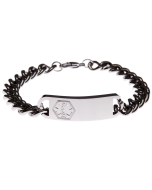
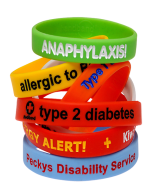
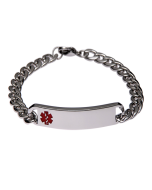
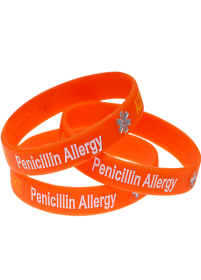
Sleep disorders that need medical alert ID
1. Severe obstructive sleep apnoea (CPAP-dependent)
Patients dependent on continuous positive airway pressure (CPAP) machines have specific emergency-care needs. If they collapse, present unconscious, or require intubation, paramedics need to know they don’t breathe normally without support and have an established CPAP protocol.
2. Narcolepsy with cataplexy
Sudden uncontrollable sleep attacks + cataplexy (muscle weakness triggered by emotions). Patients can collapse mid-conversation. Bystanders may mistake the episode for fainting, stroke, or substance use. A medical alert bracelet stating “Narcolepsy with Cataplexy — recovers spontaneously, do not restrain” prevents inappropriate emergency calls and treatment.
3. REM-sleep behaviour disorder
Patients act out their dreams — sometimes violently. Common in older adults; often a precursor to Parkinson’s disease. If they injure themselves or a partner during sleep, emergency staff need to know the underlying mechanism.
4. Severe parasomnias (sleepwalking, night terrors)
Adult sleepwalkers can drive cars, leave the house, climb stairs — with high injury risk. If found wandering or confused, ID helps reunite them with family quickly.
5. Idiopathic hypersomnia
Excessive sleepiness despite adequate sleep. Patients may pass out in inappropriate settings. The condition affects medication choices in emergency settings.
6. Sleep-related epilepsy
Some forms of epilepsy occur predominantly during sleep. Bystanders may mistake a nocturnal seizure for a heart attack or stroke. Medical alert ID with both epilepsy + the nocturnal pattern saves significant treatment time.
What sleep scientists tell their patients
Quotes from Australian sleep specialists at major sleep clinics (Sleep Health Foundation members, Royal Melbourne Hospital sleep unit, Woolcock Institute Sydney):
- “If you depend on CPAP overnight + drive long distances, your bracelet should say so.”
- “Cataplexy patients are mistaken for drunk patients more than 30% of the time when they collapse in public.”
- “Sleep-related seizures look like cardiac events to bystanders. The bracelet stops the wrong treatment.”
- “Travelling overseas with severe sleep apnoea? The bracelet IS your medical translator.”
The “close brush with death” pattern
Sleep specialists describe a recurring case pattern: a patient with previously-undiagnosed or under-treated severe sleep apnoea experiences a near-fatal cardiac event, motor vehicle accident, or fall. After the incident, the diagnosis is confirmed and the patient becomes an advocate for sleep-disorder awareness. The bracelet then becomes a daily safety device.
Common “close brush” scenarios:
- Falling asleep at the wheel due to untreated sleep apnoea
- Cardiac arrhythmia event during sleep
- Cataplexy collapse in a public setting
- Sleepwalking injury (stairs, vehicle, water)
- Mistaken arrest or hospital admission for nocturnal seizure
What to engrave for sleep disorders
- Specific condition (“Severe OSA + CPAP user”, “Narcolepsy with Cataplexy”)
- Critical instruction if relevant (“Recovers spontaneously, do not restrain”)
- Daytime medication if relevant (modafinil, sodium oxybate)
- First name + ICE contact
- For sleep-related seizures: add “Time seizure, call 000 if >5 min”
CPAP patients + travel
Australian CPAP users travelling internationally face hidden risks:
- Power outages can interrupt overnight therapy — cardiac stress next day
- Airline turbulence + sleep deprivation worsen daytime sleepiness
- Some hotels can’t provide distilled water for humidifiers
- Travel insurance may not cover untreated sleep apnoea events
A medical alert bracelet works regardless of language; international paramedics read English medical terminology. Carry a travel-CPAP backup battery + a sleep-specialist clinical letter.
Sleep hygiene for chronic-condition patients
Apart from medication + CPAP, daily habits matter:
- Consistent bed + wake times (within 30 minutes daily)
- Cool dark bedroom (under 19°C)
- No caffeine after 2 pm
- No alcohol before bed (worsens apnoea by 50-100%)
- No screens 60 minutes before sleep
- Side or back sleeping (NOT stomach for apnoea patients)
- Use bedroom only for sleep + intimacy
The shift-worker + sleep-deprived employee
Australian shift workers (nurses, paramedics, miners, truck drivers, hospitality) carry compounded sleep risk. The Sleep Health Foundation advocates rotating night shifts in a forward direction (morning → afternoon → night) and limiting consecutive nights to 4. A medical alert bracelet noting “Shift Worker — CPAP user” helps emergency staff understand both factors.
For older Australians
Sleep architecture changes with age. Older adults with multiple conditions (cardiovascular + sleep apnoea + Type 2 diabetes) carry the highest combined risk. Their medical alert bracelets typically include 2-3 conditions plus key medications. Multi-condition alert bracelets or QR-linked MedibandPlus profiles work best for complex cases.
How sleep medicine is changing in 2025
- Home sleep studies (HSS) now subsidised by Medicare for screening
- Smaller, quieter CPAP devices encouraging better compliance
- Mandibular advancement splints as alternative to CPAP for moderate apnoea
- Inspire implant therapy now available at some Australian hospitals
- Sleep medicine integrated with cardiovascular + endocrine clinics
If you suspect a sleep disorder, talk to your GP. Bulk-billed home sleep studies are widely available across Australia. Diagnosis is the first step; the bracelet is the safety device that follows.
The Mediband promise
Mediband supports 500,000+ Australian adults + families managing chronic conditions since 2008. Permanent laser engraving, medical-grade silicone + steel, NDIS-registered, Australian-designed. Trusted by Australian sleep specialists, GPs, and paramedics.
References & further reading
- Sleep Health Foundation Australia (2024) — Sleep Disorders Statistics + Treatment Guidelines.
- Australasian Sleep Association — Clinical Practice Guidelines for Sleep Disorders.
- Woolcock Institute of Medical Research — Sleep Apnoea + Cardiovascular Risk.
- Royal Australasian College of Physicians — Sleep Medicine Specialist Resources.
- National Heart Foundation Australia — Sleep Apnoea + Cardiovascular Disease Position Statement.
Frequently Asked Questions
Quick answers from the Mediband team
Should I wear a medical alert bracelet if I'm on CPAP?
Yes, if your apnoea is severe (AHI >30) or you have additional conditions like cardiac disease, hypertension, or diabetes. The bracelet alerts paramedics that you're CPAP-dependent — relevant for intubation decisions and overnight monitoring during hospital admission.
What does cataplexy look like to bystanders?
Sudden muscle weakness or collapse — often triggered by laughter, surprise, or strong emotion. Patient stays conscious but can't move. Bystanders frequently mistake it for fainting, stroke, low blood sugar, or substance impairment. A medical alert bracelet stating 'Narcolepsy with Cataplexy' prevents 000 calls and inappropriate treatment.
Can sleep apnoea cause sudden death?
Yes, in severe untreated cases. Cardiac arrhythmias triggered by repeated oxygen desaturation can cause overnight cardiac events. Untreated severe OSA increases cardiovascular event risk 2-4x. CPAP therapy reduces this risk back near baseline within 6-12 months.
Why do Australian sleep scientists advocate for medical alert bracelets?
Because sleep disorders are often invisible. Bystanders, paramedics, and ED staff have no way of knowing a patient has narcolepsy, cataplexy, severe apnoea, or sleep-related epilepsy without explicit information. The wrist bracelet bridges that information gap in the critical first 30 seconds.
Will my CPAP machine show up on airport security?
Australian airports (Sydney, Melbourne, Brisbane, Perth) all accommodate CPAP machines through security; they may swab the machine. International airports vary — bring a doctor's letter. Most airlines allow CPAP in cabin baggage; some inflight power outlets are CPAP-compatible (check pre-flight).
Are sleep studies covered by Medicare in Australia?
Home sleep studies (HSS) are subsidised by Medicare with a GP or specialist referral for symptomatic patients. In-laboratory studies are also Medicare-rebated with the right item codes. Private health funds typically cover the gap. CPAP machines are not Medicare-subsidised but are NDIS-claimable for eligible participants.
Can sleep deprivation lead to misdiagnosed emergencies?
Yes — severely sleep-deprived patients can present with confusion, slurred speech, motor coordination problems, and even hallucinations that mimic stroke, drug intoxication, or psychiatric emergency. Shift workers and chronic insomniacs are particularly affected. Medical alert ID listing sleep disorder + shift work helps.

Written by
Founder, Mediband
Founder of Mediband; over 20 years providing medical IDs worldwide.
← Previous
Diabetes: Types, Symptoms, and Why a Medical Alert Bracelet Could Save Your Life
Next →
Mediband Sponsors Black Dog Bike Ride — Riding for Mental Health
Comment(s)