
Elderly Medical Alert Bracelets: Making Safety Simple at Any Age

Why Elderly Alert Bracelets Matter More Than Most Realise
For older adults — especially those living independently or with mild cognitive change — a medical alert bracelet is one of the simplest, lowest-effort safety tools available. It needs no batteries, no charging, no app, and no fall sensor. It sits on the wrist and quietly does its job: telling anyone who finds an unwell older person exactly what they need to know in the first minute.
Medical alert IDs help in falls, in dementia-related wandering, in pacemaker checks, in unexpected ambulance transports, in the hospital admission process, and in routine GP visits where the doctor is meeting your parent or grandparent for the first time. According to HealthDirect's guidance on falls, accurate identification of risk is one of the most important factors in preventing serious injury — and the bracelet starts that conversation.

Specific Risks Where Elderly Bracelets Save Lives
Not every senior needs the same alert. The most common scenarios where a medical ID changes the outcome:
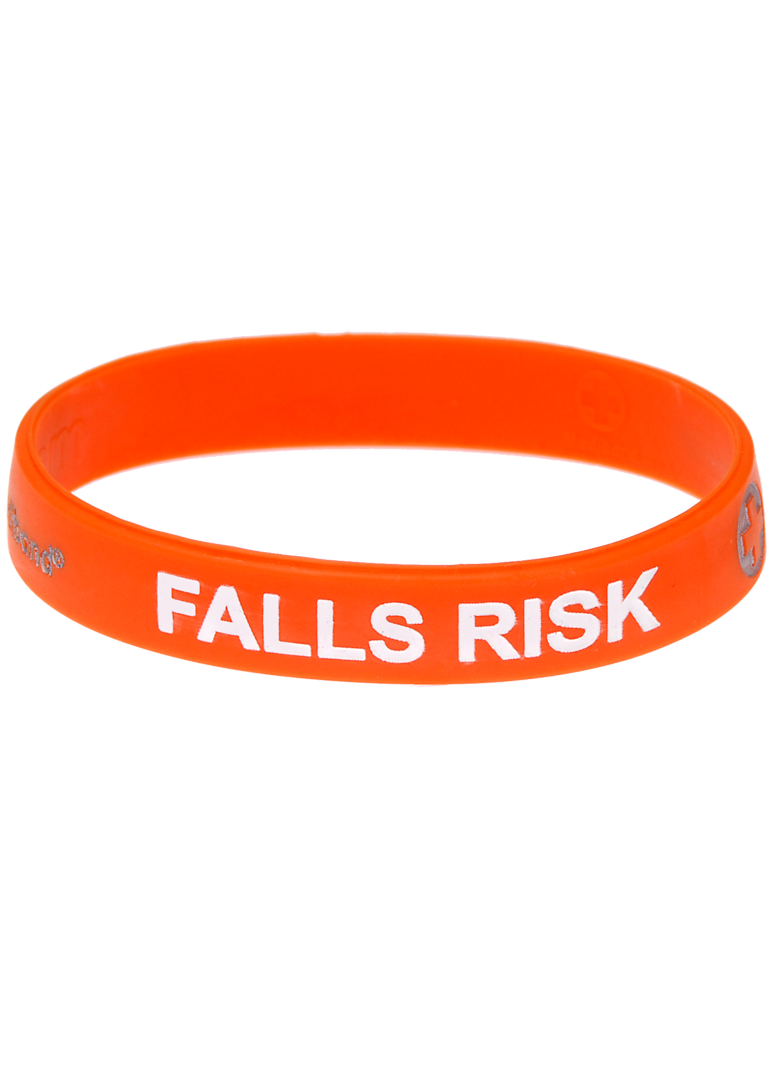
- Falls and fall-risk — bracelet tells responders this is not a one-off, and prompts cautious transfers.
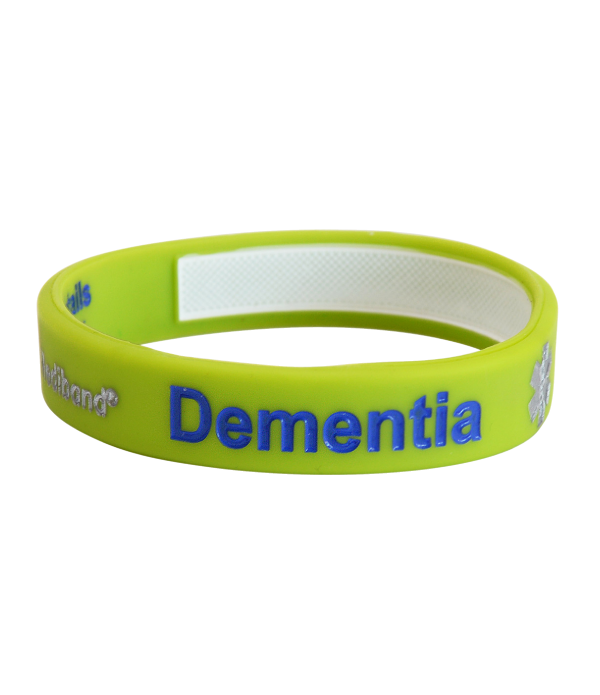
- Dementia and memory loss — wandering, confusion, lost-and-found situations all resolve faster.
- Pacemakers and implants — defibrillator energy and MRI safety depend on knowing about the device.
- Anticoagulants — Warfarin, Eliquis, Xarelto change every emergency response from a fall to surgery.
- Heart conditions — past heart attacks, stents, arrhythmias, or implanted defibrillators.
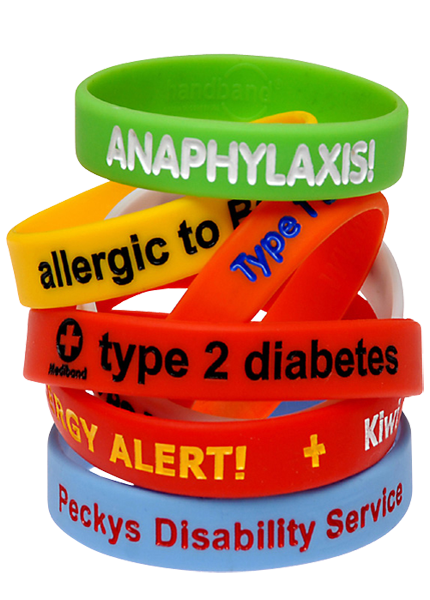
- Diabetes — particularly insulin-dependent seniors prone to hypos.
- Severe allergies — penicillin, sulfa, contrast dye, latex.
- Advance care directives — DNR or known wishes that staff need to honour.
What If My Loved One Has No Major Diagnosis?
Even healthy older adults benefit from a simple ID — at minimum, name, date of birth, an emergency contact, and any single critical detail (e.g. "Penicillin Allergy"). It costs nothing to wear and pays off in any unexpected situation, from confusion after surgery to disorientation after a faint at a shopping centre.
Shop Elderly Medical Alert Bracelets
Visible, dignified bands that protect older adults at home, on outings, and during hospital visits.

What Information to Engrave on an Elderly Medical Alert Bracelet
Less is more. First responders need to read the bracelet at arm's length, in a panic, sometimes through poor lighting. The five priority fields:
- First and last name
- Primary medical alert — "Falls Risk", "Dementia", "Pacemaker", "Warfarin", "Diabetic", "DNR"
- Critical medication or allergy — "No Aspirin", "Penicillin Allergy", "On Insulin"
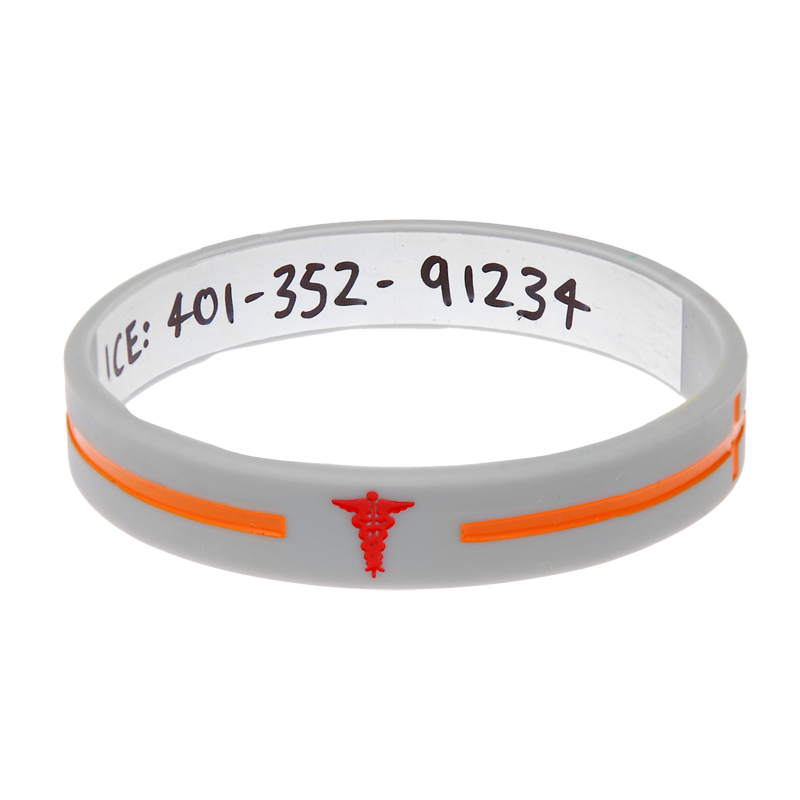
- Emergency contact phone number — answered 24/7 by family or carer
- "See wallet card" if more detail lives in a handbag or wallet
For people in residential aged care, also include the facility name and ward — useful when a transfer team picks them up from a community setting.
Choosing a Bracelet Your Loved One Will Actually Wear
The hardest part of any senior medical ID conversation isn't the engraving — it's getting the band on the wrist and keeping it there. Older adults have legitimate reasons to resist: jewellery feels foreign, sleeves catch, the band feels "labelling," or arthritis makes clasps a pain. Tactics that work:
Match the Style to the Person
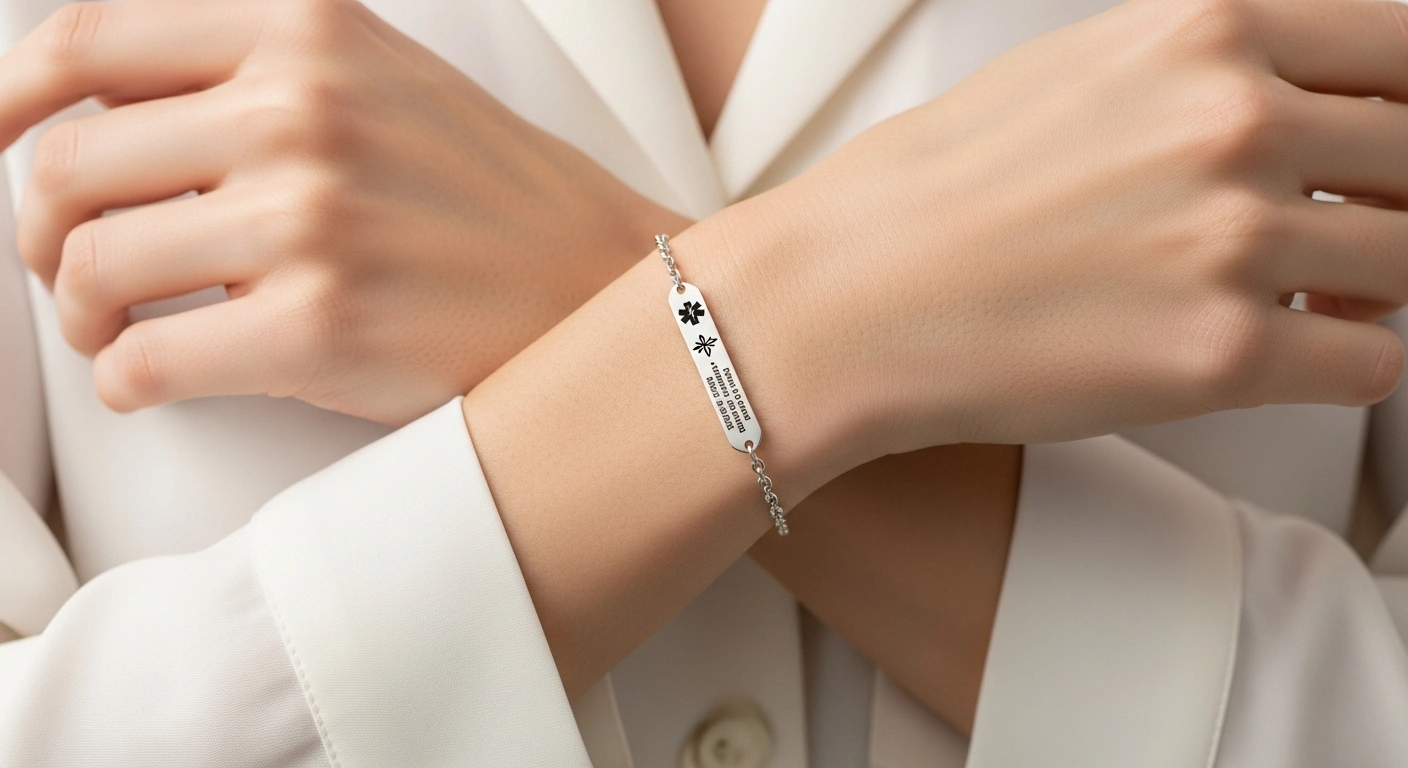
If your mother loves silver jewellery, pick a stainless or sterling silver design. If your father wears a watch, pick something that pairs well with it. Designer reversible bands that flip from "alert" to "decorative" suit people who feel uncomfortable looking medical all the time.
Easy Clasps
Magnetic clasps, snap clasps, or stretch fits beat lobster clasps for arthritic hands. The wearer should be able to put it on themselves — or have a carer do it once and leave it on for days.
Comfortable Materials
Older skin is fragile. Choose hypoallergenic stainless steel, silicone, or fabric. Avoid heavy metal that fatigues thin wrists, sharp edges, or charm-style bracelets that catch on bedrails or sleeves.
Sizing for Aging Wrists
Wrist size changes with weight, fluid retention, and arthritis. Adjustable bands or stretch fits handle these changes without forcing replacement. Measure carefully — a band that slips off won't help in an emergency.
Visibility
For dementia or falls risk, brighter bands (orange or neon green) increase the chance of being spotted by a stranger or passer-by. For dignity-driven daily wear, classic stainless or silver disappears under sleeves but is still found by paramedics in seconds.
Combining a Bracelet with Other Safety Tools
The bracelet is one part of a layered safety system. The fullest plan also includes:
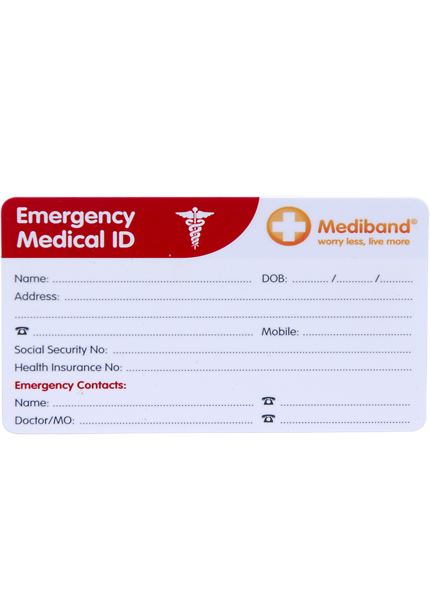
- A wallet card with full medications, doses, and recent surgeries — kept in handbag or wallet
- A fridge alert sticker — paramedics often check the fridge for medication lists in a home call-out
- A digital profile linked from a QR-code bracelet — for full history without engraving everything
- A care plan with the GP — shared with family and aged-care providers
- An advance care directive — documented wishes for end-of-life care
- A personal alarm or fall detector — automatic alerting when an event happens at home alone
Conversations Worth Having With Family
If you're choosing a bracelet for an elderly parent or spouse, treat the conversation as more than just shopping. Useful prompts:
- Who answers their phone? — confirm before engraving — pick the contact who actually picks up.
- Do they know what to do in an emergency? — go over the "if you fall and can't get up" plan.
- Are care plans updated? — include the GP and any specialist in the loop.
- What are their wishes? — DNR, advance care directives, preferred hospital, religious or cultural preferences.
- What if they refuse to wear it? — try a different format: a key chain, a watch insert, or a pocket wallet card.
Frequently Asked Questions
What's the most important medical alert for an elderly person to wear?
It depends on their condition. For someone on blood thinners, "Anticoagulant" is critical. For someone with dementia, a clear "Dementia / Memory Loss" alert with phone number is most important. For most older adults, the priorities are: falls risk, dementia/memory, anticoagulants, pacemaker, severe allergy, or diabetes — whichever applies.
What if my elderly parent refuses to wear a medical alert bracelet?
Try a different format: a key chain, a watch-band insert, or a wallet card. A pocket wallet card is the gentlest start. Designer reversible bands that flip between alert and stylish often persuade reluctant wearers. Lead by example by wearing one yourself, and tell a real story of someone whose ID changed an outcome.
Can a medical alert bracelet replace a personal alarm or fall detector?
No — they do different jobs. The bracelet identifies risk; the personal alarm or fall detector actively alerts someone when an event happens. Both belong in a comprehensive elderly safety plan: the bracelet says what's wrong, the alarm says that something has gone wrong.
How often should an elderly person's medical alert bracelet be updated?
Review every six months and immediately after any major change — new medication, new diagnosis, hospital admission, or change of carer. Older adults often have rapidly evolving care needs; an outdated bracelet that says the wrong thing is more dangerous than no bracelet at all.
Are medical alert bracelets covered by aged care funding or government subsidies?
Coverage varies by region and care package. Some home care packages cover medical alert devices; basic engraved bracelets are usually purchased privately. Many aged-care providers include them in welcome packs or partner with suppliers for bulk pricing. Ask your local provider or My Aged Care for specifics.
May 04, 2026
1

Share on Facebook

Share on X

Share on Pinterest
Recent Posts

Regards
Paula