
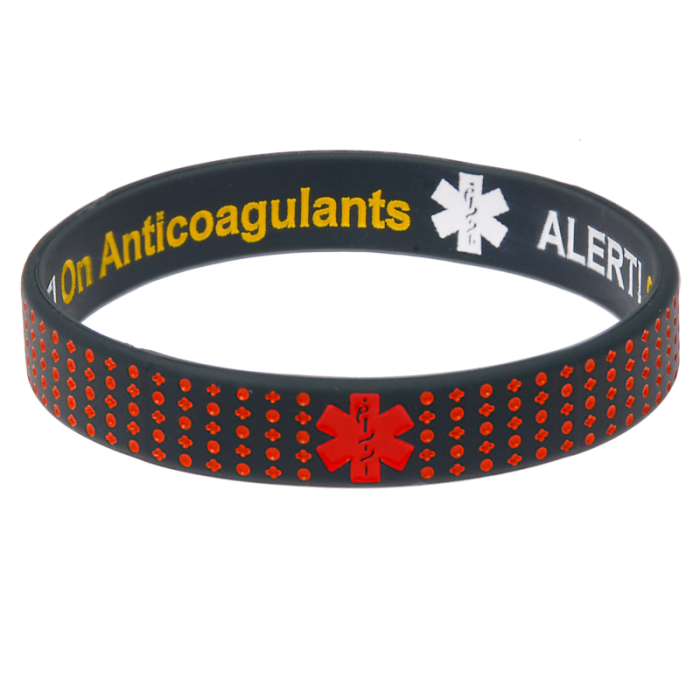
Anticoagulant Alert - Emergency Medical ID Bracelet (Reversible style)
US$ 7.70
SKU
D2303


Stay safe with our Anticoagulant Alert Medical ID Bracelet. Designed to alert medical personnel of your medication in emergencies, it's a vital tool for those on anticoagulant medication.
With a stylish reversible design and a clear medical logo, it ensures your crucial information is quickly and easily accessible
| SKU | D2303 |
|---|---|
| Manufacturer | Mediband |
Anticoagulant / Blood Thinner Medical Alert Bracelet
The Anticoagulant Alert bracelet is essential safety wear for anyone on warfarin, apixaban (Eliquis), rivaroxaban (Xarelto), dabigatran (Pradaxa), edoxaban (Lixiana) or any oral or injectable blood thinner. In an accident, trauma or unconscious admission, paramedics urgently need to know you're on anticoagulant therapy — it changes everything about how bleeding is managed, whether to reverse the medication, and how to dose new treatments.
Without this information, an internal or external bleed can spiral fast. The bracelet bridges the seconds between scene arrival and your medication record being found.
Why a Blood Thinner Bracelet Matters
Approximately 750,000 Australians take an oral anticoagulant for atrial fibrillation, mechanical heart valves, deep vein thrombosis, pulmonary embolism or stroke prevention. Each year tens of thousands present to emergency with trauma, falls or sudden illness. When paramedics see this bracelet:
- Reversal agents can be administered earlier — vitamin K for warfarin, prothrombin complex concentrate, andexanet alfa for factor Xa inhibitors, or idarucizumab for dabigatran
- Bleeding management shifts to higher-acuity protocols immediately
- Medication interactions are avoided in subsequent treatment
- Imaging decisions (CT scan for head trauma) are escalated automatically
- Surgical consults happen faster if intervention is needed
What to Engrave on an Anticoagulant Bracelet
Recommended engraving:
- Drug name — "Warfarin", "Apixaban", "Rivaroxaban", "Dabigatran" or generic class "Anticoagulant"
- Dose — e.g. "5mg daily" (optional but useful for ED dose decisions)
- Indication — e.g. "AF", "Mechanical valve", "Post-DVT"
- Your name
- Emergency contact — one mobile, relationship
Mediband's reversible design lets you put core info on one side and additional details on the other — future-proof if your medication changes.
Who Should Wear One
- Anyone on long-term oral anticoagulant therapy
- Patients with mechanical heart valves
- Atrial fibrillation patients on warfarin or DOACs
- Post-DVT and post-PE patients
- Stroke prevention patients
- Anyone on dual antiplatelet therapy after stent placement
- Patients on bridging therapy with low molecular weight heparin
How the Bracelet Works in Practice
Australian paramedic protocol on every unconscious patient or major trauma call includes a check for medical alert IDs — wrists, neck, ankles. The reversible Anticoagulant Alert bracelet displays the universal Star of Life symbol with the word "Anticoagulant" or your specific drug name clearly visible. Combined with the engraving, this gives the treating crew all the information they need in 4-6 seconds.
Care & Sizing
Medical-grade silicone, waterproof, dishwasher-safe, comfortable for 24/7 wear. 4-5 year lifespan. Available in S/M/L/XL. Soft, flexible band suits thin wrists, post-surgical wrists and elderly skin.
Related Medical Alert Bracelets
Frequently Asked Questions
Quick answers from the Mediband team
What is a blood thinner bracelet?
A medical alert bracelet engraved with the wearer's anticoagulant medication (warfarin, apixaban, rivaroxaban, dabigatran, edoxaban). It tells paramedics and ED staff the wearer is on a blood thinner so bleeding management, reversal agents and imaging decisions can be made immediately.
Do I really need one if I'm on Eliquis (apixaban) or Xarelto (rivaroxaban)?
Yes. Apixaban, rivaroxaban and dabigatran are still anticoagulants and have specific reversal agents (andexanet alfa for factor Xa inhibitors, idarucizumab for dabigatran). Paramedics need to know which drug you're on to administer the correct reversal — a bracelet saves critical minutes.
What should I engrave on it?
Drug name (e.g. 'Warfarin' or 'Apixaban'), optional dose, indication (AF, mechanical valve, post-DVT), your name, and one emergency contact. Keep it short and update if your medication changes.
Is the bracelet waterproof?
Yes — medical-grade silicone is fully waterproof and shower-safe. You can wear it 24/7 including in the pool, shower, dishwashing and gym. Lifespan is 4-5 years.
What if my medication changes?
The Mediband bracelet is engraved (not laser-etched) so it cannot be re-engraved — you'll need a replacement when your medication changes. Many customers keep a 'spare' size handy for quick swaps after a cardiology review.