

High blood pressure is one of the leading causes of death worldwide. That’s why it’s so important for you to stay on top of your health and know the symptoms of dangerously high blood pressure.

If you have already been diagnosed with hypertension, you may already know the risks and what to do in case of an emergency. Even so, it always helps to be prepared.

Here’s everything you need to know about hypertension, plus what to do in case of a medical emergency.

What considered "dangerous hypertension"? 

High blood pressure, or hypertension, is difficult to diagnose without regular checkups. For this reason, people call it as the “silent killer.”

Check the range of healthy blood pressure and learn more about what puts you at risk for hypertension to prevent life-threatening issues. If this disease happened to you, read on to learn about hypertensive crisis and how a medical ID bracelet can save your life.

What defines high blood pressure?

what define high blood pressure

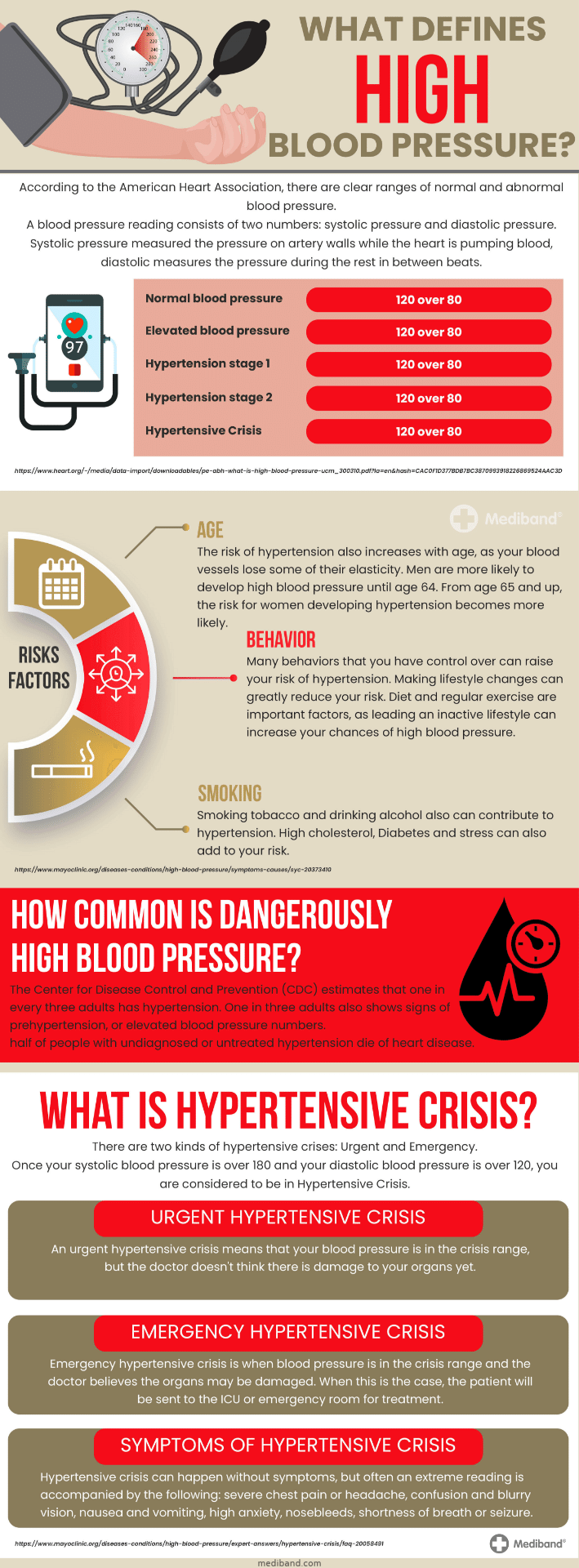
According to the American Heart Association, there are clear ranges of normal and abnormal blood pressure. A blood pressure reading consists of two numbers: systolic pressure and diastolic pressure. Systolic pressure measured the pressure on artery walls while the heart is pumping blood. Diastolic measures the pressure during the rest in between beats.  

  • Normal blood pressure: 120 over 80
  • Elevated blood pressure: 120-129 over less than 80
  • Hypertension stage 1: 130-139 over 80-89
  • Hypertension stage 2: 140 or higher over 90 or higher
  • Hypertensive Crisis: higher than 180 over higher than 120

These numbers do not vary from person to person, no matter what other factors make them different.

Blood pressure can elevate due to a dramatic change in temperature or a moment of stress. For this reason, hypertension is not usually diagnosed by one reading.  If when tested you present an elevated blood pressure, often you will test again a few minutes later. Official hypertension is usually diagnosed after a series of high readings. It is important to pay attention to your blood pressure measurements and you should check it often if your blood pressure is high.

Know your risks factors

There are several factors that can put you at risk for hypertension, although they are not the only causes of hypertension. If high blood pressure runs in your family, or you have another chronic illness, it is important to keep an eye on your numbers.

Age

The risk of hypertension also increases with age, as your blood vessels lose some of their elasticity. Men are more likely to develop hypertension until age 64. From age 65 and up, the risk for women developing hypertension becomes more likely.

Behavior

Many behaviors that you have control over can raise your risk of hypertension. Making lifestyle changes can greatly reduce your risk. Diet and regular exercise are important factors. Because leading an inactive lifestyle can increase your chances of hypertension.

Smoking

Smoking tobacco and drinking alcohol also can contribute to hypertension. High cholesterol, Diabetes, and stress can also add to your risk.

The above factors may be a reason to visit your doctor for blood pressure checks.

How common is dangerously high blood pressure?

Hypertension is extremely common in the United States.

The Center for Disease Control and Prevention (CDC) estimates that one in every three adults has hypertension. One in three adults also shows signs of prehypertension, or elevated blood pressure numbers.

Even though it is an extremely common disease, only about half of people with high blood pressure have their condition under control. This can be due to resistant hypertension, another health issue that affects blood pressure, or the inability to make lifestyle changes.

How do I know if I have hypertension?

how to know if you are in high blood pressure

The only way to know for sure if you have hypertension is to get your blood pressure checked regularly.

The majority of people with high blood pressure will not feel any symptoms until it is too late. These symptoms may be signs of damage done to the internal organs or of hypertensive crisis.

Hypertension in Children

Infants and children sometimes show signs of hypertension, which are important to look out for especially if they are at risk. These symptoms include headache, fatigue, blurry vision, or frequent nosebleeds in young children. In babies, signs can show up as seizures, irritability, fatigue and respiratory issues.

If you think your child or infant displays any of these symptoms, the best thing you can do is bring them to a doctor for a blood pressure check.

When is high blood pressure dangerous?

High blood pressure is always dangerous because it can cause great damage to your body over time without you experiencing symptoms.

Hypertension affects the arteries and can cause them to lose their flexibility and limit blood flow throughout the body. High blood pressure increases your risk of heart attack, aneurysm, internal bleeding. Also, it can cause coronary artery disease, kidney failure, vision disturbances, dementia, and strokes.

Because symptoms of high blood pressure are rare, half of the people with undiagnosed or untreated hypertension die of heart disease. Another third suffer strokes can that be life-threatening. Getting checked and following up on elevated blood pressure numbers can really reduce the chances of these serious issues and allow for a longer, healthier life.

What is Hypertensive Crisis?

There are two kinds of hypertensive crises: Urgent and Emergency.

Once your systolic blood pressure is over 180 and your diastolic blood pressure is over 120, you are in Hypertensive Crisis. For someone with regular hypertension, this may be a short term elevation, so you test again after a few minutes to be sure.

Urgent Hypertensive Crisis

An urgent hypertensive crisis means that your blood pressure is in the crisis range, but the doctor doesn't think there is damage to your organs yet. The treatment for urgent hypertensive crisis is immediate and involves medication and close monitoring. No immediate hospitalization is required.

Emergency Hypertensive Crisis

Emergency hypertensive crisis is when blood pressure is in the crisis range and the doctor believes the organs may be damaged. When this is the case, the patient will need to move to the ICU or emergency room for treatment.

Symptoms of Hypertensive Crisis

Hypertensive crisis can happen without symptoms. Yet it often accompanies by the following: severe chest pain or headache, confusion, blurry vision, nausea and vomiting, high anxiety, nosebleeds, shortness of breath, or seizure.

When should you see a doctor?

when should see a doctor

It is important to have your blood pressure checked at least every other year once you turn 18. If you are at risk for this disease or are over age 40, your blood pressure should be checked yearly.

If doctor diagnosed you with hypertension, you will go for regular blood pressure tests. Make sure to see a doctor immediately if you are having chest pains, dizziness, headache, nosebleeds. Sometimes is vision problems as this may be a sign of hypertensive crisis or another issue related to your hypertension.

What actions can you take against high blood pressure?

The only way to avoid complications is to know your risk factors, and please check your blood pressure regularly, and consult a doctor.

If you have hypertension, it is important to take all medications prescribed and make changes to your lifestyle as recommended by your physician. With hypertension, it is also important to know what constitutes a hypertensive crisis. Your doctor may recommend a medical ID band that can help you in case of an emergency.

Knowledge is power when it comes to hypertension, and preparing can save your life or the life of a loved one!

Were you diagnosed with hypertension?

mediband bracelets

People who suffer from hypertension know how important it is to receive the proper care for their condition.

Wearing a medical ID bracelet can greatly aid you in emergency situations when you need all the help you can get.

In the case of emergency, hospital workers will know that your hypertension is a chronic issue. Then it may not be related to whatever other trauma your body has experienced, giving them precious time.

In other instances, medical workers can quickly diagnose your emergency if it is actually related to your high blood pressure.

If you are unable to communicate, a medical ID band can save your life by making sure you receive proper care. Don't just take it from us- read our customer testimonials!

Design Your Custom Medical ID

A Medical ID bracelet can give you great peace of mind if you struggle with a chronic health issue or allergy of any kind. Design a Mediband that suits your style as you choose from silicone, gold, or stainless steel.

Engrave your bracelet with all of your health information that can save you precious time in an emergency situation.

Our medical IDs are made with patients in mind, focusing on great style and ability to withstand the wear and tear of your busy days. The most important way to deal with difficult health issues is to keep yourself informed and prepared. And Mediband can help you do exactly that.

Contact Mediband with any additional questions about wearing a Medical ID or check out our Frequently Asked Questions for more information

high blood pressure, blood pressure, hypertensive crisis, risk factors