
Why Medical Bracelets Are Standard in Aged Care and Hospital Settings
In a busy hospital ward or aged-care facility, no clinician can remember every patient's history at a glance. Shifts change. Agency nurses arrive. Residents move between rooms, wings, or transferred to acute hospitals at 3am. In every one of those moments, the wristband on a patient's arm becomes the most reliable, fastest source of critical information.
Modern care facilities already use colour-coded ID bands — but for residents and patients with specific conditions or risks, a dedicated medical alert bracelet adds a critical extra layer. According to national patient safety standards, identification banding is a frontline defence against medication errors, treatment mix-ups, and falls.
The Most Common Reasons Aged Care Residents Need Medical Bracelets
Care facilities request medical bracelets for residents whose conditions create real-time decisions for staff. The most common scenarios:
- Falls risk — residents prone to falling need slow, supervised transfers; staff need a one-glance reminder.
- Dementia and Alzheimer's — wandering residents need an immediate ID for anyone who finds them off the ward.
- Anticoagulants and blood thinners — Warfarin, Eliquis, Xarelto change every clinical decision from a fall to a tooth extraction.
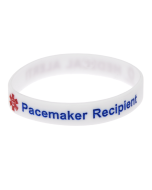
- Pacemakers and implants — wrong defibrillator energy can damage a pacemaker; MRIs may not be safe.
- Diabetes — especially insulin-dependent residents who can crash if a meal is missed or delayed.
- Severe allergies — penicillin, contrast dye, sulfa, latex — easy to forget on a busy round.
- DNR / Advance care directives — saves families from unwanted resuscitation; protects resident's wishes.
Why Standard Hospital Wristbands Aren't Always Enough
The plain ID band given on admission carries name and ID number — but rarely the medical detail responders need fast. A purpose-made medical alert bracelet sits alongside the hospital ID and shouts the diagnosis or risk in plain English. Two bands, two purposes, no confusion.
Recommended for you
Products related to this article
Hand-picked to go with what you just read.
What Information Should Go on a Care Resident's Bracelet
The same logic that applies in the community works in aged care: short, scannable, action-relevant. Recommended fields:
- Resident's first and last name
- Primary medical alert — the one fact that changes care (e.g. "Falls Risk", "Dementia", "Pacemaker", "DNR")
- Critical allergy or medication — Penicillin, Aspirin, Warfarin, Insulin
- Next of kin or facility contact — phone number that's answered 24/7
- Resident or facility ID number — for cross-checking with the chart
For non-engraved write-on bands, use a permanent fine-point pen and refresh weekly — sweat, soaps, and gloves can wear ink down faster than expected.
Choosing the Right Bracelet for Aged-Care Use
Not all medical IDs are designed for the demands of full-time care. Look for these features when stocking a facility or fitting an individual resident:
Skin-Friendly and Hypoallergenic
Residents wear these bands 24/7 — including showers, transfers, and bed-bound days. Pick medical-grade silicone, latex-free fabric, or 316L stainless steel. Avoid materials that irritate fragile aging skin.
Clasp and Sizing
Adjustable bands accommodate weight changes, fluid retention, and atrophy over time. Snap clasps stay secure against accidental pulls. Avoid charm-style bracelets that can catch on bedrails or clothing.
Visibility
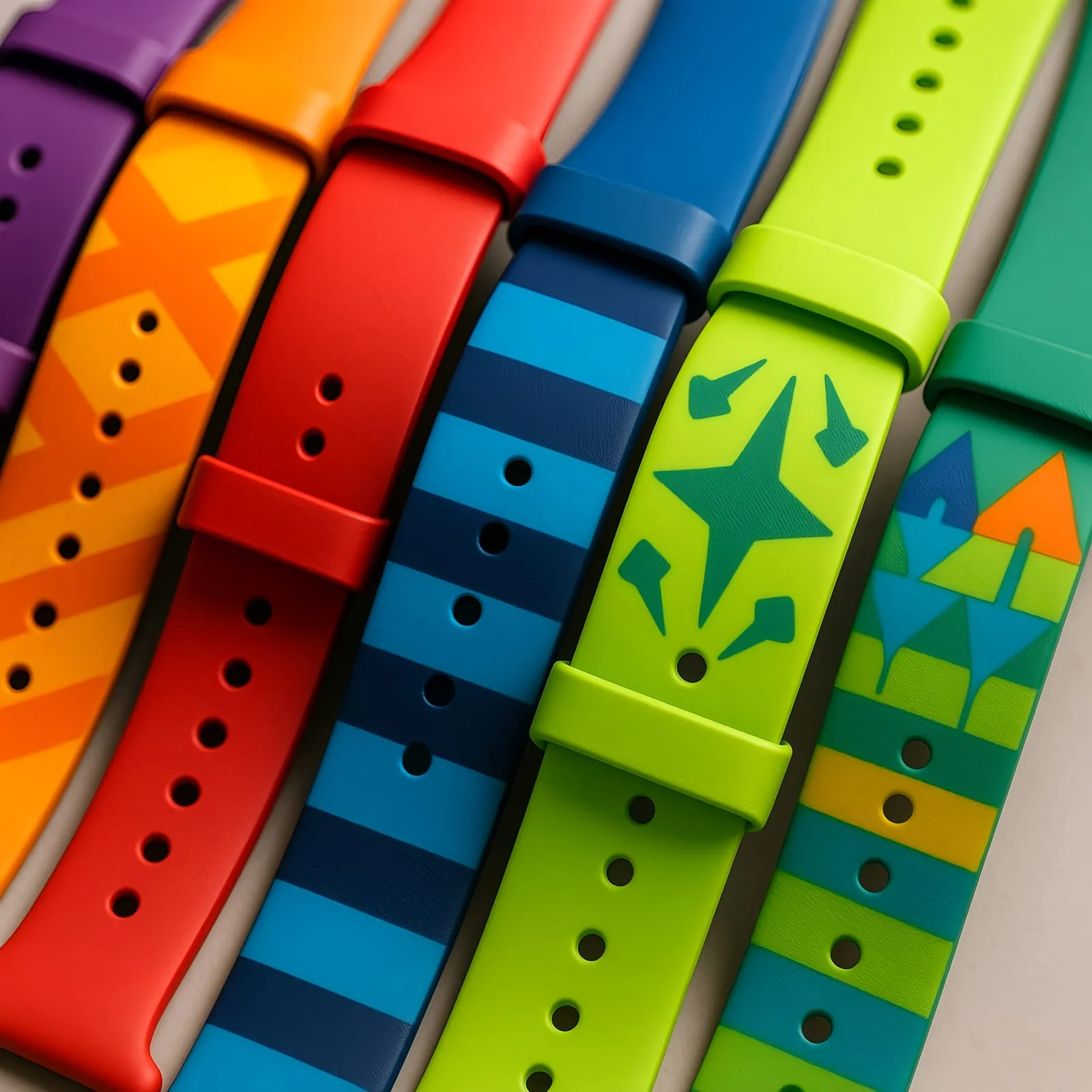
Bright orange or red bands are easier to spot from across a room or during a fall response. Subtle silver or beige bands disappear under sleeves at exactly the wrong moment. For dementia, bright neon increases the chance a wandering resident is spotted by another carer or member of the public.
Update Frequency
If a resident's medication changes regularly, write-on silicone is more practical than engraved metal. For stable conditions like a long-term pacemaker, engraved metal lasts for years.
Implementing Bracelets Across a Care Facility
For facility managers and clinical leads adding medical bracelets as a standard:
- Audit the resident roll — who has falls risk, dementia, anticoagulants, allergies, or DNR? Bracelet every one.
- Standardise colour codes — orange for falls, neon for dementia, red for allergy. One sheet posted in every nursing station.
- Build into admission — every new resident is fitted at intake; family is given a spare for travel/transfer days.
- Quarterly check — band condition, info accuracy, sizing. Replace any worn or outdated band.
- Train shift staff — agency and overnight carers should know what each colour means without asking.
- Document in care plans — note bracelet use in the resident's electronic record so transfers carry the alert forward.
Hospital Settings: Why Patient Bracelets Save Lives
Inside a hospital, medical alert bracelets reduce three common errors: wrong patient, wrong drug, wrong procedure. The classic case is a patient unable to speak — sedated, post-op, or unconscious — whose chart is in another department but whose wristband holds the critical alert. Visible alerts cut adverse events for patients with allergies, anticoagulants, and implants.
Many hospitals also use additional patient-supplied alerts on top of the ID band — particularly for known severe allergies, complex implants, and rare conditions that may not be coded into the standard chart system. The principle: redundancy in safety information is a feature, not a bug.
Frequently Asked Questions
Can residents wear a medical alert bracelet alongside the standard hospital ID band?
Yes — and they should. The standard hospital band carries name and ID number; the medical alert band carries the clinical risk. Both can be worn together, usually on the same wrist or one on each. They serve different purposes and provide redundancy that improves patient safety.
What's the difference between colour-coded hospital wristbands and personal medical alert bracelets?
Colour-coded bands (red for allergy, yellow for falls, etc.) are facility-issued and standardised within a hospital. Personal medical alert bracelets travel with the resident through care transitions, ambulance transfers, GP visits, and home stays. They carry detailed information that hospital bands often don't.
How often should bands be replaced or updated in aged care?
Quarterly review is best practice — check sizing, condition, legibility, and accuracy of information. Replace immediately if a resident's medication, primary diagnosis, or contact changes. Worn bands with faded text are no help to a paramedic in an emergency.
Are medical alert bracelets covered by aged care or hospital funding?
Many facilities include basic ID bands in their operational budget, but personal medical alert bracelets are usually purchased by residents, families, or care providers. Aged-care providers often include them in admission packs or partner with suppliers for bulk pricing.
Can the bracelet replace a fall-detection device or wandering alarm?
No — a bracelet identifies the risk, but technology like fall sensors and door alarms actively prevent or detect events. The two work best together: a bracelet tells responders what's wrong, a device alerts staff that something has gone wrong. Both belong in a comprehensive safety plan.

Written by
Founder, Mediband
Founder of Mediband; over 20 years providing medical IDs worldwide.
← Previous
Medical Alert Bracelets: How They Keep You and Loved Ones Safe
Next →
Understanding Health Insurance Terms: A Plain-English Glossary (2026)
Comment(s)