Why Every Alzheimer's Patient Needs a Hospital Wristband (A Caregiver's Story)

Why Every Alzheimer's Patient Needs a Hospital Wristband — A Caregiver's Story
Throughout the decade I cared for my father, who had Alzheimer's disease, he was hospitalised several times. Each and every stay was a complete nightmare. There were many reasons, but the one I want to focus on here is this: you can't tell by looking at someone that they have a cognitive disability. Because of that one fact, my father was regularly mistaken for "just another patient" — and the cost of that mistake was misunderstanding, misplacement, and his own experience of being terrified.
I tried to be vigilant at his side during those stays. But sometimes I had to leave — for a bathroom break, a breath of fresh air, a coffee. More often than not, I'd come back to turmoil. Once, after a five-minute break, I returned to find a nurse towering over him with a clipboard, impatiently drilling him about his prescription history. He looked up at me with bewildered eyes, imploring me to rescue him. The poor man couldn't have told her if he'd taken pills two minutes ago.
Sitting in waiting rooms, I had plenty of time to think. Why didn't the hospital provide some kind of signal, a flag — a visible marker so every member of staff knew immediately that a patient had Alzheimer's? Why not a wristband? Purple is already the designated colour for Alzheimer's awareness. Why not choose a bright shade, ideally one that glows in the dark, and make it mandatory the moment a person with memory impairment is admitted?
The Case for a Mandatory Dementia Wristband
That was the idea I started campaigning for four years after my father's final hospital stay: legislation requiring every patient identified as having Alzheimer's or another dementia to be fitted with a designated coloured wristband on admission to any hospital or medical facility. The band would do three things that paper charts consistently fail to do:
- Flag cognitive impairment at a glance. No need to wait for the chart to catch up — every staff member who approaches the bed sees it instantly.
- Travel with the patient. Into imaging, into theatre, into discharge — the band never leaves the wrist.
- Train staff to adjust their approach. Slower questions, clearer language, a support person alongside, less isolation.
Over the years I've written a weekly caregiving column for the Tampa Tribune and Hernando Today. I hear from dementia caregivers globally, every single day, and the horror stories of what their loved ones have endured during hospital admissions would make your skin crawl. A gentler, more visible hospital system would have changed my father's last decade — and every one of those readers' stories.
Why Hospital Stays Are So Dangerous for Dementia Patients

Hospitals are designed for acute medicine, not long-term cognitive care. For someone with Alzheimer's, the very environment that's meant to heal them can accelerate decline. Research from Dementia Australia and HealthDirect consistently identifies the same risks:
- Delirium — up to 50% of hospitalised dementia patients develop acute confusion on top of their baseline impairment. Recovery can take weeks.
- Wandering and elopement — roughly 60% of people with dementia wander at some point; unfamiliar corridors and signage amplify the risk.
- Falls — disorientation + new medications + bed rails + unfamiliar toileting = a major fall hazard.
- Pressure injuries — reduced mobility combined with impaired pain communication.
- Medication errors — when a patient can't remember what they've taken or what they're allergic to.
- Trauma of restraint — dementia patients are far more likely to be physically or chemically restrained, which itself accelerates decline.
Every one of these risks gets smaller when the next nurse, porter, radiographer or cleaner who walks past the bed already knows this person has dementia — without having to ask.
Protect Your Loved One — Dementia & Falls-Risk Medibands
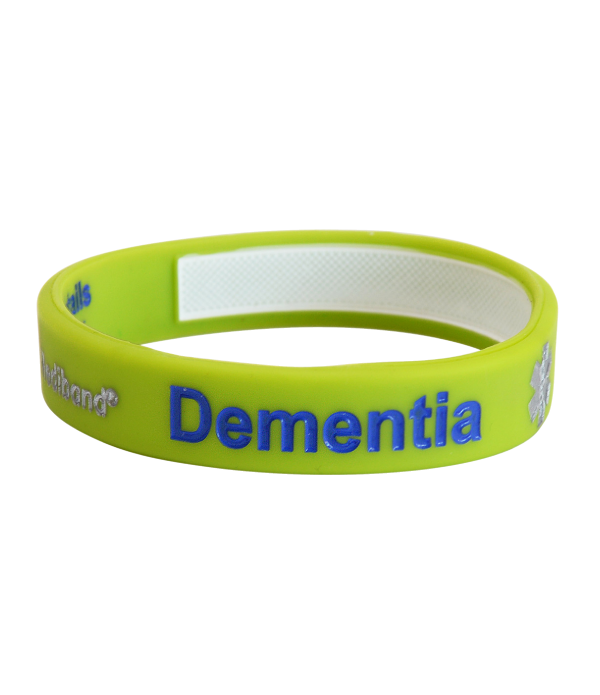
Dementia Alert Write-On
High-visibility neon green band with "DEMENTIA" printed — write name, address and contact for immediate rescue.
Shop Now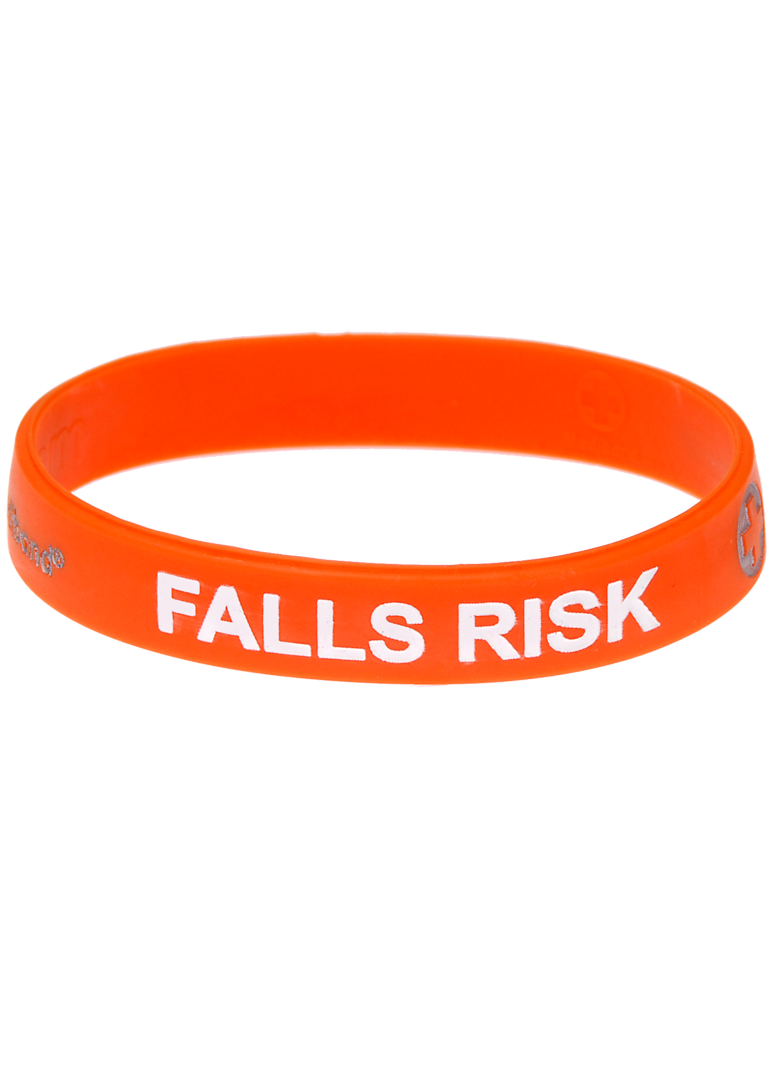
Falls Risk Bracelet
Bright orange alert for hospitals, aged care and home — warns every staff member to assist with transfers.
Shop Now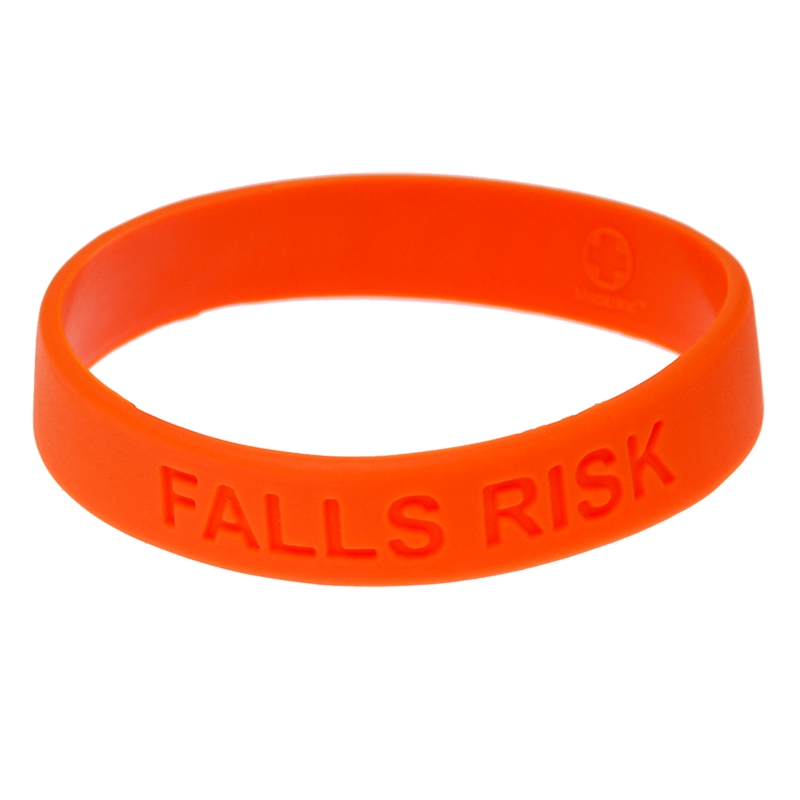
Falls Risk Debossed Bracelet
Premium debossed version — deep-etched lettering that stays legible through years of wear.
Shop NowWhat Dementia Families Can Do Today (While We Wait for Policy)
Legislation takes years. Your loved one can't wait. The good news: you don't have to rely on the hospital's wristband system — you can fit your loved one with a personal dementia medical ID that travels with them, from home to ambulance to ward to discharge.
1. Fit a Personal Dementia Medical ID Now
A write-on silicone or engraved Mediband achieves what I was asking the Florida Legislature to mandate — at the individual level. Mediband's dementia alert bracelet uses a high-visibility neon green silicone band with "DEMENTIA" printed on it. You write your loved one's first name, carer contact, and any key flags (wandering, falls risk, non-verbal) on the inside strap. That band is visible to every paramedic, every shift-change nurse, every ambulance officer.
2. Build a Dementia-Ready Hospital Bag
- A one-page medical summary — diagnosis, medications (with doses), allergies, baseline cognition, carer contacts.
- Familiar items — photos, a blanket, glasses, hearing aids, a favourite jumper.
- A laminated "Getting to Know Me" sheet (free downloadable template from Dementia Australia) for every staff member.
- A spare medical ID if the first gets cut off for an IV or surgery.
3. Advocate at Every Shift Change
Introduce yourself and your loved one to each new nurse. Name the diagnosis. Point to the wristband. Ask that it stay visible. Ask for slower, clearer communication. You are not being "difficult" — you are being the advocate your loved one cannot be.
4. Stay If You Can
The first 24–48 hours of any admission are the highest risk. If possible, have a family member physically present around the clock. Most Australian hospitals allow overnight carer stays for dementia patients on request — ask the nursing unit manager.
When Wandering Is the Real Risk

For families where wandering is a known risk, the medical ID is a literal lifeline. A person found disoriented on the street — whether that's across the road from the hospital or in a shopping centre — can be identified and returned home within minutes if they're wearing a bracelet that says "DEMENTIA" and lists a carer phone number. Without that band, you're hoping a stranger asks the right questions or that police fingerprints lead somewhere fast.
For extra peace of mind, pair the bracelet with a GPS tracker (watches, shoe inserts and pendant options exist). The medical ID is what protects your loved one while the GPS is helping you find them.
Don't Forget Falls Risk
Falls are the other silent hospital danger for dementia patients. Many Medibands are now used in pairs — a bright orange Falls Risk bracelet on one wrist and a dementia alert on the other. Staff see both; everyone acts accordingly. Small investment, enormous peace of mind.
A Caregiver's Closing Word
My father is gone now. Some of his hospital stays are memories that still make my chest tight. In a perfect world, we wouldn't need legislation to make what I've described the default — every medical professional would instinctively protect those who are memory-impaired in the unknown environment of a hospital. We're not quite there yet. But while policy catches up, you don't have to wait. A $25 silicone Mediband, fitted today and worn every day, gives you most of what the law would provide. And it gives you back something you probably haven't felt in a long time: a little peace of mind.
Worry less. Live more.
Frequently Asked Questions
Do Australian hospitals use a special wristband for dementia patients?
Not uniformly. Many Australian hospitals use colour-coded wristbands for allergies (red), falls risk (orange), DNR (purple or dark blue) and infection control — but dementia and cognitive-impairment flagging varies by health district. Some use a purple or dementia-specific band; many rely on chart notes. That's exactly why a personal Mediband worn from home matters — it's with the patient from the ambulance to the ward, regardless of which hospital they arrive at.
What colour represents Alzheimer's and dementia?
Globally, purple is the Alzheimer's awareness colour. Memory Walks, Dementia Australia campaigns, and most advocacy bodies use it. A few purple medical IDs directly reference Alzheimer's; bright green or orange versions are used where maximum visibility is the priority — such as wandering risk or falls risk.
What information should a dementia medical ID include?
At minimum: "DEMENTIA" or "ALZHEIMER'S" on the front, the person's first name, a phone number for their primary carer, and (if relevant) "may wander," "non-verbal," or "memory impaired — please assist." Write-on silicone Medibands let you update details if carers change or new risks appear (like a falls risk after a fracture).
How do I prepare a loved one with dementia for a hospital stay?
Pack a "hospital bag" with their Mediband already on the wrist, a one-page summary of diagnosis + medications + allergies, familiar items (photos, blanket, glasses, hearing aids), and a contact list for all their carers. Tell the charge nurse and each shift change. If possible, stay with them — especially in the first 24 hours when disorientation peaks.
What's the risk of wandering for Alzheimer's patients?
Around 60% of people with Alzheimer's or dementia will wander at some point. Hospital and aged-care settings increase the risk because environments are unfamiliar. A high-visibility medical ID (like our green-neon dementia band) speeds identification and return if wandering occurs — paramedics, police and bystanders know what to do the moment they see it.
April 19, 2026

Share on Facebook

Share on X

Share on Pinterest
Comment(s)
Recent Posts