Allergy Medical Alert Bracelets: The Complete Guide for Food and Drug Allergies
August 18, 2011
Around 1 in 10 people worldwide has a food allergy — and for those with severe reactions, an allergic emergency can happen anywhere: at a restaurant, at work, on public transport, or at a social event. When someone with anaphylaxis loses consciousness or can't communicate, first responders need to know within seconds what they're dealing with. That's exactly what an allergy medical alert bracelet provides.
According to research cited by the Food Allergy Research & Education organisation (FARE), 95% of emergency medical professionals check for medical alert jewellery during emergencies. A bracelet worn on the wrist is the fastest, most reliable way to communicate your allergy to anyone who needs to help you — whether that's a paramedic, a bystander, or a school nurse.
What Is an Allergy Medical Alert Bracelet?
An allergy medical alert bracelet is a wristband worn every day that identifies the wearer's specific allergy — along with any critical treatment information such as "carry EpiPen" or "avoid penicillin." Unlike a wallet card or phone app, a bracelet is visible on the body and impossible to miss in an emergency.
Medical alert bracelets for allergies come in two main formats:
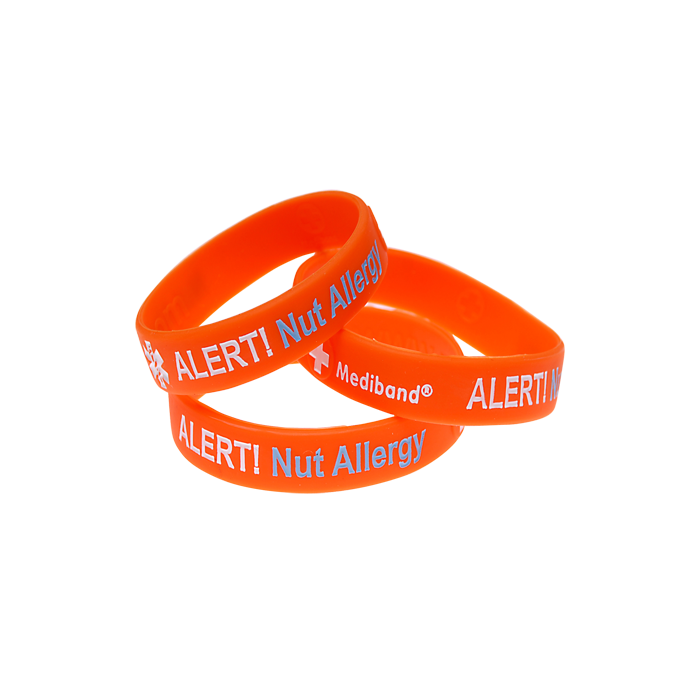
- Write-on silicone bands: Soft, flexible, and waterproof. You write your allergy information directly on the band with a permanent marker, or order a pre-printed version with your specific allergen. Ideal for children, active wearers, and those who need multiple bands for different activities.
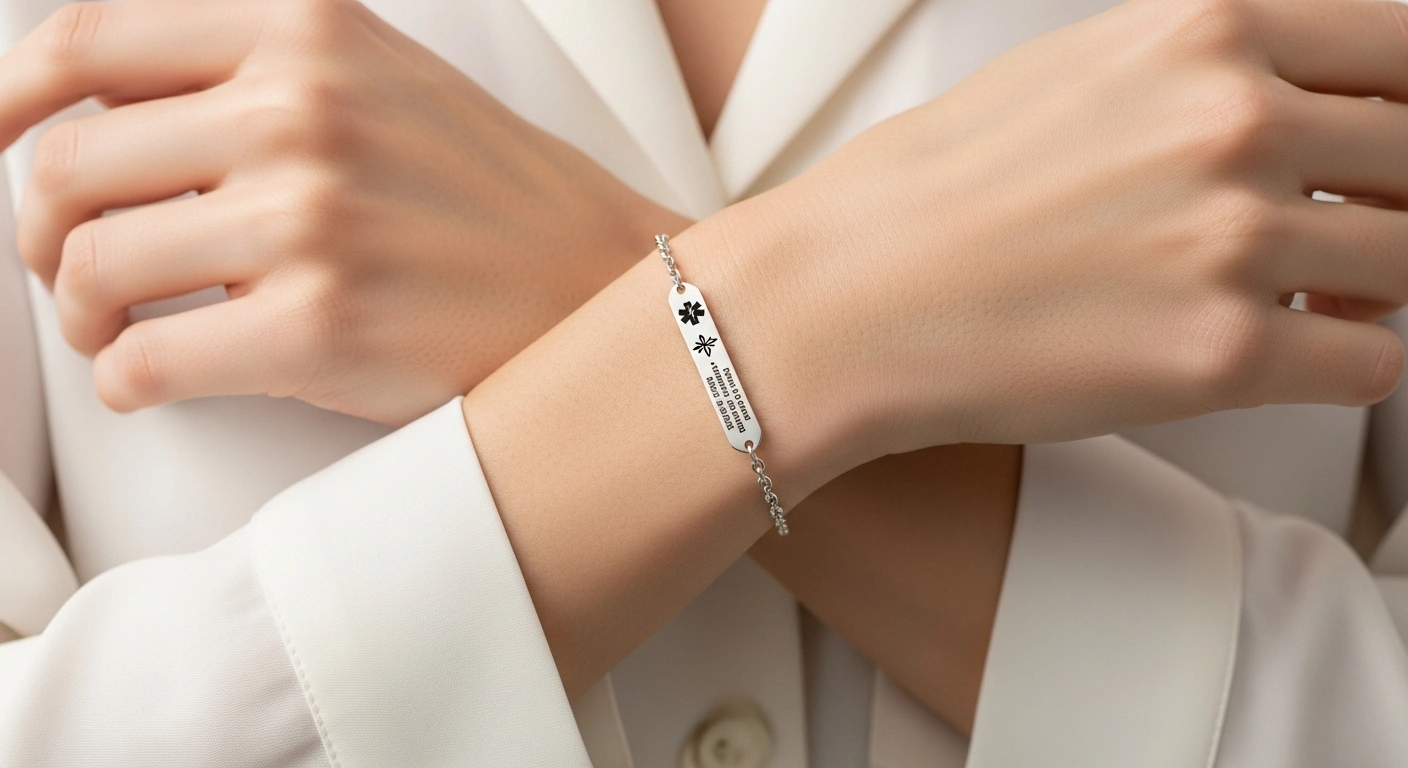
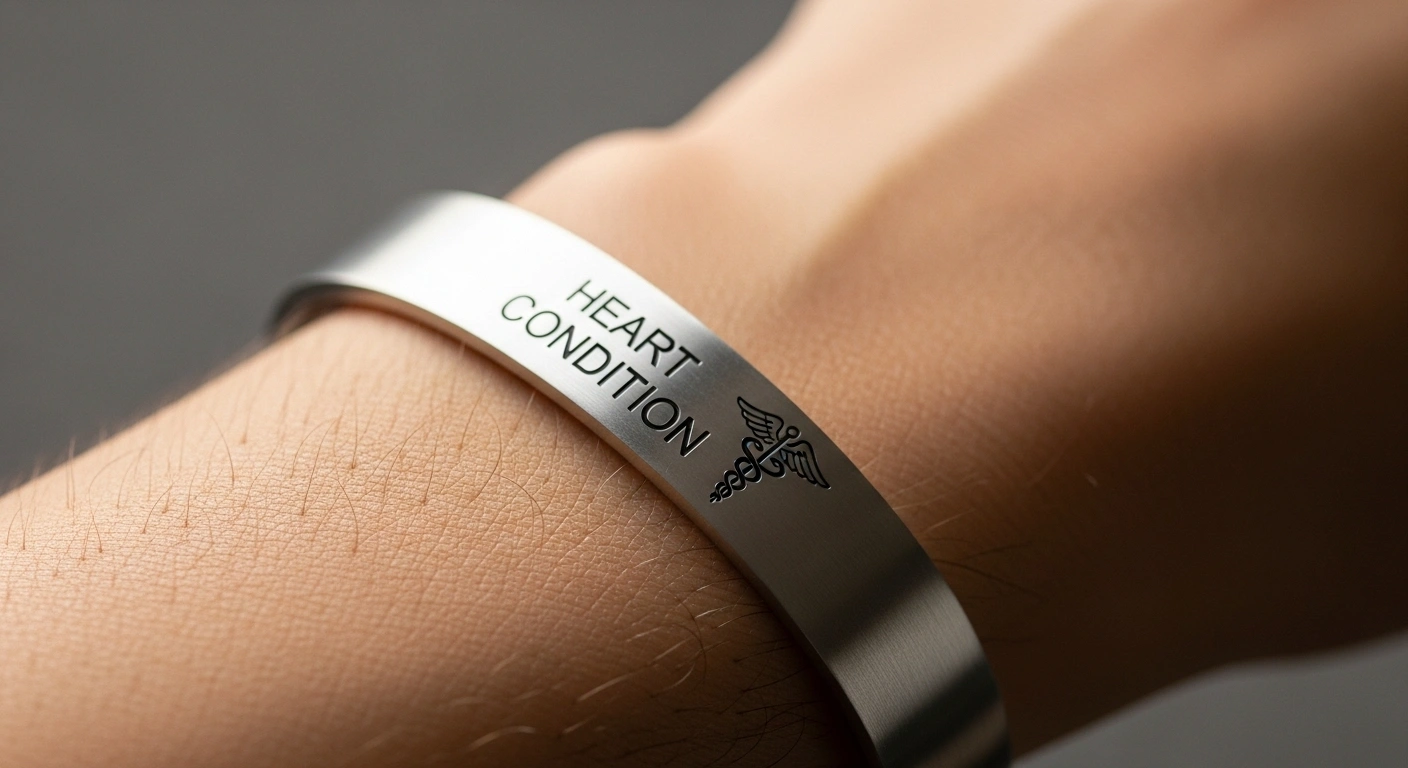
- Engraved stainless steel bracelets: A permanent, durable option that looks like jewellery. Medical information is laser-engraved onto the metal — it won't wash off, fade, or wear away. Preferred by adults who want something they'll actually wear every day.
Mediband's range covers both styles — from affordable silicone write-on bands to premium stainless steel medical IDs — all designed to be worn consistently and read quickly in an emergency.
Which Allergies Require a Medical Alert Bracelet?
Any allergy that could cause anaphylaxis or seriously affect emergency treatment warrants a medical alert bracelet. Emergency responders and hospital staff rely on this information to make fast, potentially life-saving decisions.
Food Allergies
The most common life-threatening food allergies include peanuts, tree nuts (almonds, cashews, walnuts), shellfish, fish, dairy, eggs, wheat, sesame, and soy. Among these, peanut allergies account for the majority of fatal anaphylaxis reactions. If you or your child has ever experienced anaphylaxis from a food — swelling in the throat, difficulty breathing, a sudden drop in blood pressure — a medical alert bracelet is not optional. It is essential safety equipment.
Drug and Medication Allergies
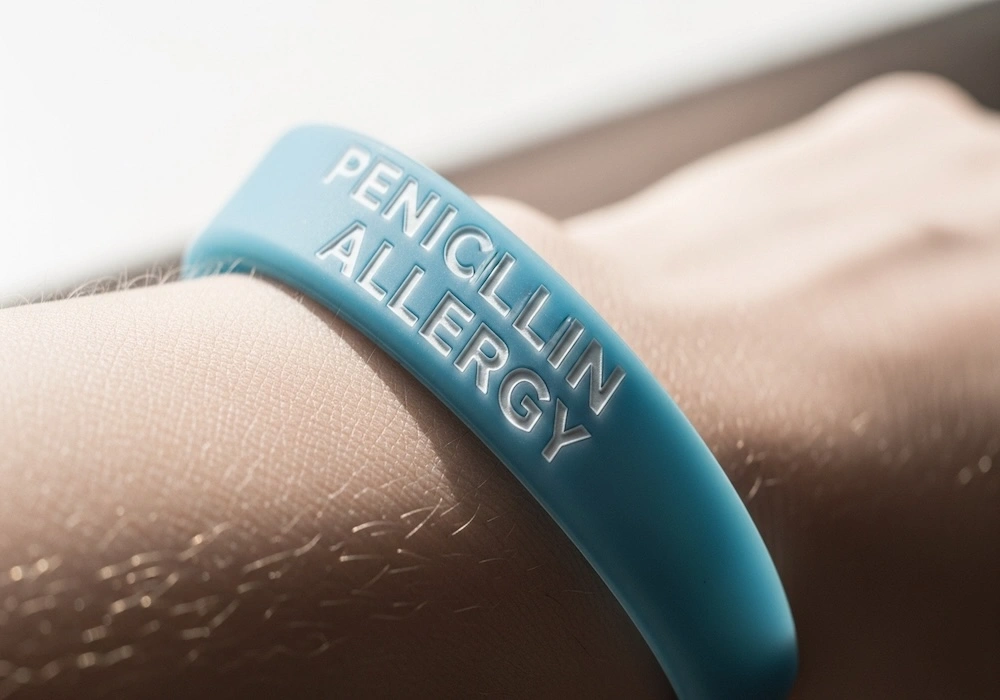
Drug allergies are particularly dangerous in emergency situations because a paramedic or hospital may administer a standard medication without knowing your history. Penicillin allergy affects approximately 10% of the population, though the true rate of severe reaction is lower. Allergies to aspirin, NSAIDs, ibuprofen, sulfa drugs, and anaesthetics also carry significant risk in emergency care. Wearing a bracelet that states "PENICILLIN ALLERGY" or "ASPIRIN ALLERGY" ensures that no one gives you a drug that could cause a serious secondary reaction on top of the original emergency.
Insect Sting Allergies
Bee, wasp, and jack jumper ant stings cause anaphylaxis in a significant proportion of those who are sensitised. These reactions can happen outdoors — at school sports days, camping trips, festivals — anywhere epinephrine may not be immediately to hand. A bracelet reading "BEE STING ALLERGY — USE EPIPEN" gives bystanders the critical instruction they need while emergency services are on their way.
Shop Allergy Medical Alert Bracelets
Make your allergy visible to everyone who needs to know — first responders, teachers, colleagues, and bystanders.



What to Engrave on an Allergy Medical Alert Bracelet
The golden rule of medical ID engraving is: short enough to read in three seconds, specific enough to act on. Emergency responders are reading your bracelet in a high-pressure situation — the information needs to be instantly clear.
Food Allergy Engraving Examples
For food allergies, always list the allergen first, then the treatment action:
PEANUT ALLERGY / USE EPIPEN / Call 000MULTIPLE FOOD ALLERGIES / PEANUT DAIRY EGG / EpiPen in bagSHELLFISH ALLERGY / ANAPHYLAXIS RISK / EpiPen required
If your child has multiple allergies, list the most severe one first. Include "EpiPen" or "Epinephrine auto-injector" so it's clear to responders what medication is needed — not everyone knows every brand name.
Drug Allergy Engraving Examples
For drug allergies, the format is the same — allergy first, then the consequence for treatment:
PENICILLIN ALLERGY / No beta-lactam antibioticsASPIRIN / NSAID ALLERGY / Do not administerCONTRAST DYE ALLERGY / Premedicate before scansMORPHINE ALLERGY / Use alternative analgesic
Your emergency contact number and your doctor's name are useful additions if space allows. Some people also include their blood type — particularly valuable if they may need a transfusion.
Do Emergency Responders Really Check for Medical Alert Bracelets?
Yes — and this is one of the most important facts for people who are unsure whether a medical alert bracelet is worth wearing.
According to research cited by FARE (Food Allergy Research & Education), 95% of emergency medical professionals check for medical alert jewellery during emergencies. Many do so within the first 30 seconds of patient contact — before a patient can even be questioned. For an unconscious or disoriented person, a wristband is often the only source of reliable medical history available to first responders.
Paramedics, emergency nurses, and doctors are trained to check the wrist first. A bracelet with your allergy printed clearly in contrasting text or engraved permanently into metal gives them everything they need to avoid a medication error or administer the right emergency treatment immediately.
The bracelet only works if it's worn consistently. This is why comfort, style, and fit matter — a bracelet that stays in the drawer provides zero protection.
Choosing the Right Allergy Medical Alert Bracelet
The best bracelet is the one that gets worn every day. Think about your lifestyle, your child's preferences, and the specific information that needs to be communicated.
Silicone Write-On Allergy Bands
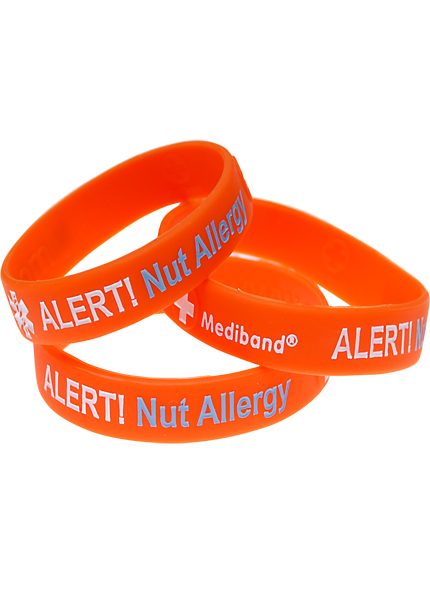
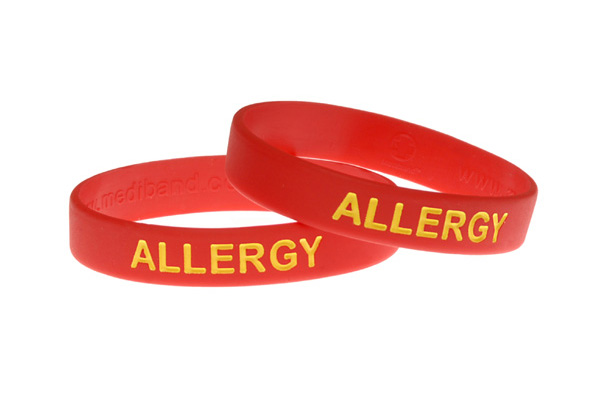
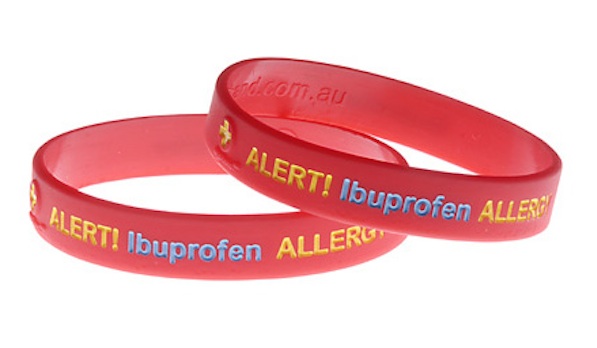
Mediband's silicone allergy bands are soft, lightweight, and waterproof — they can be worn in the shower, at the beach, during sport, and through everything in between. The write-on surface lets you add specific information with a permanent marker, or you can choose a pre-printed band with your allergen already displayed. These are particularly popular for children, as they come in bright colours and are comfortable enough to forget you're wearing one.
Pre-Printed Allergy Bands
Pre-printed Mediband allergy bands are manufactured with your allergen already displayed in bold, high-visibility text — "PEANUT ALLERGY", "BEE STING ALLERGY", "PENICILLIN ALLERGY". These are ideal when you want maximum legibility without needing to write anything yourself. They're also useful for young children who may not keep a written bracelet legible over time.
Stainless Steel Engraved Medical IDs
For adults who want something more like a piece of jewellery, Mediband's stainless steel engraved bracelets are laser-engraved with permanent, precise text. These are the most durable option — they don't fade, wash off, or degrade over time. They're also the preferred choice for adults who want to wear their medical ID to work, social events, or formal occasions without it looking clinical.
Frequently Asked Questions
What allergies require a medical alert bracelet?
Any allergy that could cause anaphylaxis or affect emergency treatment warrants a bracelet. This includes food allergies (peanuts, tree nuts, shellfish, dairy, eggs), drug allergies (penicillin, aspirin, NSAIDs, morphine, contrast dye), and insect sting allergies (bees, wasps). If you carry an epinephrine auto-injector, you should also wear a bracelet indicating this.
Do EMTs and paramedics actually check for medical alert bracelets?
Yes. Research shows 95% of emergency medical professionals check for medical alert jewellery during emergencies, often within the first 30 seconds of patient contact. A wristband is frequently the only source of medical history when a patient is unconscious, confused, or unable to speak.
What should I put on an allergy medical alert bracelet?
List your specific allergen first (e.g. "PEANUT ALLERGY"), then the treatment action (e.g. "USE EPIPEN"), and an emergency contact number if space allows. For drug allergies, include the drug name and what to avoid (e.g. "PENICILLIN ALLERGY / No beta-lactam antibiotics"). Keep it concise — responders need to read it in seconds.
Can children wear allergy medical alert bracelets?
Yes — children's sizes are available and strongly recommended for any child with a diagnosed food, drug, or insect sting allergy. Silicone write-on or pre-printed bands are most popular for children because they are comfortable, colourful, and waterproof. A bracelet helps teachers, coaches, and first aiders respond correctly if your child has a reaction.
How is an allergy medical alert bracelet different from a regular allergy wristband?
A medical alert bracelet is designed specifically to communicate critical health information in an emergency. It is recognisable to trained first responders and uses standard medical ID conventions (the caduceus symbol, high-contrast text). An allergy wristband used at events or for general identification may not carry the same weight in a medical emergency. For safety purposes, a dedicated medical alert bracelet from a reputable medical ID provider is the better choice.

Share on Facebook

Share on X

Share on Pinterest
Comment(s)
Recent Posts
The Risk Of Not Wearing An Allergy Medical Alert Bracelet
March 23, 2026