

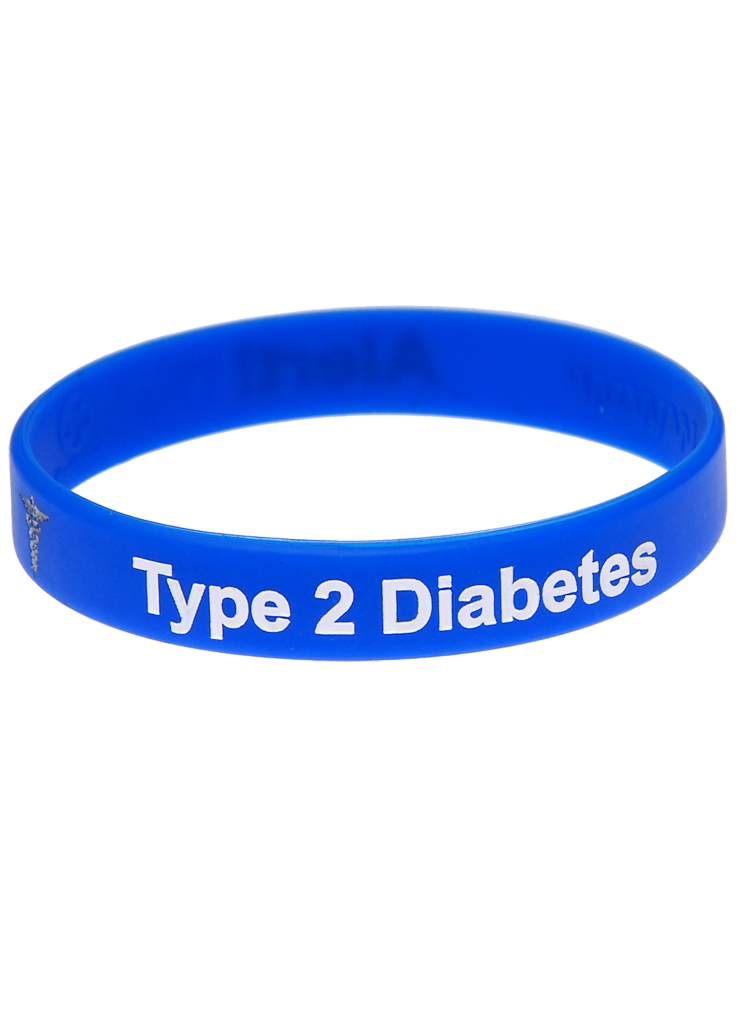
Type 2 Diabetes Medical Bracelet
£4.13
SKU
B3273
Secure checkout
VISA
Mastercard
Apple Pay
Google Pay
+5 more
Also accepted
AMEX
Afterpay
Zip
Klarna
PayPal
Enjoy life more knowing that you - or your loved one - can get immediate and appropriate treatment should something happen.
4.9 · 39 reviews
Since 2004
Type 2 Diabetes Alert Bracelet – Blue Medical ID
Stay safe
Enjoy life more knowing that you - or your loved one - can get immediate and appropriate treatment should something happen.
Type 2 Diabetes, or non-insulin dependent diabetes, is characterized by body resistence to insulin produced by the pancreas, or reduced production of insulin by the pancreas, resulting in high blood sugar levels. Non-insulin dependent diabetes is primarily caused by obesity or not enough exercise in people who are genetically predisposed to this condition. Non-insulin dependent diabetic patients are at risk of severe hypoglycemic and hyperglycemic episodes if their condition is not properly managed, and this can result in a diabetic coma. Wearing a Non-Insulin Dependent Diabetes Alert Medial ID Wristband ensures that attending paramedics and other medical professionals are aware of your condition, and therefore include or exclude symptoms to do with your condition, allowing them to accurately and precisely assess and diagnose the situation, and provide you with the best and most appropriate treatment. Check out our Non-Insulin Dependent Diabetes Alert Medical ID Bracelet
Phrase 1: Alert! Diabetes
Phrase 2: Type 2 Diabetes
Colour: Royal Blue
Colour Infill: White & Yellow
The blue Type 2 Diabetes Alert Bracelet is an essential accessory for anyone managing T2D. With bold, clear text signalling “Type 2 Diabetes” and a crisp blue wristband, this medical ID bracelet offers both comfort and visibility. Designed for daily wear, it supports awareness of your diabetic condition and provides immediate recognition by first responders in emergency situations.
Why a dedicated Type 2 Diabetes bracelet matters
In a diabetic emergency — whether due to hypoglycaemia, hyperglycaemia or an unnoticed complication — time is critical. Wearing a dedicated Type 2 Diabetes alert bracelet means your condition is communicated instantly, even if you are unable to speak. Emergency personnel can then initiate appropriate treatment sooner, giving you greater safety and peace of mind.
Comfort, durability and daily usability
This Type 2 Diabetes medical ID bracelet blends comfort with ruggedness. The silicone‑style wristband is flexible, lightweight and suitable for swimming, gym, or sleep. Its waterproof nature means you don’t need to remove it for showers or workouts, making consistent wear easy. That consistency is vital because an ID only works if you keep it on.
- High visibility blue colour: widely associated with diabetes awareness and allows the band to stand out.
- Clear engraving or printing: ensures the “Type 2 Diabetes” message stays legible over time.
- Comfort fit: smooth edges and skin‑friendly material prevent irritation from everyday wear.
- Reusable and low‑maintenance: wash with mild soap and water to keep it fresh.
Who should wear a T2D alert bracelet?
Anyone living with Type 2 Diabetes who wants to proactively communicate their condition in all settings—work, travel, exercise, social events—is a candidate. It’s especially beneficial for those who:
- Are newly diagnosed and still establishing habits for medical ID wear.
- Take insulin or medications that increase hypoglycaemia risk.
- Enjoy active lifestyles or sports where monitors may be hidden or delayed.
- Travel internationally or attend multilingual environments where generic ID plates may be overlooked.
Layering your safety strategy with engraving and alternatives
While this bracelet provides fast visual alert, consider layering your protection: a second engraved metal plate or external medical ID tag for detailed medical history, or a wallet card / digital profile for full documentation. When you combine the visible “Type 2 Diabetes alert band” with a backup ID containing emergency contacts and treatment notes, you create a robust identification system.
Engraving guidance
- Phrase 1: Alert! Diabetes
- Phrase 2: Type 2 Diabetes
Comparing with competitor options
Popular brands like Lauren’s Hope or American Medical ID focus on high‑end metal designs or premium materials. While they offer aesthetic value, they often lack the everyday comfort and affordability of a silicone bracelet designed specifically for Type 2 Diabetes. This blue alert bracelet stands out by offering a comfortable, durable, high‑visibility ID at a practical price point.
Choosing your band and colour wisely
The blue tone for this diabetes bracelet is meaningful — it aligns with global diabetes awareness campaigns and enhances recognition. For users who prefer a more subtle look, there are compatible bands in different finishes, but ensure the alert text remains visible. Whether you’re at the gym, office or dinner, your ID remains effective and discreet.
Care and maintenance tips
To keep your bracelet effective and looking good: rinse after exposure to chlorine or salt water, wipe with mild soap, and avoid direct heat or harsh chemicals. Regularly check the band for wear, and replace it if the text becomes faint or the band becomes loose. Consistent wear is the best safeguard.
Related products & options
Wear it with confidence
When you select this blue Type 2 Diabetes alert bracelet, you’re choosing more than just a medical ID — you’re choosing clarity, comfort and everyday awareness. Make it part of your routine: wear it morning to night, pair it with your glucose monitor or insulin equipment, and give yourself the extra layer of safety that matters most.
Which diabetes band to choose
We carry several, and the difference is what the band states rather than how it is made. Pick the one that matches how your treating team describes your diagnosis.
| Band | Says | Choose when |
|---|---|---|
| Type 2 (this band) | Type 2 Diabetes | Diagnosis is type 2, whatever the treatment |
| Type 1 | Type 1 Diabetes | Diagnosis is type 1 |
| Insulin dependent | Insulin Dependent | Insulin use is the key fact for responders |
| Reversible | Discreet face, alert face | Appearance is why an ID gets left off |
If treatment has changed — if you have moved onto insulin, for instance — it is worth replacing the band rather than relying on a responder to ask. Browse the full diabetes range.
What to engrave
Name and an emergency contact
The band front already states the condition, so the engraving carries what is specific to you. A contact number for someone who knows your treatment turns the band into a route to your fuller history.
Note insulin use if it applies
Whether someone uses insulin changes what a responder considers. If you have type 2 and use insulin, saying so on the band is more useful than the diagnosis alone, and it is the single most common thing people leave off.
Keep the longer detail elsewhere
A full medication list will not fit on a wrist. Keep it in a wallet card and on My Health Record, and use the band for what needs to be known immediately.
For information about the condition itself, see Healthdirect Australia. Questions about your own treatment, targets or medication belong with your GP, endocrinologist or diabetes educator — we make identification products, not clinical recommendations.
Wearing it so it is actually there
Waterproof means no reason to remove it
Silicone can be worn showering, swimming and playing sport. The most common failure of a medical ID is that it came off for one of those and was not put back on.
It does not interfere with monitoring gear
A wrist band sits away from the sites usually used for continuous monitors or pumps. If you wear a sensor on the upper arm and a band on the wrist, the two do not compete for space — but follow the instructions from whoever fitted your device.
Check the fit over time
It should sit snugly without sliding over the hand, and still turn on the wrist. Re-check after significant weight change, and every few months for a growing child.
Ordering
Order a spare alongside the first. A lost band leaves the wearer unidentified until a replacement arrives, and a second costs little. For fully engraved wording, use the custom ID builder, or browse all medical alert bracelets.
Diabetes services, aged-care homes, schools and NDIS providers ordering with different engraving per wearer can do it as one order against an engraving list — request a bulk quote.
Type 2 diabetes bracelet FAQs
Should the band say type 2, or insulin dependent?
Use the wording that matches how your treating team describes your diagnosis. If you have type 2 and use insulin, a band noting insulin use carries more practical information for a responder than the type alone.
What should I engrave on it?
Your name and an emergency contact number, plus insulin use if it applies. The condition is already stated on the band itself, so the engraving is for what is specific to you.
Will the text wear off?
No. The message is colour-filled into the silicone and any engraving is cut into it, both below the wear surface. Showering, sport and daily use do not remove them.
Can I wear it with a continuous glucose monitor or pump?
A wrist band does not occupy the sites normally used for sensors or infusion sets. Follow the guidance from whoever fitted your device about what can be worn where.
Can children wear these?
Yes. Silicone is flexible and breakaway-safe, which suits school and sport. Check the fit every few months as they grow, since a band that slips over the hand is not doing its job.
What if my treatment changes?
Replace the band so it reflects your current treatment. An out-of-date band is read as current, which is why updating it matters more than keeping the original.
SKU B3273Manufacturer Mediband
| SKU | B3273 |
|---|---|
| Manufacturer | Mediband |
Shipping
In-stock orders are dispatched the same business day when placed before 12pm AEST, Monday to Friday (excluding public holidays). Orders placed after 12pm AEST, or on weekends and public holidays, are dispatched the next business day.
Express, Regular and Courier delivery estimates are shown at checkout and apply from the dispatch date.
More information about shipment and delivery times can be found on our shipping page.
Returns & guarantee
100% Quality Guarantee. Your satisfaction is our priority. If there is a confirmed quality issue, return the item to us in its original condition and packaging within 14 days of receipt and we will issue a full refund (excluding the original delivery charge) or replace the item.
In-stock items may be exchanged for a different size or colour, provided they are returned as new, unworn and in their original packaging within 14 days of receipt.
Custom and made-to-order items are produced to your specification, so we do not accept returns or exchanges for change of mind, size or colour. Please check your size, colour, spelling and details carefully before ordering. First Aid Kits and Defibrillator Supplies also cannot be returned or exchanged except for a confirmed quality issue.
Please view terms and conditions for further information.
Loading reviews…