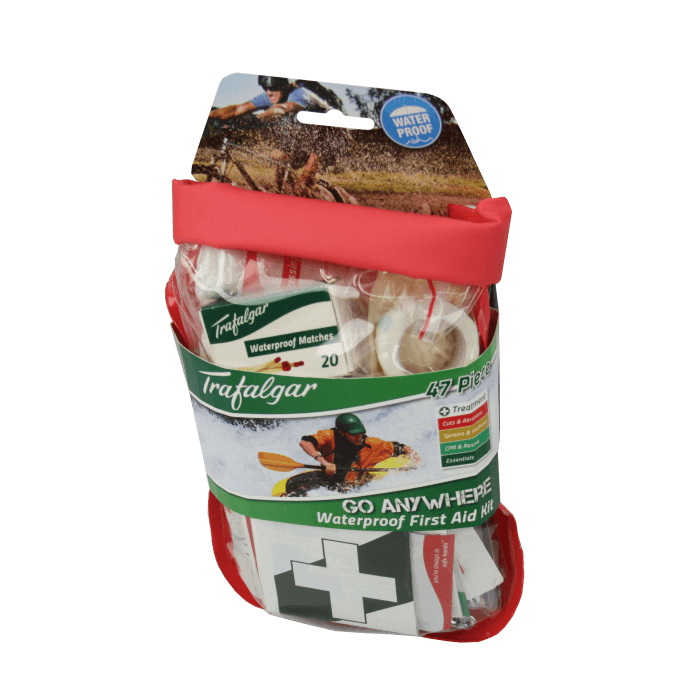
Trafalgar Go Anywhere Waterproof First Aid Kit
£22.98
SKU
101671
Secure checkout
VISA
Mastercard
Apple Pay
Google Pay
+5 more
Also accepted
AMEX
Afterpay
Zip
Klarna
PayPal
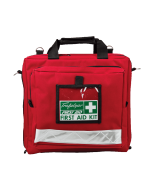
This handy “Go Anywhere waterproof first aid kit can be easily snap locked onto your backpack or kept in storage compartments. Ideal for the adventurer this kits contains all your essentials including waterproof matches, poncho as well as items to administer Cuts & Abrasions, Sprains & Fractures, CPR & Rescue as well as other essential items such as safety pins, tweezers, splinter probes and more.
Since 2004
A kit built around staying dry
Most first aid kits fail quietly. Dressings go soft, adhesive strips stop sticking, the pamphlet turns to pulp — and you find out at the moment you open it. The Go Anywhere is built around a waterproof bag with a snap clip, so it can hang off a pack, live in a kayak hatch or sit in a ute tray and still be sterile when it matters.
That is the whole design brief, and it is why the contents lean towards being away from help rather than being at home with a grazed knee.
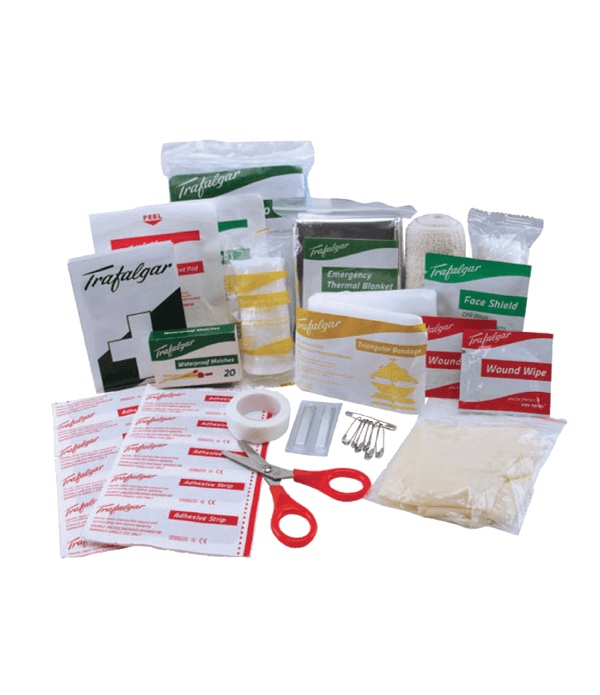
47 pieces, grouped by what they are actually for
| Purpose | Items |
|---|---|
| Everyday wounds | 20 × adhesive strips, 2 × wound wipes, 1 × non-adherent dressing 7.5 × 5 cm, 1 × large wound dressing |
| Bleeding and bandaging | 1 × conforming bandage 5 cm, 1 × crepe bandage 10 cm, 1 × triangular bandage, 6 × safety pins, 1 × paper tape 1.25 cm × 5 m |
| Resuscitation | 1 × CPR face shield |
| Exposure and shelter | 1 × emergency thermal blanket, 1 × disposable poncho, 1 × waterproof matches |
| Tools | 1 × scissors, 1 × tweezers, 2 × disposable splinter probes, 1 × eye pad |
| Protection and guidance | 2 × latex gloves, 1 × first aid pamphlet, 1 × waterproof bag |
Where this differs from the Personal kit
Our Trafalgar Personal First Aid Kit advertises 62 pieces against this kit's 47, and that comparison is misleading in this kit's favour. Fifty of the Personal kit's pieces are adhesive strips. This one carries twenty, and spends the difference on capability.
The four items the smaller kit does not have
Four items here do not exist in the Personal kit at all, and each covers a scenario the smaller kit cannot:
- CPR face shield — a barrier for rescue breaths, so a bystander is not choosing between helping and not.
- Emergency thermal blanket — for shock and for cold, which is the risk once someone is immobile outdoors.
- Waterproof matches — a survival item, not a first aid one. It tells you what this kit is really for.
- Scissors, tweezers and splinter probes — cutting tape and clothing, removing splinters and ticks.
Plus an eye pad and a poncho. If your use case is a glovebox and grazed knees, the Personal kit is the cheaper correct answer. If it is a trail, a boat or a worksite an hour from a hospital, this is.
Where it earns its place
Away from a vehicle
- Hiking and camping — clipped to the outside of a pack where it is reachable without unpacking.
- Boats, kayaks and fishing — the one environment where a non-waterproof kit is guaranteed to fail.
- Cycling and motorbikes — small enough for a pannier or under a seat.
- Four-wheel driving and touring — alongside, not instead of, a larger vehicle kit.
- Outdoor work — fencing, landscaping, surveying, anywhere the vehicle is a walk away.
One kit, or two?
A common and sensible setup is both: the compact Personal kit in the day bag for the cuts and blisters that happen constantly, and this one staying with the vehicle or the main pack for the things that happen rarely and matter more. They are not competing products so much as different distances from help.
If you only buy one and you spend time outdoors, buy this one. The Personal kit cannot do CPR, cannot treat shock and cannot survive a wet day; this kit can still handle a blister.
What Healthdirect says about being prepared
Healthdirect defines first aid as the steps you take in the first minutes of an illness or injury until further help arrives — and that phrase is the argument for this kit specifically. The further away you are, the longer those first minutes last.
Its advice is to put a kit together for home and the car, and to consider doing a first aid course. The course matters more than the contents: a CPR face shield is only useful to someone who knows the DRSABCD sequence — Danger, Response, Send for help, Airway, Breathing, CPR, Defibrillation — and a thermal blanket is only useful to someone who recognises shock.
One thing worth planning before you go: Healthdirect's instruction at step S is to call triple zero (000) and stay on the line. Know where your phone has coverage on the route you are taking, and tell someone your plan if it does not.
Keeping it serviceable
Check it twice a year
Tie it to something you already do — the start of a season, a vehicle service. Open the bag, replace anything used or out of date, and reseal it. Strips lose their stick, wipes dry out in the sachet, and latex gloves perish and tear as you pull them on.
The items people forget to check
The thermal blanket is a single-use foil sheet: once it has been opened and refolded it will never go back in neatly, so replace it rather than repack it. The waterproof matches are only waterproof while the container is sealed. And the waterproof bag is the kit — if its seal or seam is damaged, everything inside is on borrowed time, so check the closure, not just the contents.
What no first aid kit can tell a responder
A kit treats the injury in front of someone. It says nothing about the patient.
If the injured person has a serious allergy, takes an anticoagulant, has epilepsy or diabetes or carries an implanted device, that changes what should happen next — and if they are unconscious, nothing in the bag will say so. That is the gap a medical alert bracelet fills, and checking wrists and neck for identification is part of a standard primary survey, as we explain in do paramedics check medical ID.
For detail that will not fit on a wrist, an emergency information wallet card lives well in the same bag — see wallet cards. If someone in the group is at risk of anaphylaxis, our anaphylaxis ID guide covers how the band, the action plan and the autoinjector work together. The wider range is under accessories.
Buying several
These are commonly bought per vehicle, per boat or per crew member. Tell us how many and we will come back with pricing and a date.
Frequently asked questions
Is the kit waterproof, or just the bag?
The bag is what provides the waterproofing — it seals and clips shut, keeping the contents dry. Check the closure and seams periodically, because a damaged bag means wet dressings regardless of how good the contents are.
Why fewer pieces than the Personal kit?
Because piece count is mostly adhesive strips. The Personal kit has 50 of them in its 62; this has 20 of its 47 and spends the rest on a CPR shield, a thermal blanket, scissors, tweezers and waterproof matches. Fewer pieces, more capability.
Does it contain any medication?
No — no painkillers, no antiseptic cream and no adrenaline autoinjector. An autoinjector is prescribed to an individual and carried by them, never stocked in a general kit.
Is it a workplace first aid kit?
Treat it as a personal or vehicle kit. What a workplace must provide depends on its hazards, worker numbers and distance from help, and is set by work health and safety law — check with your WHS officer rather than assuming any off-the-shelf kit satisfies it.
Can I take it on a plane?
It contains scissors, tweezers and matches, so it belongs in checked baggage. Airline and country rules differ — check before you fly rather than at the security gate.
Does the thermal blanket expire?
It does not have a shelf life the way a dressing does, but it is single use. Once opened it will not refold to its packed size, so replace it rather than trying to repack it.
SKU 101671Manufacturer Trafalgar
| SKU | 101671 |
|---|---|
| Manufacturer | Trafalgar |
Shipping
In-stock orders are dispatched the same business day when placed before 12pm AEST, Monday to Friday (excluding public holidays). Orders placed after 12pm AEST, or on weekends and public holidays, are dispatched the next business day.
Express, Regular and Courier delivery estimates are shown at checkout and apply from the dispatch date.
More information about shipment and delivery times can be found on our shipping page.
Returns & guarantee
100% Quality Guarantee. Your satisfaction is our priority. If there is a confirmed quality issue, return the item to us in its original condition and packaging within 14 days of receipt and we will issue a full refund (excluding the original delivery charge) or replace the item.
In-stock items may be exchanged for a different size or colour, provided they are returned as new, unworn and in their original packaging within 14 days of receipt.
Custom and made-to-order items are produced to your specification, so we do not accept returns or exchanges for change of mind, size or colour. Please check your size, colour, spelling and details carefully before ordering. First Aid Kits and Defibrillator Supplies also cannot be returned or exchanged except for a confirmed quality issue.
Please view terms and conditions for further information.
Complete your order
Related products

Medium Sports Tape
£8.54