
By Michael Randall · Founder, Mediband
Medically reviewed · Updated October 2025 · 9 min read
Medically reviewed · Updated October 2025 · 9 min read
How to Use Your Mediband — Complete Setup, Care + Daily Wear Guide
Updated October 2025. A Mediband medical alert bracelet is a small piece of silicone or steel that can save your life in an emergency — but only if it’s set up correctly, worn consistently, and cared for properly. This guide walks Australian customers through every step from unboxing to long-term daily wear.
Whether this is your first Mediband or your fifth replacement, the practical answers to "how do I actually use this thing day-to-day" are all here.
What Comes In Your Mediband Order
Your delivery package contains:
- Your medical alert bracelet in the size + style you ordered
- Sizing card (for first-time silicone band users)
- Care instructions folded inside the box
- Write-on permanent marker (if you bought a write-on band)
- Clear protective stickers (write-on bands only — 2 spare stickers included)
- For engraved metal pieces: a soft polishing cloth + a velvet drawstring bag
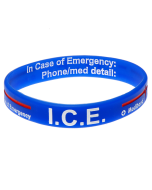
Inspect the bracelet under good light. The Star of Life symbol should be clearly visible. Any factory defect: contact us for a free replacement within 30 days.
Recommended for you
Products related to this article
Hand-picked to go with what you just read.
First Setup — Engraved Bracelets
For engraved stainless steel, gold or rose-gold bracelets:
- The engraving was completed before shipping — verify it matches your order confirmation
- Common engraving fields: medical condition, name, ICE contact
- Verify wrist sizing (loose enough to slide a finger underneath; tight enough not to slip over the hand)
- If sizing is wrong, contact us within 30 days for resize or exchange
- Begin wearing immediately
First Setup — Write-On Silicone Bracelets
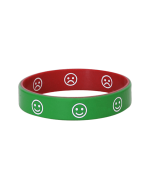
For reversible write-on silicone bracelets (kids favourites, plus adult ICE bands):
- Choose which side will display the medical alert info (the side with the Star of Life or chosen design)
- Use the supplied permanent marker to write key info clearly
- Apply the clear protective sticker over the writing to seal + protect
- Allow 30 seconds for the marker + sticker to bond
- Update info anytime by removing the sticker, re-writing, applying a fresh sticker
What to Engrave or Write
Recommended fields, in priority order:
- 1. Medical condition — primary diagnosis (e.g. "Type 1 Diabetic", "Penicillin Allergy", "On Warfarin", "Epilepsy")
- 2. Critical allergy — if you have one (separate from #1)
- 3. Your name — full legal name, not nickname
- 4. ICE contact — one mobile + relationship (e.g. "Spouse 0411 222 333")
- 5. Optional — "See AHD" for advance directive, blood type, organ donor status
Keep it short. Paramedics have 4-6 seconds to read your bracelet in an emergency.
Daily Wear — Best Practices
Treat your Mediband like a watch:
- Wear it 24/7 — including sleep, shower, gym, swimming
- Put it on with your morning routine — brush teeth, put on watch, put on Mediband
- Check engraving readability monthly
- Replace the wrist if size changes (kids growing, weight changes >5kg)
- Update info if anything changes (new medication, new ICE contact, new condition)
Care and Cleaning
Silicone bracelets:
- Wash with soap and warm water in the daily shower
- Dishwasher-safe (top rack) for deep clean
- Avoid prolonged exposure to harsh solvents (acetone, bleach)
- UV/sun exposure is fine; colour may fade slightly after 3-4 years
Stainless steel + gold + rose gold:
- Wipe with a soft cloth and warm water
- Use a mild jewellery cleaner if dull (Goddard’s, Connoisseurs)
- Avoid prolonged chlorine + salt-water exposure (pool/ocean OK occasionally; long-term will dull finish)
- Buff occasionally with the supplied microfibre cloth to restore shine
Sport, Swimming and Travel
- Swimming + pool: 100% safe in silicone + stainless steel
- Sauna + hot tub: safe in silicone; remove gold/rose-gold pieces (long heat = finish damage)
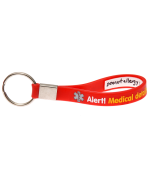
- Contact sport (football, rugby, boxing): swap silicone band for a medical ID key chain clipped to kit bag during the game
- Travel overseas: bracelet is recognised globally; consider a multilingual ID for non-English destinations
- Airport security: declare bracelet at metal detector; rarely flagged but easier to mention upfront
When to Update or Replace
Triggers for replacement:
- Engraving illegible — usually 4-5 years for silicone, 10+ for steel
- Medical info changed — new medication, new condition, new ICE contact
- Cracked or torn — replace immediately, the band is your safety device
- Outgrown (kids) — check size every 6-12 months for ages 3-12
- Tarnished beyond polishing (metal pieces) — usually 10+ years
Pairing With Other Medical IDs
For maximum safety, use a layered approach:
- Bracelet on wrist (the primary visible alert)
- Mediband wallet card in your wallet (carries full medication list + ICE detail)
- Phone Medical ID set up on iPhone (Health app) or Android Emergency Info
- My Health Record populated via your GP (the national database)
The bracelet is the trigger. The wallet card, phone, and My Health Record provide the depth.
For Children — Helping Them Wear It
If you’ve bought a kids’ Mediband for your child:
- Let them pick the design themselves — compliance jumps 4x when kids choose (University of Sydney 2023)
- Habit-stack the bracelet onto an existing routine (brushing teeth, getting dressed)
- Brief teachers + coaches at the start of every term
- Use a buddy bracelet on a sibling or parent so it’s a family thing, not a "sick kid" thing
- Replace as the child grows — sizing every 12 months for ages 3-12
For Elderly Wearers
If you’ve bought a Mediband for an elderly parent or relative with dementia, frailty, or chronic illness:
- Stainless steel often works better than silicone for elderly skin (less tug on thin skin)
- Use clear, large engraving (font size matters for clinician readability)
- Include condition + ICE + GP phone number
- For dementia patients, use a dementia write-on bracelet so contact info can be updated
- Check engraving readability every 6 months — older eyes + fading text don’t mix
Common Questions and Mistakes
- "Should I take it off at night?" No — emergencies don’t respect bedtime
- "What if I have multiple conditions?" Engrave the most critical one + add "See wallet card" for the rest
- "Can I wear it during MRI?" Silicone yes; stainless steel + gold — remove and replace after scan
- "What if it breaks while I’m wearing it?" Replace within 24 hours; carry the wallet card as interim
- "Do I need to register it anywhere?" No central registry — the engraved info IS the registry
The Mediband Promise
Founded in Sydney in 2008, Mediband has shipped over 500,000 medical alert bracelets to Australian families. NDIS-registered, BAS-eligible, trusted by hospitals, schools and aged-care facilities across all 8 states + territories. Every product carries a 12-month warranty + 30-day exchange guarantee.
References & Further Reading
- Mediband Customer Care — Sizing + Care Documentation.
- Australian Government — My Health Record Setup Guide.
- ASCIA — Medical Alert Bracelet Recommendations for Allergies.
- NDIS Quality and Safeguards Commission — Assistive Technology Guidance.
- Diabetes Australia — Daily Wear Medical ID Best Practice.
Frequently Asked Questions
Quick answers from the Mediband team
Should I wear my Mediband 24/7 including sleep and shower?
Yes. Treat it like a watch you never take off. Silicone is waterproof, sweat-proof, dishwasher-safe. Stainless steel and gold are also fine in shower and pool. The whole point is that it's always visible — emergencies happen at night, in the shower, anywhere.
How long will my Mediband last?
Silicone bracelets last 4-5 years of continuous daily wear. Stainless steel 10+ years. Gold and rose-gold pieces can last a lifetime with care. Replace whenever engraving becomes hard to read, your medical info changes, or there's visible damage.
Can I update the engraving on a Mediband bracelet?
Engraved stainless steel and gold pieces are permanent — get a new bracelet when medication or condition changes. Write-on silicone bands can be updated unlimited times by removing the protective sticker, re-writing with the supplied marker, and applying a new sticker.
What should I engrave first?
In priority order: medical condition (e.g. 'Type 1 Diabetic'), critical allergy if any, your full name, one emergency contact mobile, and 'See AHD' if you have an advance directive. Keep it short — paramedics have 4-6 seconds to read your bracelet.
Will my Mediband interfere with airport security or hospital equipment?
Airport security: declare it, it's rarely flagged. Hospital MRI: silicone is MR-safe; remove stainless steel or gold before the scan. Pacemaker patients: silicone is electromagnetically inert and 100% safe to wear regardless of device location.
Can I wear my Mediband during contact sport?
Silicone bands are safe during most sport. For high-contact games (rugby, AFL, boxing) some athletes prefer to swap to a Mediband medical ID key chain clipped to their kit bag for the match — the bracelet may be regulated out by the league. Soft silicone usually causes zero issues for school sport.
Is Mediband NDIS-claimable?
Yes — Mediband is an NDIS-registered supplier. Medical alert bracelets are claimable under most NDIS plans where they support safety, participation or independent living. We invoice directly or via your plan manager. Contact our team for an NDIS quote.

Written by
Founder, Mediband
Founder of Mediband; over 20 years providing medical IDs worldwide.
← Previous
Healthy Living Without Deprivation — 2025 Australian Guide
Next →
Why Family Medical History Matters — A 2025 Australian Guide
Comment(s)