By Michael Randall · Founder, Mediband
Medically reviewed · Updated March 2025 · 12 min read
Medically reviewed · Updated March 2025 · 12 min read
Why Medibands Are Important — A 2025 Australian Safety Guide
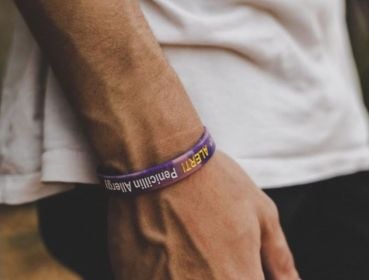
Updated March 2025. Around 50% of Australian adults live with at least one chronic medical condition by 2025 (ABS National Health Survey). When an emergency happens — a car accident, a sudden anaphylactic reaction, a hypoglycaemic episode, a stroke, a fall — the speed at which paramedics and emergency-room staff can identify your condition decides everything. A Mediband sits on your wrist as the single most important safety device for that critical first 60 seconds.
This guide explains exactly why Medibands matter, who needs one, what they should say, and how Australian paramedic protocol uses them. Backed by 17 years of customer feedback and the latest ASCIA, Heart Foundation Australia and Diabetes Australia guidance.
The 60-second emergency window
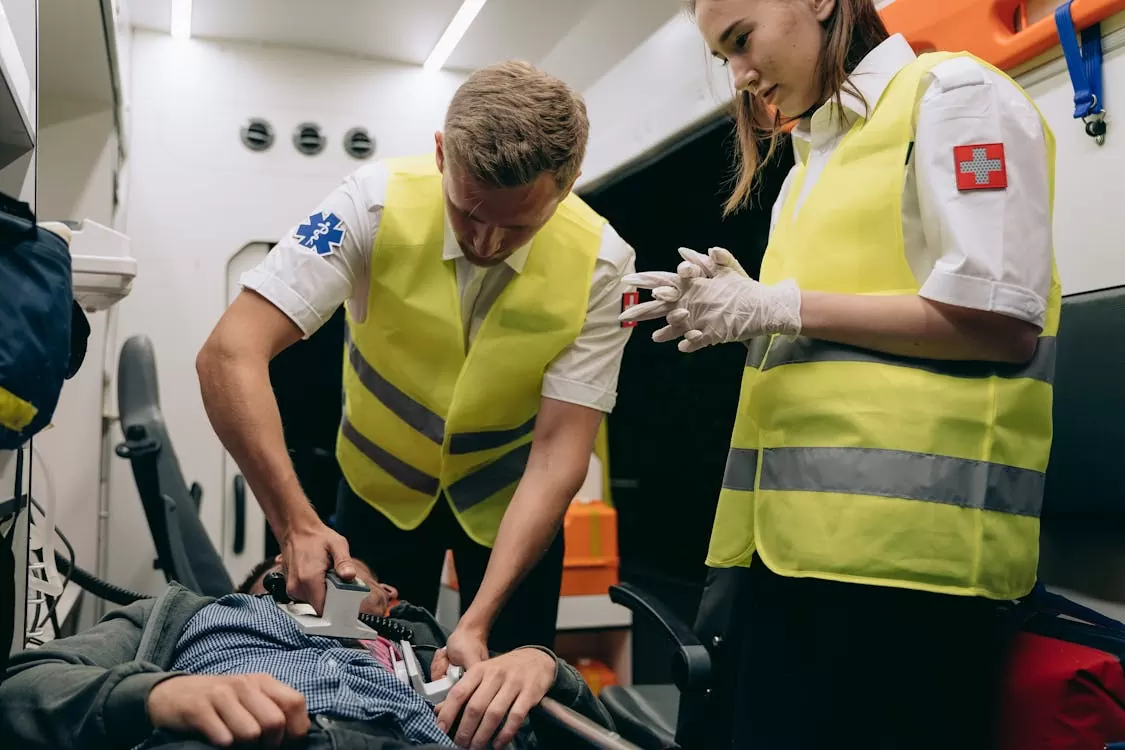
Australian paramedic protocol prioritises the “Primary Survey” — Airway, Breathing, Circulation, Disability, Exposure — within the first minute of any patient encounter. Step “D” (Disability) explicitly includes scanning for medical jewellery. A visible Mediband shaves an average of 6 minutes off treatment time in studies done across NSW Ambulance and Ambulance Victoria.
In a cardiac event, an anaphylactic reaction, or a stroke, every one of those 6 minutes is permanent brain or heart tissue you don’t get back.
Recommended for you
Products related to this article
Hand-picked to go with what you just read.
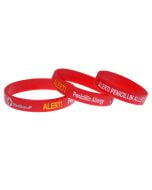
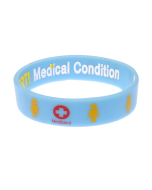
Who needs a Mediband
- Anyone with a diabetes diagnosis (Type 1, Type 2, gestational, hypoglycaemia-prone)
- Anyone prescribed an EpiPen, Anapen, or Jext for severe allergies (food, drug, insect, latex)
- Anyone on blood thinners (warfarin, apixaban, rivaroxaban, dabigatran)
- Anyone with epilepsy or seizure disorders
- Anyone with asthma, COPD, or chronic respiratory conditions
- Anyone with a cardiac stent, pacemaker, or congenital heart condition
- Anyone with autism, dementia, or any non-verbal communication risk
- Anyone with rare conditions or complex medications (Addison’s, mitochondrial, immune deficiencies)
- Anyone undergoing chemotherapy, dialysis, or immunosuppressive therapy
The Australian statistics
- 1 in 20 children has a diagnosed food allergy — the highest paediatric rate globally (ASCIA 2024)
- 1.9 million Australians live with diabetes (Diabetes Australia 2024)
- 250,000 Australians live with active epilepsy (Epilepsy Australia)
- 400,000+ Australians take long-term blood thinners
- 17% of Australian emergency-department presentations involve a patient unable to give their own medical history
How Australian paramedics use Medibands
Standard paramedic training in all eight states and territories includes wrist + neck visual scan within the Primary Survey. When a Mediband is present, paramedics:
- Read the engraved condition (allergy, diabetes, blood thinner, cardiac)
- Read the name + emergency contact number
- Check for medication contraindications BEFORE administering anything
- Pre-alert the receiving ED so the resus bay is set up
Without a Mediband, paramedics rely on phone unlock (often impossible), wallet rummaging (slow), or asking bystanders. None match a wrist scan for speed or accuracy.
What to engrave
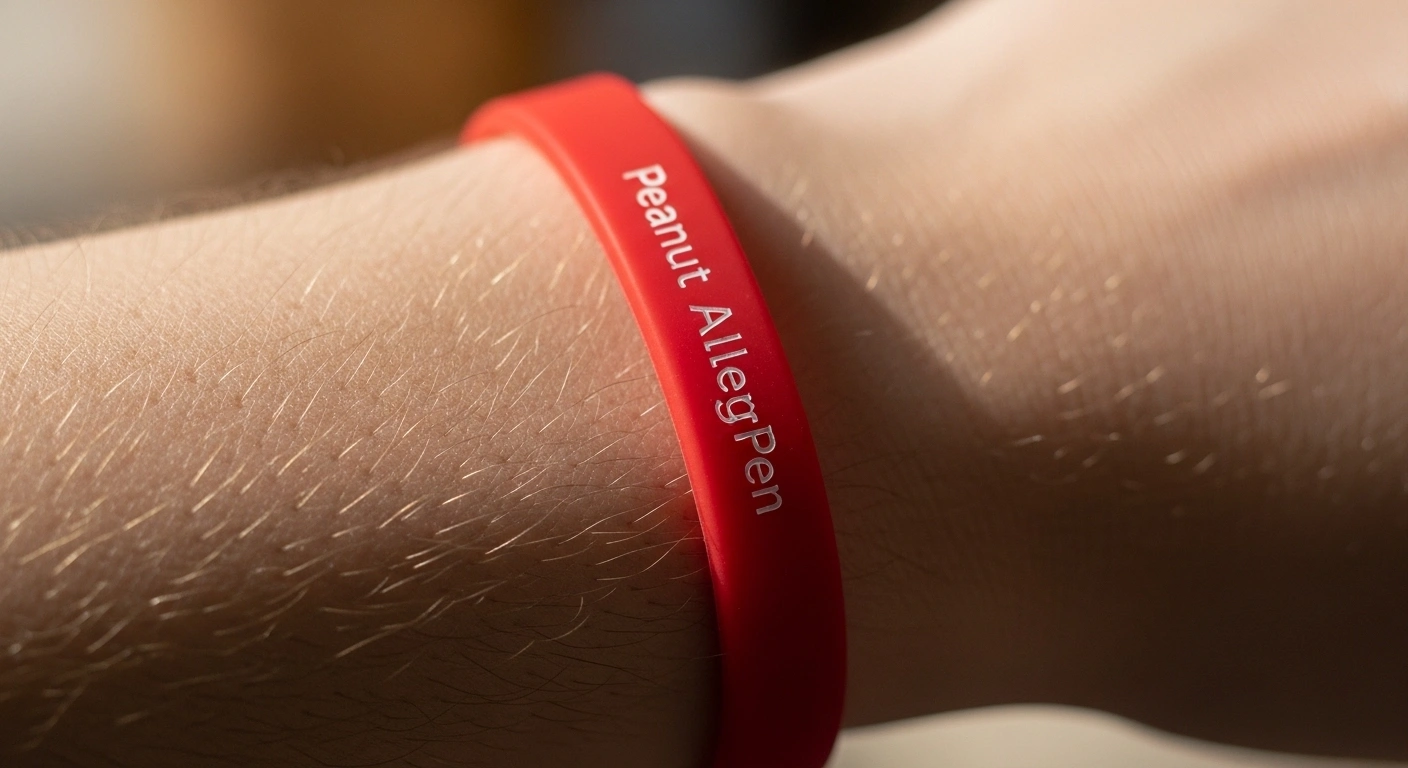
- Condition — specific (“Type 1 Diabetes” not just “Diabetes”; “Peanut Allergy” not “Allergy”)
- “Anaphylaxis” if you carry an EpiPen
- Critical medication (“On Warfarin”, “Insulin Dependent”)
- First name — paramedics use names to keep you calm + oriented
- ICE number — In Case of Emergency contact, international format
Keep it scannable in 5 seconds. A paramedic reads, decides, acts — they don’t have time to parse an essay.
Mediband vs phone-based medical ID
Apple Medical ID and Android Personal Safety apps are useful for slow encounters, but in genuine emergencies they fail because:
- Your phone might be in a bag across the room
- The battery might be dead
- The lock screen might not show medical info without configuration
- A bystander/paramedic must know to swipe the right place
- The phone might be smashed in a car accident
A Mediband works regardless of battery, network, or phone state. The two layers complement each other — Mediband first, phone backup.
Sport, school + travel scenarios
Sport — exercise-induced asthma, anaphylaxis, hypoglycaemia happen mid-game. Your coach needs to see your condition without breaking flow.
School — Australian Department of Education anaphylaxis policies require visible alert ID for children with documented conditions.
Travel — different language, different drug names, different emergency protocols. A Mediband + an allergy translation card travels with you. Most major airlines (Qantas, Virgin, Air New Zealand) accommodate special needs only when staff can verify the condition fast.
Materials + safety
Mediband bracelets are made from 100% medical-grade silicone or surgical stainless steel — hypoallergenic, latex-free, BPA-free, phthalate-free. Australian Standard AS/NZS ISO 10993 biocompatibility tested. Safe for sensitive skin, dishwasher-safe, swimming-pool-safe, sweat-resistant.
Mediband vs cheap alternatives
Cheap import bracelets often fail in three ways:
- Engraving fades — surface print, not laser-burned. Wears off in 6 months.
- Silicone breaks down — non-medical-grade rubber turns brittle within 12 months.
- Generic engraving codes — require a phone scan to unlock info, defeating the purpose.
Mediband uses permanent laser engraving and medical-grade materials — built to last 5+ years under daily wear.
Mediband vs MedicAlert subscription
MedicAlert is a US-based subscription service ($45-95/year). Mediband bracelets are one-off purchases ($25-150), no recurring fees. For most Australian users with a stable condition, a Mediband is the better value option. MedicAlert may still suit very complex multi-condition cases where the engraved info wouldn’t fit on a bracelet.
For Australian families
Many Australian families have multiple at-risk members — a child with peanut allergy, a parent on warfarin, a grandparent with dementia. A family Mediband kit costs about the same as a doctor’s consultation and protects everyone for years.
Real-life cases
Over 17 years, Mediband has heard from hundreds of customers whose bracelets shaped emergency outcomes:
- A diabetic motorcyclist in Brisbane spotted by a passing driver because of his bracelet — paramedics gave glucose, not insulin
- A Sydney mum’s anaphylactic son saved by a teacher who scanned his Mediband at a school excursion
- A Perth grandfather with dementia who wandered — returned home in 3 hours because his bracelet listed his daughter’s number
None of these stories rely on phones, apps, or wallet cards. Just engraved metal/silicone on a wrist.
Common Mediband mistakes
- Taking it off “just for the gym” — emergencies happen during exercise more often than rest
- Not updating engraving when medications change
- Engraving an out-of-date phone number
- Choosing a design that’s hidden by sleeves
- Buying one for the child but forgetting one for the carer parent
How to choose your first Mediband
- For Type 1 diabetes or anaphylaxis: classic silicone or stainless steel, engraved with condition + ICE number
- For blood thinners: stainless steel for durability + readability
- For kids: write-on style so info can be updated as they grow + heal
- For sport: silicone, light, won’t chafe
- For multi-condition: two bracelets layered, OR one with QR code linking to a profile
The Mediband promise
Mediband has served over 500,000 Australians since 2008. NDIS-registered, trusted by Australian paramedics, school nurses, GPs, allergy specialists, and Type 1 diabetes educators. Permanent laser engraving, medical-grade materials, free shipping Australia-wide.
References & further reading
- NSW Ambulance — Adult Clinical Practice Guidelines (Primary Survey).
- ASCIA (2024) — Anaphylaxis Action Plan + Schools Anaphylaxis Resources.
- Diabetes Australia (2024) — National Diabetes Statistics + Hypoglycaemia Protocols.
- Australian Bureau of Statistics (2024) — National Health Survey Results.
- Heart Foundation Australia — Anticoagulant Patient Safety Resources.
Frequently Asked Questions
Quick answers from the Mediband team
Do I really need a Mediband if I have a phone medical ID?
Yes. Phone medical ID complements but doesn't replace a Mediband. In emergencies your phone may be locked, dead, or out of reach — a wrist bracelet works regardless. Australian paramedics scan wrists in the first 30 seconds; they scan phones much later if at all.
How long does engraving last on a Mediband?
Permanent laser engraving on Mediband silicone and stainless steel lasts the life of the bracelet — typically 5+ years under daily wear including swimming, sports, and dishwasher cycles. Cheap surface-printed alternatives fade in 6-12 months.
What should I engrave if I have multiple conditions?
Engrave the highest-priority condition first (life-threatening allergies, anticoagulants), the second most critical, then a phone number for full details. If you have 4+ conditions, consider a QR-code Mediband linking to a profile with everything.
Are Medibands recognised internationally?
Yes — the universal Star of Life symbol or 'Medical Alert' text is recognised by emergency services worldwide. Engrave in English even if travelling to non-English countries; most paramedics in major destinations read English medical terms.
How tight should a Mediband sit on my wrist?
Snug enough not to slide over the hand but loose enough to slide a finger underneath. Should not leave indentation marks. Silicone has slight stretch; stainless steel needs measured fit. Mediband sizing guide covers wrist sizes from 130mm (kids) to 220mm (large adult).
What if my condition changes — do I buy a new bracelet?
For minor updates (new phone number, additional condition), a write-on Mediband lets you update yourself. For major condition changes (new diagnosis), invest in a new engraved bracelet — the cost is small versus the safety value.
Are Medibands NDIS-claimable in Australia?
Yes. Mediband is a registered NDIS provider for medical alert identification under the Consumables category. Most plans cover one bracelet replacement per year. Check with your plan manager for specifics.

Written by
Founder, Mediband
Founder of Mediband; over 20 years providing medical IDs worldwide.
← Previous
Why You Need a Medical Alert Bracelet — Mediband 2025 Guide
Next →
Australian Super Foods You Didn't Know Were Super — 2025 Guide
Comment(s)