
What the Hidden Disabilities Sunflower lanyard means — and how a medical ID works alongside it

Quick answer
A sunflower-style lanyard is a discreet way to let staff know someone has a hidden disability or condition, so they can offer a little more time, patience or help. It does not carry your medical details — a medical ID does. Many people wear both: the lanyard to signal "please be patient", and a medical ID to carry the emergency information a first responder needs.
This page is general information, not medical advice. For advice about your condition, speak with your GP. In an emergency, call 000.
Designed in Australia
NDIS-registered
22+ years, since 2004
4.9★ verified customer rating
What does a sunflower lanyard mean?
The green sunflower lanyard is a worldwide symbol for hidden disability. Wearing one is a quiet way to let staff in airports, shops, hospitals and other venues know that you have a disability or condition that is not obvious — so they can offer more time, patience or help. It does not reveal what your condition is, and you never have to explain yourself.
A hidden disability is any condition you cannot see at a glance. That includes autism, ADHD, anxiety, chronic pain, epilepsy, diabetes, heart conditions, vision or hearing loss, dementia and many more. The lanyard simply signals "there may be more going on than you can see".
Who the hidden-disability lanyard is for
There are no rules about who can wear one, and you do not need a diagnosis to put one on. People commonly wear a sunflower-style lanyard when they live with:
- Autism or are on the autism spectrum, or have ADHD
- Anxiety, or find busy and noisy places overwhelming
- A chronic illness, chronic pain or fatigue
- Epilepsy, diabetes, a heart condition or another condition that can flare without warning
- Vision or hearing loss, or a condition that affects communication
- Dementia, or are a carer supporting someone who does
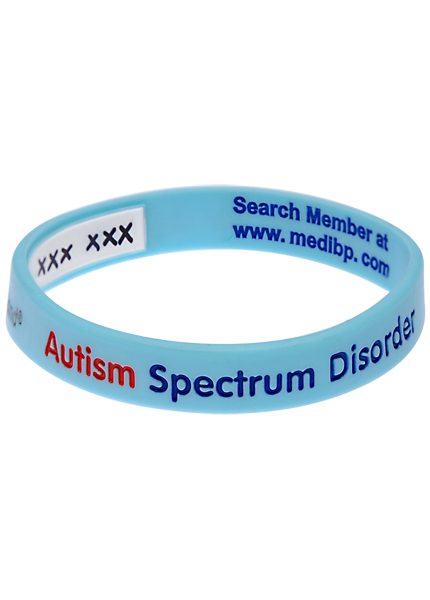
If you are buying for a child on the autism spectrum, a write-on or custom-engraved band pairs naturally with a lanyard — the band carries the details, the lanyard carries the signal. See the autism medical ID range →
Sunflower lanyard vs medical ID: what each one does
A lanyard says be patient with me. A medical ID says here is exactly what I need in an emergency.
The two do different jobs, and they work best together. A lanyard is a discreet social signal; a medical ID is the part a paramedic actually reads when you cannot speak for yourself.
| Sunflower-style lanyard | Medical ID (bracelet, necklace or card) | |
|---|---|---|
| What it does | Signals "I have a hidden disability — please be patient" | Carries your actual condition, medication and emergency contact |
| What it stores | No personal or medical information | The details first responders need, engraved or printed on the band |
| Who reads it | Staff, shop assistants, airport and transport teams | Paramedics, nurses, doctors, first responders |
| When it helps | Everyday moments — queues, security, busy venues | The first 60 seconds of an emergency — no battery, no app |
| Best use | Wear it to be understood | Wear it to be treated correctly when it counts |
If you have a condition that matters in an emergency — a severe allergy, epilepsy, diabetes, a heart condition, or a medication a paramedic needs to know about — a medical ID carries those details on your wrist, ready when you cannot speak for yourself. Browse medical alert bracelets →
How to get a sunflower lanyard in Australia
In Australia you can often pick up a sunflower lanyard free or at low cost from places that take part in the scheme — many airports, train stations, supermarkets, councils, libraries and pharmacies hand them out, and you can also order one from the official Hidden Disabilities Sunflower store. You do not need to prove anything to wear one.
What Mediband adds is the medical ID that works alongside it — the part that carries your details when it matters most.
Are sunflower lanyards free in Australia?
Often, yes. Many participating venues — including airports, transport hubs, supermarkets, councils and some pharmacies — give sunflower lanyards out free to anyone who asks, with no proof of condition required. You can also buy one from the official scheme store. Availability varies by location, so it is worth asking at the customer-service desk wherever you are.
What to put on a medical ID if you wear a sunflower lanyard
Your lanyard signals that you may need understanding; your medical ID should carry the details a first responder needs. As a guide, most people include:
- The main condition or conditions (for example EPILEPSY, AUTISM, TYPE 1 DIABETES)
- Any critical medication or device, and serious allergies
- An emergency contact name and mobile number
- Anything a paramedic should know in the first minute
Not sure what the engraving shorthand means? See our medical ID abbreviations guide, and check our wrist-sizing guide before you order.
Do first responders actually look for a medical ID?
Paramedics and emergency staff in Australia are trained to check the wrist and neck for a medical ID as part of their assessment. A clear, current ID can speak for you when you cannot speak for yourself. Read more on how responders use a medical ID →
Designed in Australia
NDIS-registered
4.9★ verified customer rating
Pair your lanyard with a medical ID that carries the details
Custom-engraved or ready-to-wear. Designed in Australia, NDIS-registered.
Shop medical alert braceletsFrequently asked questions
What does a sunflower lanyard mean?
It is a discreet, worldwide signal that the wearer has a hidden disability or condition that is not obvious. It lets staff know they may need more time, patience or help, without the wearer having to explain. It does not show what the condition is.
Are sunflower lanyards free in Australia?
Often, yes. Many airports, transport hubs, supermarkets, councils and some pharmacies hand them out free, with no proof of condition needed. You can also buy one from the official scheme store. Availability varies by location.
Do I need a diagnosis to wear one?
No. There is no eligibility test and you do not need to prove anything. Anyone who feels a sunflower lanyard would help them in everyday situations can wear one.
Is a sunflower lanyard the same as a medical ID?
No — they do different jobs. A lanyard signals that someone has a hidden disability so staff can be patient. A medical ID carries the actual condition, medication and emergency-contact details that a paramedic reads in an emergency. Many people wear both.
Can you wear a sunflower lanyard for autism, ADHD or anxiety?
Yes. The lanyard covers any hidden disability, including autism, ADHD and anxiety. For children on the autism spectrum, a write-on or engraved medical ID is a useful companion — the band carries the details, the lanyard carries the signal.
Mediband is not affiliated with, or endorsed by, the Hidden Disabilities Sunflower Scheme. "Sunflower" and "Hidden Disabilities Sunflower" are trademarks of their respective owners and are referred to here for description only. Mediband makes medical ID bracelets, necklaces and wallet cards — Designed in Australia, NDIS-registered, trusted since 2004.