
By Michael Randall, Founder, Mediband · Updated 8 June 2026 · 9 min read
Family health tips you can actually keep up with — that's what most Australian parents are after. Between school runs, work and the unpredictable bug your toddler brings home in winter, "wellness" needs to fit into normal life, not replace it. The five habits below are simple, proven and ready to start today.
This guide is built on what Mediband customers have told us works across thousands of families since 2009. Each habit pairs with a quick action you can take this week — from a five-minute pantry edit to fitting every family member with a medical ID bracelet so emergency responders never lose time.
Why family health needs a daily plan, not a New Year resolution
According to the Australian Institute of Health and Welfare, 47% of Australians live with at least one chronic condition — and the household is where prevention starts or stalls. Families that share rituals (a shared meal, a 20-minute evening walk, a weekly groceries reset) report stronger long-term health outcomes than those who chase short bursts.
Think of family health as a daily operating system, not a quarterly project. The five tips below assume one parent or carer is leading the way, but every habit scales down to age-appropriate versions for kids and up to active grandparents.
5 family health habits that actually work
Each habit is sized to fit a normal week. Pick one to start — once it sticks (two to three weeks), layer on the next.
1. Eat a rainbow at every shared meal
Cancer Council Australia recommends 2 serves of fruit and 5 serves of vegetables per adult every day. The simplest family system: aim for three colours on every dinner plate. Sweet potato + spinach + capsicum is one colour group; brown rice + broccoli + carrot is another. Kids who plate their own dinner from colour bowls eat 26% more vegetables (Stanford 2019).
2. Move together for 20 minutes daily
The Australian Physical Activity Guidelines call for 60 minutes per day for kids 5–17 and 30+ minutes for adults. A 20-minute family walk after dinner ticks the social, cardiovascular and circadian-rhythm boxes at once. Weekends, swap the walk for a bike ride or backyard cricket.
3. Build a "no-phone hour" before sleep
The Sleep Health Foundation links late-evening screen time to poorer sleep quality across all ages. Set the family rule: phones in the kitchen 60 minutes before bed. Replace with book reading, a board game or simple chat. Better sleep means stronger immunity and better mood the next morning.
4. Hydrate before caffeine, juice or soft drink
Adults need ~2.1 L (women) to 2.6 L (men) of fluid daily, kids 1.2–1.6 L. The simplest rule: every family member starts the day with a full glass of water before any other drink. Top up at each meal. Hydration helps concentration at school, productivity at work and reduces the "afternoon slump" snack reach.
5. Fit every family member with a medical ID bracelet
Paramedics in Australia rely on visible medical IDs in the first 60 seconds of any roadside or schoolyard emergency. Anaphylaxis, asthma, Type 1 diabetes, epilepsy or even a no-known-allergies note can change the medication path significantly. A medical alert bracelet is a one-time $30–$60 investment that runs 24/7, doesn't need charging and doesn't drown in handbag clutter.

Recommended for you
Products related to this article
Hand-picked to go with what you just read.
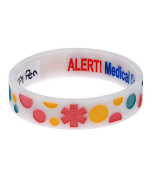
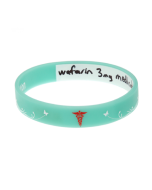
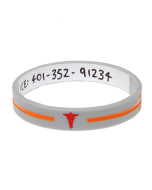
How a medical alert bracelet protects every family member
Most Australian households are familiar with the EpiPen — fewer realise that without a visible alert, paramedics may not know to look for it. A reversible write-on bracelet records:
- Name and date of birth — speeds up hospital admission paperwork
- Primary condition — e.g. "Anaphylaxis: Peanuts", "Type 1 Diabetes", "Asthma"
- Allergies and medication — penicillin reactions, blood thinners, insulin dependency
- Emergency contact — a phone number a first responder can reach immediately
Mediband bracelets are silicone, sweat-proof and reversible — write on the inside, blank on the outside so the wearer doesn't broadcast their condition. Designs cover toddler wrists through to adult, in plain colours and patterns that match school uniforms or activewear.
Building a family emergency plan step by step
Habits stick when the household has a written reference. A one-page family emergency plan pinned to the fridge — combined with medical IDs on every wrist — is the single biggest jump in preparedness most homes can make in an hour.
Step 1: List every family member's "red flag" information
Write each person's name, date of birth, allergies, conditions, GP contact and Medicare number. Keep one copy on the fridge and one in each parent's phone Notes app.
Step 2: Identify two emergency contacts
Pick one local and one interstate contact. Local handles immediate pickup if both parents are unreachable; interstate is a safety net for major events (bushfire, flood) where local lines may be down.
Step 3: Fit medical IDs to every family member
Sizes for toddler (130–150 mm), child (155–175 mm), youth (180–200 mm) and adult (210–230 mm) are all available. The bracelet matters most for the people who can't speak for themselves in an emergency — young kids, anyone with a condition that causes loss of consciousness, and elderly relatives.
Step 4: Review every six months
Schedule a calendar reminder: review allergies, update phone numbers, replace any bracelet that has cracked or faded. School uniform changes at the start of each year are a good prompt.
Family health checklist by age
Different life stages need different anchors. Use this as a printable starter list.
Babies and toddlers (0–4)
- Immunisation schedule on track via your GP or council clinic
- Soft-band medical ID if allergies, eczema or congenital condition is diagnosed
- Daily outdoor play, even 15 minutes — protects vitamin D and circadian rhythm
Primary school (5–12)
- Asthma plan or anaphylaxis plan stored in the school office AND on a write-on bracelet
- Two serves of fruit and one veg in the lunchbox; protein at breakfast
- 9–11 hours of sleep with no devices in the bedroom
Teenagers (13–18)
- Independent management of own medical ID — they own the bracelet, they update the text
- 30+ minutes of activity (sport, walking, cycling) most days
- Mental health check-in every 2 weeks; normalise it from age 13
Adults and carers
- Annual GP check, including blood pressure and cholesterol from age 40
- Medical ID for any chronic condition — even a "blood thinner" note saves emergency time
- Reserve one weekly window for movement that matters to you (yoga, run, swim, surf)
Grandparents and elderly relatives
- Falls prevention check at the GP every 12 months
- Medical ID listing dementia status, blood thinners and emergency contact
- Stay socially connected — loneliness is a known cardiovascular risk factor
Partnering with Australian health organisations your family can trust
Reliable family health tips come from people doing the research. Bookmark these for evidence-based, Australia-specific guidance:
- Allergy & Anaphylaxis Australia — anaphylaxis action plans, EpiPen training resources
- Diabetes Australia — Type 1 and Type 2 management, NDSS card and supplies
- Asthma Australia — written asthma action plan templates, free phone support
- Epilepsy Action Australia — seizure management, school education resources
- Heart Foundation Australia — heart-healthy recipes, free 30-day movement plan
- Cancer Council Australia — sun safety, screening and lifestyle prevention

Small habits, lifelong protection
Family health isn't built in dramatic weeks — it's built in small daily choices that compound over years. A colourful plate. A walk after dinner. A no-phone hour. A glass of water. A medical ID on every wrist.
If today's the day you start, pick just one. Fit the family with medical alert bracelets tonight. Schedule the GP check next week. The single biggest jump in family safety comes from the band that speaks for your kids and partner when they cannot.
Frequently Asked Questions
What are the most important family health tips for busy parents?
The five highest-leverage daily habits are: eat a rainbow at meals, move together for 20 minutes, build a no-phone hour before sleep, hydrate before any other drink, and fit every family member with a medical ID bracelet. They each take under 15 minutes a day and compound into a meaningful health buffer over the year.
At what age should kids start wearing a medical ID bracelet?
Any child with a diagnosed allergy, asthma, diabetes, epilepsy or seizure risk should wear one from the day of diagnosis — even infants in soft-band variants. For kids without conditions, age 5 (school start) is a good prompt because they are increasingly away from a parent who can speak for them.
What information should I put on a Mediband write-on bracelet?
Name, primary condition, key allergy or medication, and an emergency contact phone number. The bracelet is reversible so the writing is hidden from view but visible to paramedics who flip it. Avoid full addresses or medicare numbers.
How often should my family see the GP for a health check?
Annual check for adults 30+, age-appropriate immunisations for kids on the National Immunisation Program schedule, and a six-monthly review for anyone with a chronic condition (diabetes, asthma, cardiac, autoimmune). A medical ID review fits naturally into the same calendar reminder.
Are silicone medical ID bracelets safe for kids with eczema?
Yes — Mediband bracelets are medical-grade silicone, latex-free and free of common contact-dermatitis triggers. The reversible-write-on design also means the writing is on the inside, so no ink touches the skin. If a child has very sensitive skin, a slightly looser fit and an evening break of an hour is recommended.
What's a realistic weekly meal plan for a family of four?
Three "fast" dinners (stir-fry, tacos, baked potatoes), two "comfort" dinners (pasta, curry), one "fresh" dinner (salad or grain bowl) and one "leftovers" night. Aim for three colours on every plate and one vegetarian night. Bulk cook the protein on Sunday to save 20 minutes each weekday.
How do I keep teenagers engaged with their own health?
Hand them ownership. Let them pick their own medical ID design (we have unisex, sporty and minimal styles), schedule their own GP visits from age 14, and track their own sleep on whatever device they use. Engagement comes from autonomy, not nagging.

Written by
Founder, Mediband
Founder of Mediband; over 20 years providing medical IDs worldwide.
← Previous
How to Lose Weight: 5 Habits Backed by Science
Next →
Standing up from desks helps avoid diabetes
Comment(s)