
By Michael Randall, Founder, Mediband · Updated 13 June 2026 · 9 min read
Travelling overseas with a medical condition adds layers most Australian travellers don't think about until something goes wrong — different prescription rules, customs declarations for EpiPens, language barriers in a hospital admissions queue, time-zone-shifted medication schedules. This guide is the practical checklist to make your holiday safe, smooth and free of preventable scares.
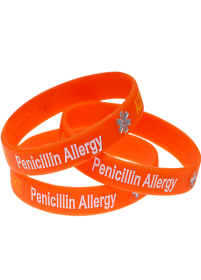
Every step pairs an action with what to put on a medical ID bracelet — because the bracelet is the only piece of safety gear that doesn't need a charger, doesn't fail in turbulence and works in every language a first responder might speak.
Why a medical condition changes how you pack for overseas travel
Smartraveller (the Australian Government's travel advisory) lists chronic-condition mismanagement among the top five preventable causes of overseas emergency-evacuation insurance claims. The patterns are predictable: insulin not labelled in destination language, EpiPen denied at security, asthma puffer left at home, allergy menu missed at a restaurant.
A medical alert bracelet covers the last 5 metres of the response when language and bureaucracy collapse — and good preparation covers the 5,000 km that came before.
7 things to do before flying overseas with a medical condition
1. Get a GP letter on letterhead
A signed GP letter listing your conditions, prescribed medications (generic names, not brand names) and devices (EpiPen, insulin pump, CPAP) clears 90% of border-security questioning. Translate into the destination's official language if possible.
2. Pack medication in carry-on, original packaging
Liquid medication exceeding 100 mL must be in original chemist packaging with a prescription label. Keep the GP letter folded inside the box. Aviation security in Sydney, LAX, Heathrow and most Asia hubs will wave it through; without the label, expect it to be confiscated.
3. Confirm travel insurance covers the condition
Most basic policies EXCLUDE pre-existing conditions unless you've declared and paid the surcharge. Speak with the insurer directly. Diabetes, asthma, anaphylaxis and heart conditions are commonly excluded by default.
4. Research the destination's medical infrastructure
Smartraveller country pages list public hospital quality + EpiPen availability + insulin equivalent brand names per destination. Bali, Vietnam, India and parts of the Middle East are common surprise gaps.
5. Fit a medical alert bracelet — in plain English
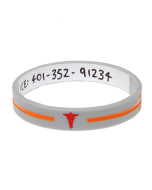
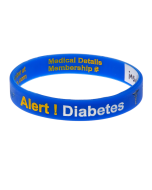
The diagnosis line stays in English on the bracelet — first-responder training globally includes basic English medical terms. "Diabetes Type 1", "Anaphylaxis: peanuts", "Epilepsy" and "Pacemaker" are universally recognised. Add the parent or partner mobile (with country code) underneath.
6. Plan medication for time-zone shifts
For insulin, asthma controllers and seizure medications, the schedule needs adjusting when crossing 4+ time zones. Speak with your GP about a "shift schedule" before flying — don't improvise mid-air.
7. Carry the EpiPen / inhaler in cabin, not checked
Checked-baggage temperatures swing between -25°C and +40°C in cargo holds. EpiPens, insulin and inhalers all degrade outside 15-25°C. Always cabin. Never checked.

Recommended for you
Products related to this article
Hand-picked to go with what you just read.
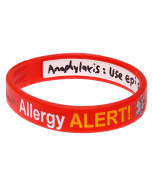
Two weeks before the flight — your travel-with-condition checklist
14 days out
GP appointment for letter, prescription refills, travel-vaccine top-ups. Update medical-ID bracelet with current medication.
7 days out
Confirm travel insurance covers the condition. Pack the medication-essentials bag (kept separate from main luggage).
3 days out
Translate critical labels into destination language. Print Smartraveller country page for the destination.
Day of
Medical ID on wrist. Medication in cabin baggage. GP letter in passport sleeve. Emergency-contact card on top.
At the destination
Photograph the nearest hospital, pharmacy and Australian consulate address on your phone. Save in offline maps.
What to write on a medical ID for international travel
Anaphylaxis traveller
- Name + DOB
- "Anaphylaxis: peanuts — EpiPen"
- Partner mobile with country code (+61 4xx)
Type 1 diabetic traveller
- Name + DOB
- "Type 1 Diabetes — Insulin pump"
- Partner mobile + endocrinologist's email
Asthma traveller
- Name + DOB
- "Severe asthma — Ventolin"
- Partner mobile + travel insurance hotline
Epilepsy traveller
- Name + DOB
- "Epilepsy — Levetiracetam"
- Partner mobile
Pacemaker / cardiac traveller
- Name + DOB
- "Pacemaker — MRI not safe"
- Cardiologist + partner mobile
Australian travel-health authorities to bookmark
- Smartraveller — official Australian Government travel advisory (smartraveller.gov.au)
- Department of Foreign Affairs and Trade — consular assistance overseas
- Australian Government Department of Health — Personal Importation Scheme for medications
- Therapeutic Goods Administration — what you can and can't take overseas
- Travel Doctor TMVC — pre-travel medical consults
- International SOS — global medical assistance hotline (often included in travel insurance)

The bracelet you don't take off, the GP letter you don't lose
Overseas travel with a medical condition isn't risky if you prepare. GP letter. Medication in cabin. Insurance declaration. Medical ID on the wrist with the diagnosis in plain English. Add Smartraveller's country page to your phone. The holiday plans the rest.
Frequently Asked Questions
Quick answers from the Mediband team
Can I take an EpiPen on an international flight from Australia?
Yes — EpiPens are allowed in cabin baggage with a GP letter on letterhead. Keep the auto-injector in original packaging with the prescription label. Most aviation security at Sydney, Melbourne, LAX, Heathrow and major Asia hubs waves it through with no issue.
Does Australian travel insurance cover pre-existing medical conditions?
Only if you declare them and pay the typical surcharge. Most basic policies exclude pre-existing conditions by default. Speak with the insurer directly — diabetes, asthma, anaphylaxis and heart conditions are commonly excluded.
How do I keep insulin at the right temperature on a long-haul flight?
Use a Frio insulin cooling wallet (no refrigeration required) or an insulated pouch with a slim ice pack. Always carry in cabin baggage — checked cargo temperatures swing between -25°C and +40°C, far outside insulin's 2-8°C range.
Should my medical ID bracelet be translated into the destination language?
Not necessary — keep the diagnosis line in English. International first responders are trained on English medical terms like 'Diabetes', 'Anaphylaxis', 'Epilepsy' and 'Pacemaker'. The phone number is the part that matters most — include the +61 country code.
What happens if I run out of medication overseas?
Use the GP letter + prescription label to visit a local pharmacy. Many countries allow Australian prescriptions; some require a local GP visit. International SOS hotline (included in most travel insurance) can arrange this.
Can I get the same medications overseas as in Australia?
Generic names yes; brand names often differ. Smartraveller country pages list common destination equivalents. The GP letter listing generic names solves this 90% of the time.
How do I adjust medication for time-zone changes?
For insulin, asthma controllers and seizure medications, ask your GP for a 'shift schedule' if crossing 4+ time zones. Don't improvise — incorrect timing can cause hypos, breakthrough seizures or asthma attacks.

Written by
Founder, Mediband
Founder of Mediband; over 20 years providing medical IDs worldwide.
← Previous
Australian Health News Roundup: 7 Updates for 2026
Next →
Australian Health News: 6 Updates Shaping Family Care
2 Comment(s)
Alan Shields
Jul 23, 2019 14:42
Do you have any bands with Parkinson's alert
Michael Randall
Aug 21, 2019 21:36
Yes, we have a Parkinsons medibands available here: https://www.mediband.com/au/parkinson-s-disease-allergy-medical-bracelet/ and here: https://www.mediband.com/us/parkinson-s-disease-allergy-medical-bracelet/