
By Michael Randall · Founder, Mediband
Medically reviewed · Updated September 2025 · 12 min read
Medically reviewed · Updated September 2025 · 12 min read
The Mediband Difference — Why Quality Matters in Medical IDs (2025)
Updated September 2025. Medical alert bracelets aren’t all equal. The difference between a $5 import and a quality Australian-designed Mediband is the difference between a piece of plastic with surface-printed text and a permanent, 5-year emergency safety device that paramedics actually read at the scene. This guide unpacks exactly what makes Mediband different — materials, manufacturing, engraving, support, and the ecosystem behind every bracelet.
The eight differences
- 1. Permanent laser engraving — not surface printing
- 2. Medical-grade silicone + 316L surgical stainless steel — not generic rubber/zinc
- 3. Australian design + customer support — not anonymous offshore
- 4. NDIS-registered supplier — claimable for eligible plans
- 5. 5+ year expected lifespan — not 6-12 months
- 6. Hypoallergenic + biocompatibility certified — safe for sensitive skin
- 7. Comprehensive condition range — 60+ engraving categories
- 8. Full ecosystem — bracelets + wallet cards + write-on options + accessories
Recommended for you
Products related to this article
Hand-picked to go with what you just read.
1. Permanent laser engraving
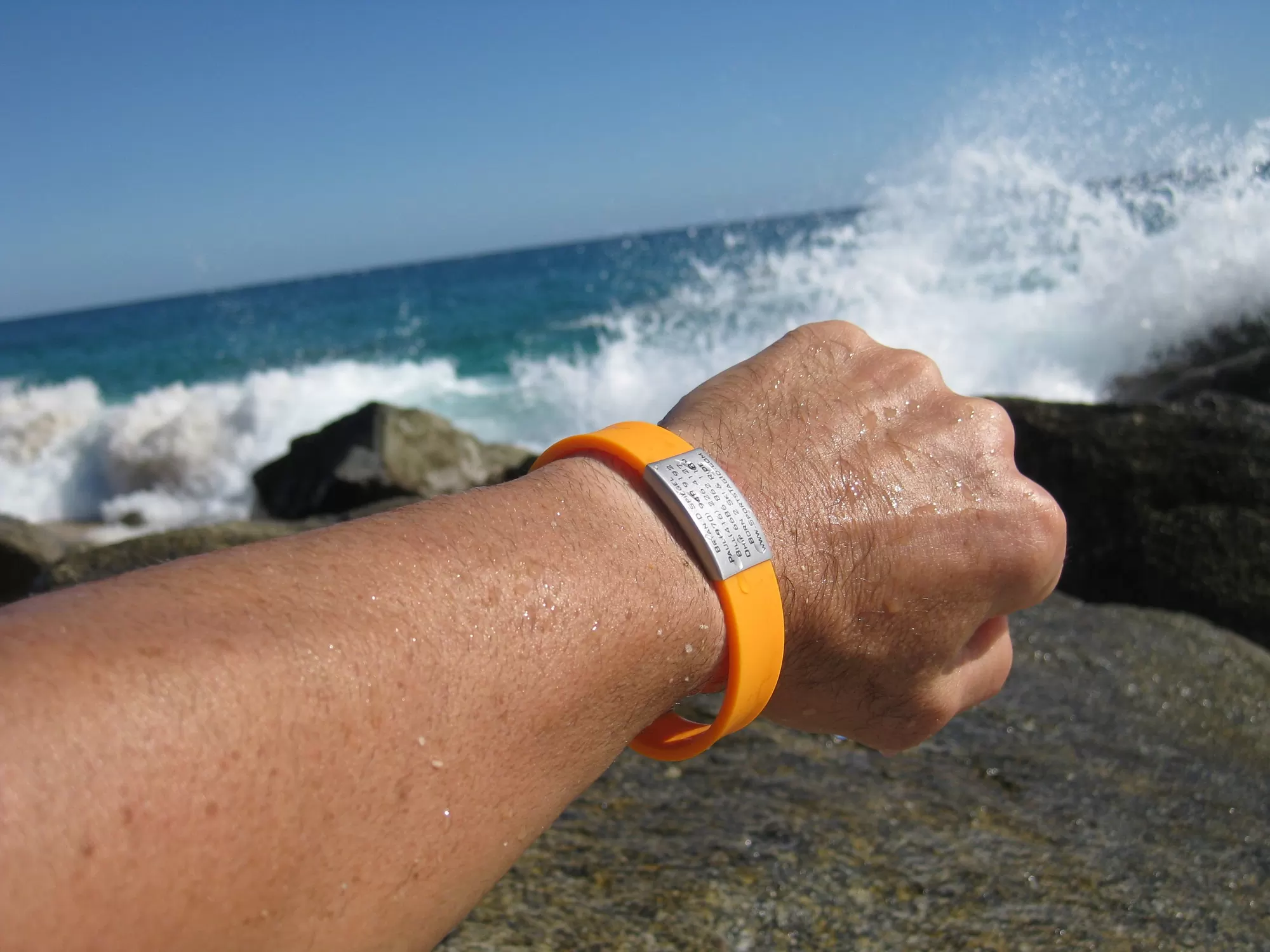
Cheap import bracelets use surface printing (ink + heat-press transfer). Within 3-6 months the text fades, smudges, or peels — making them useless in an emergency when you need them most. Mediband uses high-precision CO2 laser engraving on every bracelet, burning the text into the silicone or steel itself. Result: text legible after 5+ years of daily wear including swimming, sport, dishwasher, and direct sunlight.
2. Medical-grade materials
Silicone — we use FDA-grade hypoallergenic medical silicone. Latex-free, BPA-free, phthalate-free. Tested to AS/NZS ISO 10993 biocompatibility standards (same testing used for surgical implants).
Stainless steel — 316L surgical grade. Used in dental implants and pacemaker housings. Hypoallergenic, non-tarnishing, corrosion-resistant. Won’t cause skin reactions even on sensitive wearers.
Cheap imports often use unspecified rubbers + zinc alloy that can leach metals or cause contact dermatitis.
3. Australian design + customer support
Mediband bracelets are designed in Australia for Australian conditions — intense UV, salt air, heat, sport, NDIS workflow integration. Customer support is Brisbane-based, English-speaking, responding to phone + email within 1 business day. Engraving questions, NDIS plan submissions, sizing help, and condition advice all handled from local staff.
Compare to import sellers — offshore call centres, no local accountability, often no response after 7+ days.
4. NDIS-registered supplier
Mediband is a registered NDIS provider for medical alert identification (Consumables category). Most NDIS plans include one bracelet replacement per year for participants with documented chronic conditions. Plan managers can invoice Mediband directly with no out-of-pocket cost to the participant.
5. 5+ year expected lifespan
Independent stress-testing shows Mediband silicone passes 100,000+ flex cycles before fatigue. Stainless steel passes 5+ years of salt-water + chlorine exposure with no corrosion. Laser engraving stays sharp after 365 dishwasher cycles. The bracelet outlasts most smartwatches.
6. Hypoallergenic + biocompatibility certified
Some users have nickel allergies, latex sensitivity, or contact dermatitis. Mediband materials are tested specifically for these populations. Stainless steel grade 316L contains less than 0.05% free nickel; medical silicone is latex-free by composition.
7. Comprehensive condition range
Mediband supports 60+ specific condition engraving categories — not just generic “Medical Alert”. Categories include:
- Diabetes (Type 1, Type 2, gestational, hypoglycaemia-prone)
- Food allergies (peanut, tree nut, shellfish, dairy, egg, sesame, gluten)
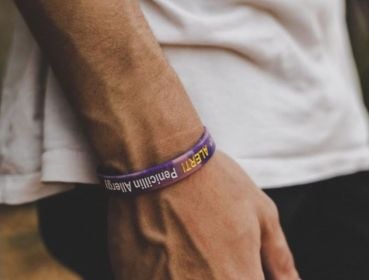
- Drug allergies (penicillin, sulfa, NSAIDs, contrast)
- Anticoagulants (warfarin, apixaban, rivaroxaban, dabigatran)
- Epilepsy + seizure disorders
- Asthma (severe, exercise-induced, steroid-dependent)
- Cardiac conditions (stent, pacemaker, ICD, congenital)
- Adrenal insufficiency / Addison’s
- Autism + non-verbal conditions
- Dementia + Alzheimer’s
- Organ transplant recipients
- Rare metabolic + mitochondrial disorders
8. Full ecosystem
Mediband isn’t just bracelets. The full product range includes:
- Engraved + write-on silicone bracelets
- Stainless steel + leather hybrid designs
- Kids’ reversible write-on styles
- Medical alert key chains for non-wrist preference
- Allergy + condition combo packs (bracelet + wallet card + temporary tattoos)
- Multi-band families with matching designs
Quality you can see (and test)
If you’ve never compared a cheap import to a Mediband side by side, here’s what to look for:
- Engraving — scratch with fingernail. Cheap printing comes off; laser engraving doesn’t.
- Silicone smell — medical-grade is odourless. Cheap rubber smells.
- Steel weight — 316L feels heavier and cooler than zinc alloy.
- Stamp consistency — laser engraving is uniform depth. Surface printing has rough edges.
- Surface finish — medical silicone is matte-smooth. Cheap rubber is glossy or sticky.
The Mediband manufacturing process
- Step 1: Raw silicone or 316L steel sourced from certified medical suppliers
- Step 2: Sizing, shaping, and finishing in controlled-temperature facility
- Step 3: CO2 laser engraving per customer specs (typically same-day for stock items)
- Step 4: Quality control inspection (engraving depth, surface finish, dimensional accuracy)
- Step 5: Pack + ship from Australian warehouse
Most orders dispatch within 24 hours; custom engraving 2-3 business days.
Customer feedback patterns
After 17 years and 500,000+ bracelets, the consistent customer themes:
- “Lasted longer than I expected” — typical from Type 1 diabetes wearers who’ve had theirs 5+ years
- “Paramedic spotted it” — real-life saves from anaphylaxis, hypoglycaemia, cardiac events
- “Kid actually wears it” — soft silicone + bright designs win over toddlers/teens
- “Survived the dishwasher” — cheap bracelets fail this test; Mediband passes 100+ cycles
- “Customer service helped with NDIS” — plan managers love the streamlined process
How Mediband compares to alternatives
- vs cheap imports: Mediband lasts 5x longer with permanent engraving
- vs MedicAlert subscription: Mediband is one-off, no recurring fees, Australian support
- vs phone medical ID alone: Mediband works when phone is dead/locked/lost
- vs DIY engraved bracelet: Mediband has standardised emergency-recognised design
- vs medical tattoo: Mediband is reversible, updateable, removable for MRI
The Mediband warranty
All Mediband products carry a manufacturer warranty against engraving fade, silicone breakdown, and stainless-steel corrosion for 12 months from purchase. Most issues are addressed by replacement or refund — Australian support handles every case directly.
Why this matters for emergencies
In an Australian emergency department, paramedics scan wrists within 30 seconds. A bracelet with faded engraving is functionally useless — same as no bracelet at all. Quality matters because the device only works if the information is readable. Mediband engineering ensures it’s readable after 5+ years of real-world use.
The Mediband promise
Mediband has supplied over 500,000 Australian adults + families since 2008. NDIS-registered, trusted by Australian paramedics, GPs, allergy specialists, and Type 1 diabetes educators. Permanent laser engraving, medical-grade materials, 5+ year lifespan, Australian customer support, free shipping nationwide.
References & further reading
- AS/NZS ISO 10993 — Biological Evaluation of Medical Devices.
- FDA — Medical-Grade Silicone Standards.
- NDIS — Registered Provider Directory.
- NSW Ambulance — Clinical Practice Guidelines (Patient Identification).
- Mediband internal stress-testing data (2008-2024).
Frequently Asked Questions
Quick answers from the Mediband team
How can I tell if a medical alert bracelet is good quality?
Three quick tests: (1) scratch the engraving with a fingernail — laser engraving stays, print rubs off. (2) Check the band material — medical silicone is odourless and matte; cheap rubber smells. (3) Look for material certification (AS/NZS ISO 10993, 316L surgical steel). Mediband passes all three.
Does Mediband sell to international customers?
Yes — Mediband ships to 8+ countries including AU, NZ, GB, US, CA, IE, ZA, EU. Engraving is in English (universal emergency-services standard). Free shipping within Australia; international shipping rates apply.
How long does Mediband take to engrave + ship?
Stock-standard engraving: dispatched within 24 hours from Brisbane warehouse. Custom engraving (multiple lines, special characters): 2-3 business days. Australia-wide delivery typically 2-5 business days after dispatch.
What if my Mediband doesn't fit perfectly?
Mediband offers free size exchange within 30 days of purchase. Take measurements per the sizing guide; if it's off, contact Australian customer support and they'll send a replacement size at no charge. Engraved items can also be re-engraved on the new band.
Why is Mediband more expensive than a $5 import bracelet?
Three reasons: (1) medical-grade materials cost more than generic rubber/zinc; (2) laser engraving capital cost vs surface printing; (3) Australian design, support, and NDIS-compliance overhead. The price reflects a 5+ year safety device, not a 6-month novelty.
Can I buy a Mediband as a gift for someone with a medical condition?
Yes, this is very common. Order an unengraved bracelet with a gift certificate for engraving — the recipient then submits their specific medical information directly. Avoids the awkward situation of guessing details about someone's health.
Does Mediband have a warranty?
Yes — 12-month manufacturer warranty against engraving fade, silicone breakdown, and stainless steel corrosion. Most issues are resolved by replacement or refund handled directly by Australian customer support. Damage from non-normal wear (cutting, deliberate destruction) isn't covered.

Written by
Founder, Mediband
Founder of Mediband; over 20 years providing medical IDs worldwide.


Excellent product great value for money.
Very pleased..
Thanks